

Hear from Our Customers
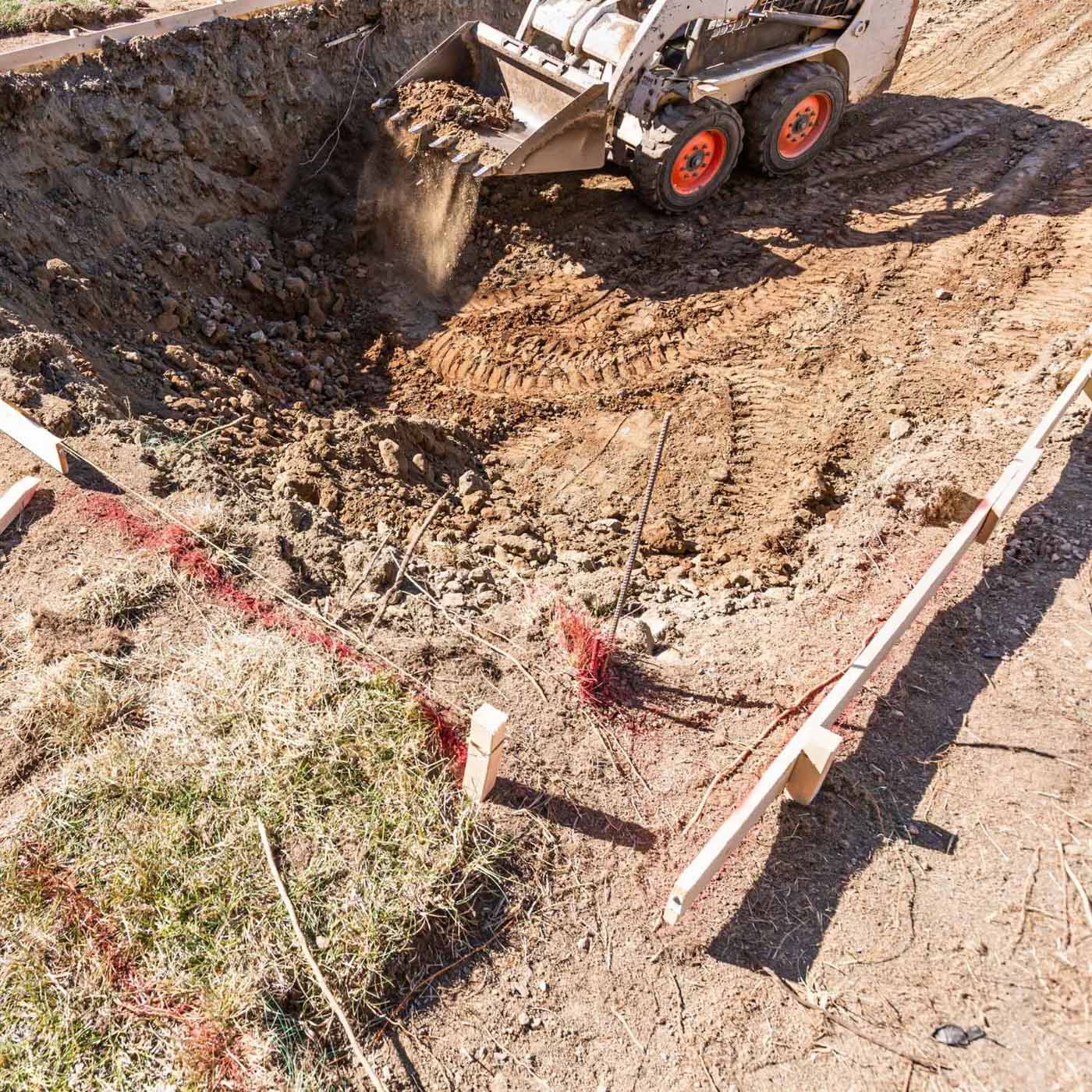
Standing water isn’t just an eyesore. When it sits within a few feet of your foundation which happens constantly on Boothwyn’s older ranch homes and Cape Cods it creates hydrostatic pressure that works against your basement walls every single time it rains. That pressure builds over years. By the time you see a crack or moisture inside, the damage is already underway.
The clay soil throughout Delaware County makes this worse than it would be almost anywhere else. Water doesn’t soak in it spreads laterally across the surface and concentrates at the lowest point on your lot, which is often right next to your house. Homes built in the 1930s through the 1960s, which make up most of Boothwyn’s housing stock, were graded to standards that simply weren’t designed for this kind of long-term water management.
When drainage is handled correctly with proper grading and a system that actually moves water off your property your yard dries out, your lawn recovers, and you stop worrying every time a storm rolls through. Foundation repair in Delaware County routinely runs $10,000 to $30,000 or more. A properly installed drainage system costs a fraction of that and protects the investment you’ve already made in your home.
We’re based in Aston, PA directly next to Boothwyn. That’s not a detail we mention to sound local. It means our crew working on your property knows what southern Delaware County clay soil actually does to a yard, has worked on homes like yours throughout Upper Chichester Township, and isn’t learning your neighborhood on your dime.
Renato has run this operation for over 15 years. He’s not managing from an office while a rotating crew shows up at your house. He’s in the field, he knows the work, and when something doesn’t look right, he catches it. In Boothwyn where the Chichester School District families all know each other that kind of accountability matters.
We handle both grading and drainage as a combined service. That’s not standard in this industry, and it’s the reason our installs hold up long after other contractors’ work has failed.
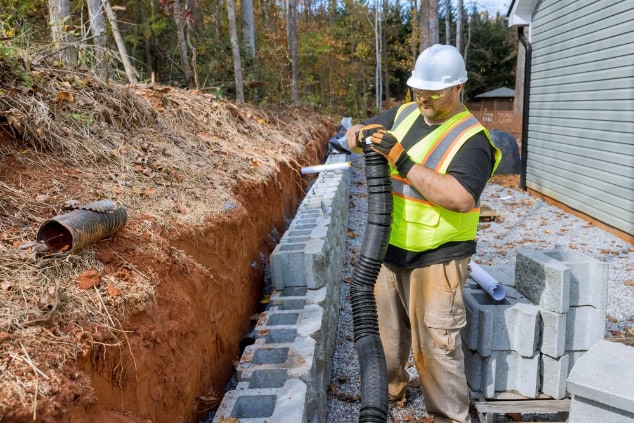
It starts with a real site assessment not a quick glance and a quote. We walk the property, identify where water is entering, where it’s pooling, and where it needs to go. In Boothwyn, that usually means tracing water movement across compacted clay soil with limited natural slope, often around homes where the original grading has shifted over 60 or 70 years of freeze-thaw cycles. That context shapes everything we recommend.
From there, we determine what your property actually needs. Sometimes that’s a French drain. Sometimes it’s a catch basin, a swale, or a combination of regrading and a drainage system working together. We don’t default to the most expensive option we recommend what solves the problem. If regrading alone will fix it, that’s what we tell you.
Once the plan is set, we handle the installation from start to finish one crew, clear timeline, no disappearing acts. In Upper Chichester Township, we account for the township’s stormwater requirements throughout the process, and we always call 811 before any excavation begins. When the job is done, the yard gets restored. You won’t be left with open trenches or torn-up lawn.

Ready to get started?
Every drainage system we install in Boothwyn is engineered for Delaware County’s specific conditions not sized for average soil in an average climate. That means pipe diameter, gravel depth, filter fabric, and outlet placement are all chosen with clay soil permeability and Pennsylvania’s freeze-thaw winters in mind. Upper Chichester Township sees January lows around 28°F, and the ground freezes and thaws repeatedly from December through March. Inferior installs fail under that stress. Ours don’t.
For homes along Blueball Avenue, Cherry Tree Road, and the older subdivision streets throughout Boothwyn, we frequently see a combination of negative grading near the foundation and undersized or misdirected downspout systems both of which need to be corrected before any drain system will perform the way it should. Addressing only one and not the other is one of the most common reasons homeowners end up calling a second contractor.
Upper Chichester Township also operates a stormwater management fee program based on the amount of impervious surface on your lot, and the township offers credits to homeowners who implement qualifying drainage improvements. If that applies to your property, it’s worth knowing before you start and it’s something we can walk you through.

The most likely cause is a combination of Delaware County’s clay-heavy soil and grading that’s no longer doing its job. Clay soil has very low permeability water doesn’t absorb into it the way it would with sandy or loamy ground. Instead, it spreads across the surface and collects at the lowest point on your lot. If that low point is your yard, you get standing water. If it’s near your foundation, you get basement moisture.
For most homes in Boothwyn especially the ranch homes and Cape Cods built in the 1930s through 1950s the grading around the foundation has shifted over decades of settling and freeze-thaw cycles. What was once a proper slope away from the house has flattened or reversed. That’s not a drainage system problem. That’s a grading problem, and installing a French drain without fixing the grade first won’t solve it permanently. A proper site assessment will tell you which issue is driving the water and what the right fix actually looks like.
Regrading changes the physical slope of your yard so water naturally flows away from your home and toward a safe discharge point. It’s a ground-level correction moving and reshaping soil to restore proper elevation and slope. A French drain is a subsurface collection system: a perforated pipe surrounded by gravel and wrapped in filter fabric, buried underground to intercept water and redirect it away from problem areas.
In many cases, you need both. If the grade is wrong, water will continue to flow toward your house regardless of what drain system is installed. If the grade is correct but the soil is too clay-heavy to move water fast enough, a French drain handles the overflow. For Boothwyn properties where clay soil and aging grades are both common the most effective and lasting solution usually involves correcting the grade first and then designing the drainage system around that corrected baseline. That’s the approach we take on every job.
The cost for French drain installation in Boothwyn typically ranges from $5,000 to $9,250 for a standard residential project, though costs can vary based on the size of the area being drained, how much excavation is involved, whether regrading is needed, and where the water needs to be discharged. A simple perimeter French drain on a small yard will cost less than a full drainage system on a larger property with multiple problem areas.
For Boothwyn homeowners, it’s worth putting that number next to what you’re protecting. Median home values in the area run between $296,000 and $375,000. Foundation repair in Pennsylvania which is often the consequence of unmanaged drainage routinely costs $10,000 to $30,000 or more, and that’s before any mold remediation. A properly installed drainage system is one of the better-value investments you can make in a home you plan to keep. We give straightforward estimates after a real site assessment no pressure, no upsell.
Permit requirements depend on the scope and nature of the work. Basic French drain installation and regrading on private residential property in Upper Chichester Township typically doesn’t require a building permit, but any work that involves altering stormwater discharge patterns particularly if it connects to the municipal storm sewer system may be subject to township review under their MS4 stormwater management program.
What’s important to know is that Upper Chichester Township takes stormwater management seriously. They operate under a federally mandated MS4 permit and have a formal Pollutant Reduction Plan in place. The township also charges property owners a stormwater management fee based on impervious surface area, and they offer credits for homeowners who implement qualifying Best Management Practices which can include properly designed drainage systems. Before any excavation, Pennsylvania law requires a call to 811 to identify buried utilities. We handle that as standard practice on every job. If you’re unsure what applies to your specific property, we can help you work through it.
A properly installed French drain in Delaware County should last 30 to 40 years or more. The key word is properly. The two most common reasons French drains fail early are silt infiltration when filter fabric is missing or improperly installed and fine clay particles migrate into the gravel bed and clog the pipe and frost damage, when shallow installation or inadequate slope allows the pipe to shift or crack during Pennsylvania’s freeze-thaw cycles.
In Boothwyn’s climate, where the ground freezes and thaws repeatedly from late fall through early spring, installation depth and pipe slope matter more than they would in a warmer region. We use filter fabric rated for clay soil conditions, size the gravel appropriately, and set pipe slope to maintain flow even after years of ground movement. The materials we spec are chosen for Delaware County’s specific thermal and soil conditions not pulled from a generic supply list. A system built that way doesn’t need to be replaced in 10 years.
You can, and plenty of homeowners try extended downspouts, bags of pea gravel, French drain kits from the home improvement store. Some of those fixes help in minor situations. Most of the time, by the time someone is searching for a drainage contractor, the DIY attempts have already been made and the water is still there.
The issue with most DIY drainage work isn’t effort it’s diagnosis. Without understanding where water is entering, how it’s moving across the property, and where it needs to go, it’s easy to install something that redirects water toward a neighbor’s yard or toward your foundation instead of away from it. In Boothwyn, where lots are modest in size and homes sit close together, a misdirected drainage system can create a neighbor dispute on top of the original problem. There’s also Pennsylvania’s 811 requirement any excavation requires utility notification first, which is easy to overlook on a weekend DIY project. If the standing water is near your foundation or has been getting worse over time, a professional assessment costs you very little and tells you exactly what you’re dealing with before you spend money on materials that may not solve it.
Useful Links