Wondering what asphalt installation actually costs in 2026? We break down the real numbers, hidden fees, and cost factors that affect your driveway project in Delaware County, PA.
Share:
Summary:
You’re not looking for the cheapest driveway. You’re looking for one that won’t crack in three years or surprise you with hidden costs halfway through the project.
The truth is, asphalt installation costs vary wildly, and most pricing you’ll find online doesn’t account for what actually matters in Delaware County—soil conditions, freeze-thaw cycles, and the difference between a contractor who does it right versus one who disappears when problems show up.
Here’s what you need to know about real asphalt installation costs, what drives those numbers, and how to make a decision that protects your investment instead of creating a headache two winters from now.
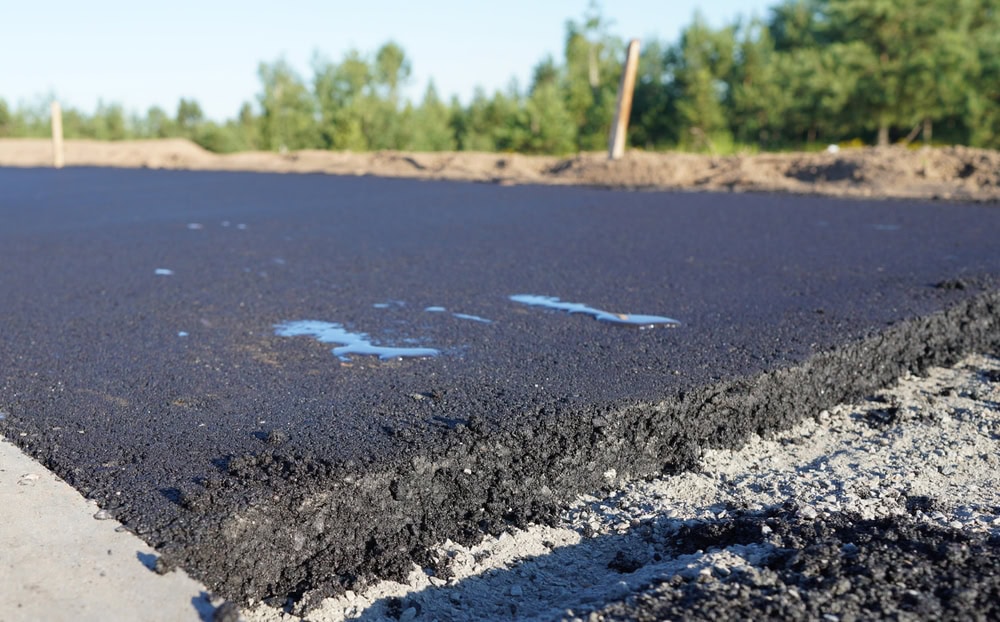
Asphalt installation costs between $7 and $13 per square foot in 2026 for complete professional installation. That includes materials, labor, and basic site preparation. Break it down further and you’re looking at $2 to $6 per square foot for asphalt materials and another $2 to $6 per square foot for labor.
A standard 600-square-foot driveway runs between $2,400 and $6,000 for most Delaware County homeowners. Smaller driveways cost more per square foot because fixed costs like equipment mobilization and delivery get spread over less area. Larger projects benefit from economies of scale, which is why a 200-square-foot patch might hit $10 per square foot while a 1,000-square-foot driveway drops to $5.50 per square foot.
But here’s what matters more than the average: what’s actually included in that price. Some contractors quote material-only pricing around $2 to $3 per square foot, then hit you with separate charges for delivery, labor, base prep, and grading. Others give you a fully installed price that covers everything from excavation to final compaction. Know which one you’re getting before you compare quotes.
When you pay for asphalt installation, you’re not just buying the black surface. You’re paying for the work that determines whether your driveway lasts 20 years or starts cracking in five.
Site preparation comes first. That means excavating to the proper depth, removing old materials if you’re replacing an existing driveway, and grading for water drainage. Poor grading causes pooling, ice formation, and the kind of damage that requires expensive repairs. In Delaware County’s climate with its rolling hills and varied terrain, proper drainage isn’t optional.
Next is base installation. A compacted gravel base, typically 6 to 8 inches deep, provides the stable foundation that prevents your driveway from shifting or sinking. Pennsylvania’s freeze-thaw cycles make this base work critical. Water that seeps under your driveway expands when it freezes, causing cracks and heaving. A properly installed base prevents that.
Then comes the asphalt itself. Residential driveways need 3 to 4 inches of compacted asphalt for standard vehicle traffic. If you’re parking heavier vehicles or RVs, you’ll want 4 to 6 inches. Thicker asphalt costs more upfront but handles weight better and lasts longer.
Labor includes spreading the hot asphalt mix at the correct temperature, grading it for proper water runoff, and compacting it with heavy rollers to achieve the density and strength your driveway needs. Shortcuts here show up fast. Insufficient compaction leads to rutting and premature wear.
Edge finishing, final grading, and cleanup round out the work. We also include the first sealcoating application after the asphalt cures, though that typically happens 6 to 12 months after installation in southeastern Pennsylvania.
The base preparation and proper compaction separate installations that last from ones that fail. When a contractor’s price seems too good, they’re usually cutting corners on the work you can’t see. And that’s the work that matters most.
Before committing to asphalt, most Delaware County homeowners want to know how it compares to pavers. The cost difference is significant, and understanding what you get for that extra money helps you make the right choice for your property and budget.
Driveway pavers cost $10 to $30 per square foot installed, with most projects landing between $15 and $25 per square foot. That’s roughly double what you’ll pay for asphalt at $7 to $13 per square foot. A 600-square-foot driveway in pavers runs $6,000 to $15,000 compared to $4,200 to $7,800 for asphalt.
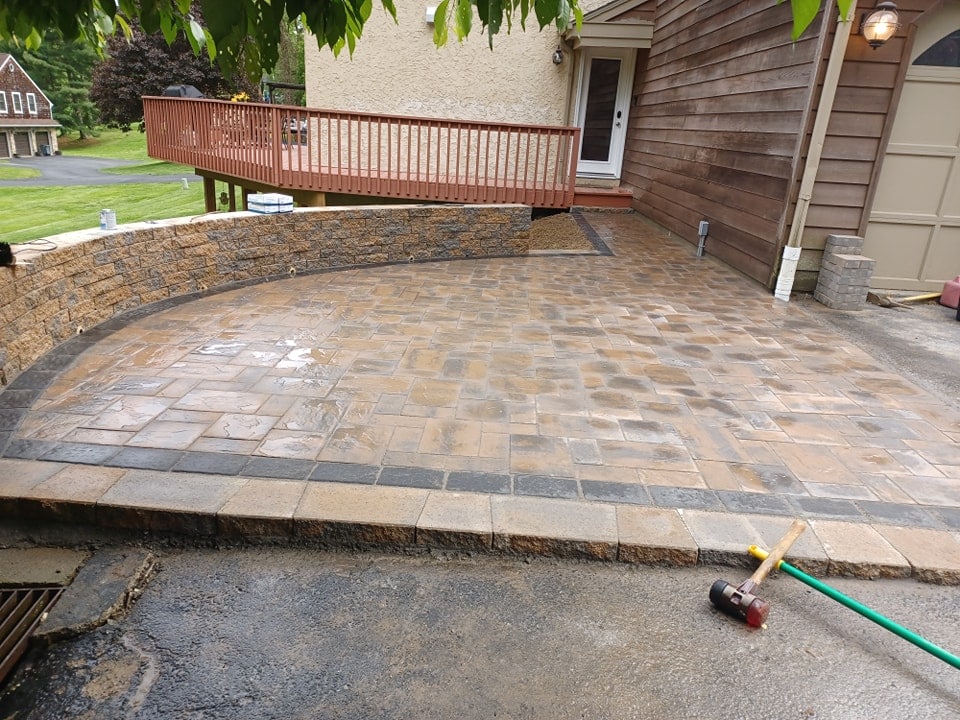
Pavers offer some advantages. They last longer—25 to 75 years compared to asphalt’s 15 to 20 years. Individual damaged pavers can be replaced without redoing the entire surface. The aesthetic options are broader with various colors, patterns, and materials from concrete pavers to natural stone.
But pavers have downsides in Pennsylvania’s climate. Installation takes longer, usually a week or more. They require more maintenance including re-sanding joints every few years to prevent weed growth and shifting. Snow removal is harder because plow blades can catch on uneven pavers. And the upfront cost is substantially higher.
Asphalt makes more sense for most Delaware County driveways. It handles freeze-thaw cycles better than concrete, installs in 1 to 2 days, and provides a smooth, durable surface at half the cost of pavers. Repairs are straightforward, and with proper sealcoating every 2 to 3 years, asphalt delivers excellent value.
Consider pavers if aesthetics are your top priority and budget isn’t a constraint. Choose asphalt if you want proven performance in Pennsylvania weather, faster installation, and lower overall costs for a driveway that handles everything you’ll throw at it.
The real cost per square foot for asphalt driveway installation depends on whether you’re talking about materials only, basic installation, or comprehensive work that includes proper site preparation.
Material-only pricing runs $2 to $6 per square foot for the asphalt itself. That’s just the hot mix from the plant, excluding delivery, labor, and everything else. Some contractors quote this number because it sounds competitive, then add charges for the actual installation work.
Fully installed pricing, which is what most homeowners actually pay, ranges from $7 to $13 per square foot. This includes materials, labor, basic excavation, gravel base installation, asphalt placement, and compaction. It’s the real number you should budget for when planning your project.
Premium installations with extensive site work, drainage solutions, thicker asphalt, or challenging terrain can reach $15 to $18 per square foot. That’s not price gouging—it’s the cost of doing the job right when your property presents challenges that can’t be ignored.
Heated driveways eliminate snow shoveling and ice management, but they add substantial cost to your asphalt installation project. Understanding the investment helps you decide if the convenience justifies the expense for your Delaware County home.
A heated driveway system costs $12 to $25 per square foot on top of your standard asphalt installation cost. That breaks down to $7 to $13 per square foot for the asphalt itself plus $5 to $12 per square foot for the heating system installed beneath it. For a typical 600-square-foot driveway, you’re looking at $7,200 to $15,000 total.
Electric heating systems use corrosion-resistant cables or mats embedded under your asphalt. They cost less to install because they don’t require a boiler, but operating costs run $100 to $300 per winter season depending on snowfall and how often the system runs. The cables produce about 50 watts per square foot, melting snow and ice before it accumulates.
Hydronic systems circulate heated water or antifreeze through PEX tubing under your driveway. They require a boiler installation, usually housed in your garage, which increases upfront costs by 30 to 50 percent. But operating costs are lower long-term because water-based systems run more efficiently than electric.
The best time to install a heated driveway is during new construction or full replacement. Retrofitting an existing driveway is possible with electric systems but more complicated and may void warranties. Most Delaware County contractors recommend adding the system when you’re already tearing out and replacing your driveway.
Consider heated driveways if you have physical limitations that make snow removal difficult, if your driveway has steep slopes where ice creates safety hazards, or if the convenience justifies the cost for your household. Skip it if you’re comfortable with traditional snow removal or if the $7,000 to $15,000 investment doesn’t align with your budget priorities.
For most homeowners, a well-installed standard asphalt driveway with proper drainage and regular sealcoating delivers better value than adding heating systems.
If you already have an asphalt driveway that’s showing age but isn’t completely failed, an overlay might save you money compared to full replacement. Understanding when each option makes sense protects you from wasting money on a temporary fix.
An asphalt overlay costs $3 to $7 per square foot. The process involves laying 1.5 to 2 inches of fresh asphalt over your existing surface without removing the old driveway. It’s faster, less disruptive, and costs 40 to 60 percent less than full replacement.
But overlays only work when your existing base is structurally sound. If you have more than 25 percent surface cracking, potholes, or areas where the driveway has sunk or heaved, an overlay just covers up problems that will continue getting worse underneath. You’ll end up paying for the overlay now and a full replacement in a few years.
Full replacement costs $8 to $15 per square foot because it includes removing your old driveway at $1 to $3 per square foot, addressing any base issues, and installing new asphalt over a properly prepared surface. It’s more expensive upfront but gives you a fresh 15 to 20 year lifespan instead of a 5 to 7 year patch job.
Signs you need full replacement instead of an overlay include widespread cracking, drainage problems, areas that sink when you drive over them, or edges that are crumbling. If water pools on your driveway or you see grass growing through cracks, the base has failed and an overlay won’t fix it.
For Delaware County homeowners, the decision often comes down to base condition. Our freeze-thaw cycles are hard on driveways, and base failure is common in older installations that didn’t use adequate gravel depth or proper compaction. A contractor who recommends an overlay when you actually need replacement is either inexperienced or trying to win your business with a low price that won’t solve your problem.
Get an honest assessment of your base condition before deciding. We’ll tell you when an overlay makes sense and when you’re throwing money away by not addressing underlying issues.
Widening an existing driveway costs $3 to $12 per square foot depending on how the new section connects to your current driveway and what site preparation is needed. Most widening projects in Delaware County run between $800 and $3,000 total.
The challenge with widening is matching your existing driveway and ensuring proper bonding between old and new asphalt. You can’t just pour new asphalt next to old and expect it to hold. The ground under the new section needs the same base preparation as a new installation—excavation, compacted gravel, and proper drainage.
We typically saw-cut the edge of your existing driveway, excavate the widening area, install base material, and tie the new asphalt into the old using proper bonding techniques. If your existing driveway is old or deteriorating, widening might not make sense. You could end up with a new section that outlasts the original, creating an uneven surface as the old portion continues failing.
Widening makes most sense when your existing driveway is in good condition but you need extra parking space, easier access for multiple vehicles, or room for turning around. Common widening projects add 2 to 4 feet along one side to create more parking or extend the driveway to accommodate an RV or boat.
Site conditions affect widening costs just like new installations. If the area you’re widening into has poor drainage, slopes, or clay soil, you’ll need more extensive prep work. Trees, landscaping, or utilities in the widening path add removal and protection costs.
Before widening, check local regulations. Some Delaware County municipalities have setback requirements that limit how close your driveway can be to property lines. You may need permits, especially if the widening changes your driveway’s footprint significantly or affects drainage patterns.
Widening typically takes 1 to 3 days depending on the size of the addition and site complexity. The new asphalt will be slightly different in color from your existing driveway until it weathers, but the contrast fades over time.
If you’re considering widening, get quotes that specifically break down site prep, base installation, and asphalt costs separately. That helps you understand what you’re paying for and compare contractors accurately.
Article details:
Share:
Continue learning: