
Hear from Our Customers
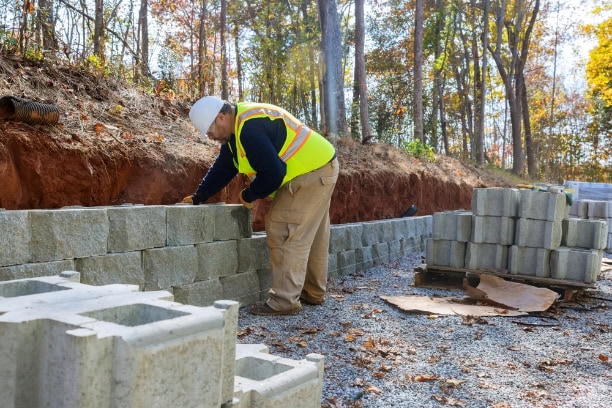
Most homes in Drexel Hill were built before 1950. That means the retaining walls on a lot of these properties if they’re still standing are original timber or block from decades ago. Timber walls have a lifespan of 10 to 30 years. If yours is older than that, it’s not a question of whether it will fail. It’s a question of how much damage it does when it does.
Drexel Hill sits within the Darby and Cobbs Creek Watershed, and the drainage issues along that corridor are well-documented. When heavy rain hits a sloped lot here, water moves fast and clay-heavy soil holds it. Without proper drainage behind a retaining wall, that trapped water builds pressure and that pressure is what bows walls, cracks block, and eventually pushes the whole structure out. A wall built with drainage in mind from the start doesn’t just look better. It actually holds.
The other thing a properly built retaining wall does is give you back usable space. Drexel Hill lots on the hillier streets lose a significant chunk of their square footage to unusable slope. A well-designed wall creates level ground room for a patio, a garden, a flat lawn area for kids or dogs and adds real, appraiser-recognized value to a home in a competitive Delaware County market.
We’re a Delaware County-based operation not a regional franchise, not a company that subcontracts the actual work out to whoever’s available that week. I hold an active Pennsylvania contractor license (PA057623) and carry a BuildZoom score of 102, which puts me in the top 11% of over 125,000 licensed contractors in the state. That’s not a marketing claim it’s a publicly verifiable number.
What that means for you practically: the same team that shows up to assess your Drexel Hill property is the team that builds your wall. No handoffs. No strangers showing up on day three. If something needs attention after the job is done, you’re calling the same person who designed and built it not a customer service line.
We serve Drexel Hill and Delaware County specifically, which means the soil conditions, the drainage patterns near Darby Creek, and the permit process through Upper Darby Township’s Licenses and Inspections office are all familiar territory not something being figured out on your dime.
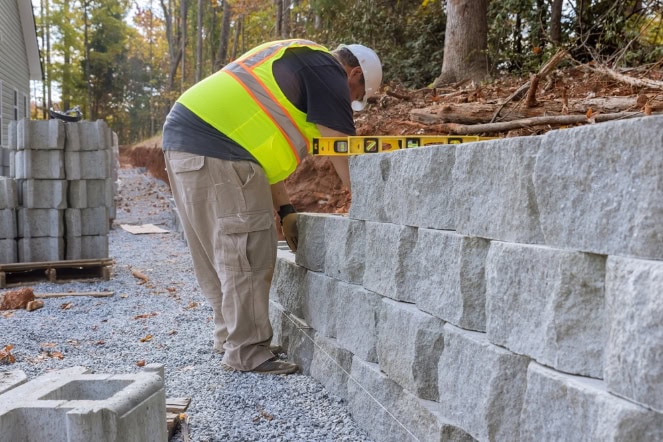
It starts with a free on-site visit. A phone quote can’t assess the slope on your property, the condition of your existing wall, or what the drainage situation looks like after a hard rain. We visit every Drexel Hill property before providing a number because a quote that doesn’t account for your actual site conditions isn’t worth much.
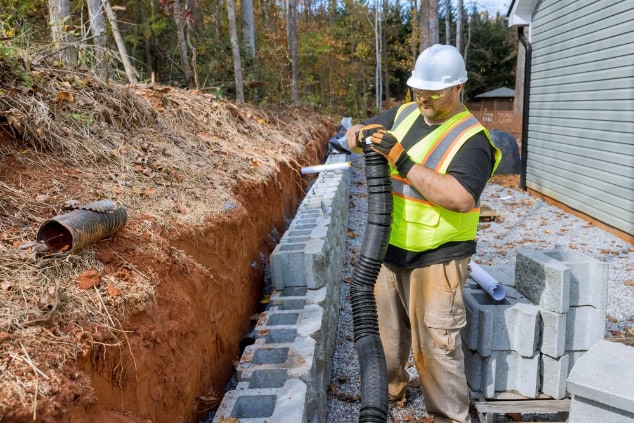
From there, drainage gets planned before materials get chosen. That’s the sequence that matters. Drexel Hill’s clay-heavy Piedmont soil doesn’t drain the way sandy or loamy soil does it holds water, and that water needs somewhere to go. Every wall we build includes gravel backfill and a drainage system sized for the actual conditions on your property. Once the drainage plan is set, material selection follows whether that’s concrete block rated for 30 to 50 years, natural stone that can outlast the house, or another option that fits your goals and budget.
If your project requires a permit and in Upper Darby Township, walls over four feet typically do we handle that process too. Upper Darby requires a zoning permit before a building permit can even be submitted, and skipping that step can mean double fees or problems at resale. It’s a two-step process that trips up homeowners who go it alone. Most retaining wall installations in Drexel Hill take five to ten days depending on size, slope, and weather. You’ll know the timeline before work starts, and the site will be cleaned up when it’s done.
Ready to get started?
Retaining wall installation here isn’t a one-size-fits-all job. The rolling terrain across Drexel Hill elevations shifting from 60 to over 260 feet across Upper Darby Township means slope angles, drainage paths, and load conditions vary significantly from one street to the next. What works on a flat lot in a newer development doesn’t automatically translate to a 1940s Colonial on a hillside near Garrett Road or Burmont.
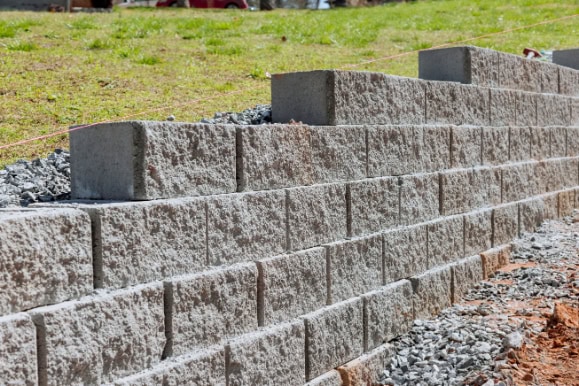
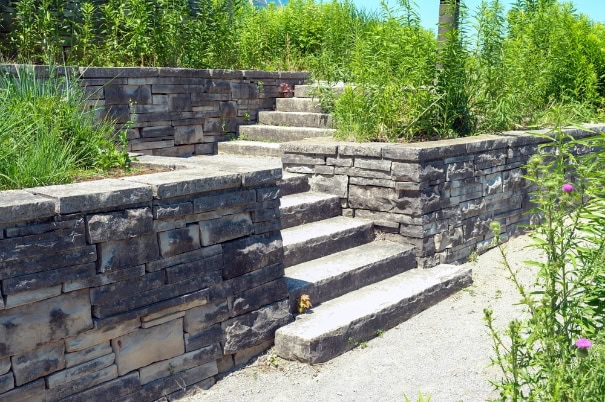
Material options include concrete block systems like VERSA-LOK, which are engineered for freeze-thaw conditions and carry a 30 to 50-year lifespan, as well as natural stone for homeowners who want something that blends with an older home’s character and can last well over a century. Timber is available but generally not recommended for Drexel Hill’s climate and soil conditions it’s the shortest-lived option in an environment that will stress it every winter and every wet spring.
Every installation includes drainage engineering, proper backfill, and cleanup. We also manage the permit process with Upper Darby Township’s Department of Licenses and Inspections, so you’re not navigating the zoning permit and building permit steps on your own. For homeowners in areas like Drexelbrook or Drexel Park where properties sit on more pronounced grades, that permitting step is often required and it’s handled without putting it on your plate.
It depends on the height of the wall. Under Pennsylvania’s Uniform Construction Code, retaining walls under four feet measured from the lowest grade to the top of the wall are generally exempt from a state building permit, unless the wall is supporting a surcharge load like a driveway or structure above it. But being exempt from a building permit doesn’t mean you’re clear to build without any approvals.
Upper Darby Township, which governs Drexel Hill, requires a zoning permit before a building permit can be submitted for structural improvements. That zoning permit costs $75 and goes through the township’s Planning and Zoning review typically within 30 days of a completed submission. If you skip it and get caught, you’re looking at double permit fees and potential complications when you sell the property. We handle both steps as part of the project so there are no surprises down the line.
For most residential projects in Drexel Hill, you’re looking at a range of $3,500 to $10,000 depending on the length, height, material, and how much drainage work the site requires. Per linear foot, that typically falls between $40 and $345 with the lower end reflecting simpler, shorter walls in accessible locations, and the higher end reflecting taller walls, natural stone, or sites with significant drainage challenges.
Drexel Hill’s clay soil and sloped terrain tend to push projects toward the middle and upper end of that range, because proper drainage installation isn’t optional here it’s what keeps the wall standing. A cheaper quote that skips drainage engineering might save you money upfront and cost you $5,000 to $8,000 in reconstruction a few years later. Property appraisers estimate a 100 to 200 percent return on investment for well-built retaining walls, which means a $6,000 wall on a Drexel Hill home could add $6,000 to $12,000 in appraised value making it one of the more defensible outdoor investments you can make.
The most common cause is poor drainage specifically, water that gets trapped behind the wall and has nowhere to go. When that happens, the water creates hydrostatic pressure that pushes laterally against the wall. In Drexel Hill’s clay-heavy soil, this is especially pronounced because clay holds moisture rather than letting it drain through. Over time, that pressure bows concrete block, cracks mortar joints, and eventually pushes the entire structure forward.
Pennsylvania’s freeze-thaw cycle makes it worse. Water that’s already saturating the soil behind a wall freezes in winter, expands, and shifts the earth loosening the wall’s base and accelerating movement. If the wall was built without gravel backfill, weep holes, or a perforated drainage pipe, it’s essentially a dam waiting to give out. Most of the walls we replace in Delaware County failed for exactly this reason not because the materials were bad, but because drainage was never part of the original build.
Material choice is the biggest factor. Treated timber walls last roughly 10 to 30 years, and in Drexel Hill’s wet winters and clay-heavy soil, they tend to land on the shorter end of that range. Concrete block systems like VERSA-LOK are rated for 30 to 50 years and handle Pennsylvania’s freeze-thaw cycle significantly better. Natural stone, when properly installed, can last well over a century there are stone walls in Delaware County that have been standing since before the homes next to them were built.
The other factor is drainage. A wall built from quality materials but without proper drainage will still fail prematurely sometimes within five to ten years. A wall built with the right materials and a drainage system that actively moves water away from the structure will perform at the top of its expected lifespan. For Drexel Hill homeowners with older homes and sloped lots, replacing an aging wall is a one-time investment when it’s done right not a recurring expense.
Concrete block systems, including VERSA-LOK, are the most practical choice for most Drexel Hill residential projects. They’re engineered to handle repeated freeze-thaw cycles, they’re structurally consistent, and they carry a 30 to 50-year lifespan without the maintenance demands of timber. They also work well on the kind of moderate slopes you find throughout Drexel Hill’s hillier streets near Drexel Park, along the Garrett Road corridor, and in properties backing up toward the Darby Creek drainage area.
Natural stone is a strong option for homeowners who want something that complements the character of an older home a 1930s or 1940s Colonial or bungalow often looks better with stone than with block, and the longevity is unmatched. Timber is the least recommended option for Drexel Hill. It’s the most affordable upfront, but the area’s clay soil, wet springs, and hard winters accelerate rot and structural movement in timber walls faster than in drier or warmer climates. The savings at installation rarely hold up against the earlier replacement cost.
There are a few signs that are hard to ignore. If the wall is visibly leaning or bowing outward, that’s hydrostatic pressure doing its work and it typically gets worse, not better, on its own. Cracks running horizontally through block or stone are a structural warning sign, as opposed to minor vertical hairline cracks which are more cosmetic. If you’re seeing soil washing out from behind or beneath the wall, the base is being compromised. And if the wall is timber and it’s been in place for more than 20 years in Drexel Hill’s climate, it’s worth having someone look at it regardless of how it appears on the surface rot often starts from the inside.
The best way to know for certain is an on-site assessment. Drexel Hill’s terrain varies enough from the flatter sections near Burmont Road to the steeper grades in Drexel Park and along the Darby Creek corridor that a general answer only goes so far. We visit every property before recommending repair or replacement, because the right call depends on what’s actually happening with your specific wall, your soil, and your drainage situation.
Useful Links
Other Services we provide in Drexel Hill