

Hear from Our Customers

Standing water in a Drexel Hill yard is not a fluke. It is what happens when a pre-1950 home on a small lot meets 44 inches of rain a year, dense soil that barely absorbs anything, and original grading that was never engineered to move water away from a foundation. That combination does not fix itself and a sump pump in the basement does not address what is happening outside.
When drainage is handled correctly starting with the slope of the land, not just a pipe in the ground the water that used to pool near your foundation has somewhere to go before it ever becomes a basement problem. Your yard dries out after rain instead of staying soggy for days. The dead grass patches from standing water start to recover. And the corner of your yard that has been a muddy mess every spring finally holds up.
Drexel Hill’s freeze-thaw winters add another layer to this. A drainage system installed without accounting for Pennsylvania’s freeze-thaw cycle will shift, crack, and fail within a few seasons. The work we do is designed to hold up through those winters because 15 years of working across Delaware County means we already know what happens to drainage infrastructure that was not built for this climate.
We are based in Aston, PA same county as Drexel Hill, and close enough that this is not a new market for us. We have been working on Delaware County properties for over 15 years, which means the housing stock here older homes, tight lots, clay-influenced soil is not something we are figuring out on your dime. Drexel Hill’s specific drainage challenges are familiar to us because we have solved them repeatedly across this neighborhood.
What makes a real difference in a community like Drexel Hill is that you are not dealing with a regional chain or a subcontractor rotation. You get one crew from the first site visit to the final cleanup, and Renato the owner is the person behind every project. In a neighborhood where word travels and people pay attention to what is happening on the street next door, that kind of accountability matters.
We understand Upper Darby Township’s stormwater requirements, we know how Darby Creek’s watershed dynamics affect individual properties in this area, and we have seen what happens to drainage systems on Drexel Hill’s small lots when the work is done without accounting for the neighbors on either side.

It starts with a site assessment not a sales pitch. Before anything is recommended, our team walks your property to understand how water is actually moving across it. In Drexel Hill, where lots are small and homes sit close together, that assessment matters more than it does on a half-acre property. Redirecting water incorrectly on a tight lot does not solve the problem it just moves it toward your neighbor’s foundation instead of yours.
From there, grading and drainage are addressed together. If the slope of your yard is pushing water toward the house, installing a French drain without correcting the grade first is a partial fix at best. We handle both in the same project the grading work that establishes proper slope, and the drainage system that gives water a clear path out. Depending on your property, that might mean a French drain along the foundation, a catch basin in a low-lying area, a dry well, or some combination of all three.
Upper Darby Township’s stormwater ordinance may factor into your project depending on scope, particularly if you are adding any hardscape alongside the drainage work. Our familiarity with Delaware County’s municipal requirements means that piece is handled you are not left to sort out compliance questions on your own. Once the installation is complete, your yard is restored and cleaned up. The goal is a finished property, not a construction site handed back to you.
Ready to get started?
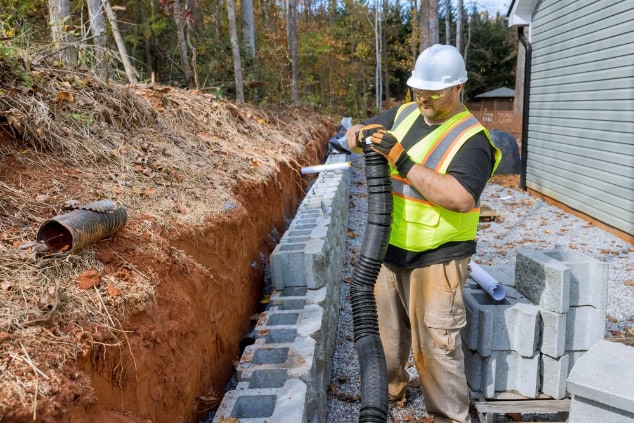
The drainage work we do in Drexel Hill covers the full scope of what older properties in this area typically need. French drain installation is the most common solution a perforated pipe buried in gravel that intercepts water before it reaches your foundation and directs it to a safe discharge point. On Drexel Hill’s small lots, the discharge location matters as much as the drain itself, and that is something the site assessment determines before any digging starts.
Grading is often part of the same conversation. Homes built in the 1930s and 1940s which make up a significant share of Drexel Hill’s housing stock were graded to the standards of that era, which means many of them now slope toward the foundation rather than away from it. Correcting that slope is not complicated, but it is foundational to any drainage solution that is going to hold up long-term.
For yards with more severe pooling, catch basins and dry wells give standing water a direct path out of the problem area. These are particularly useful in Drexel Hill’s lower-lying lots and in areas where surface runoff from neighboring properties compounds the issue. Every solution is scoped to the specific property the lot size, the soil conditions, the existing infrastructure, and what Upper Darby Township’s stormwater guidelines require for the scope of work involved.
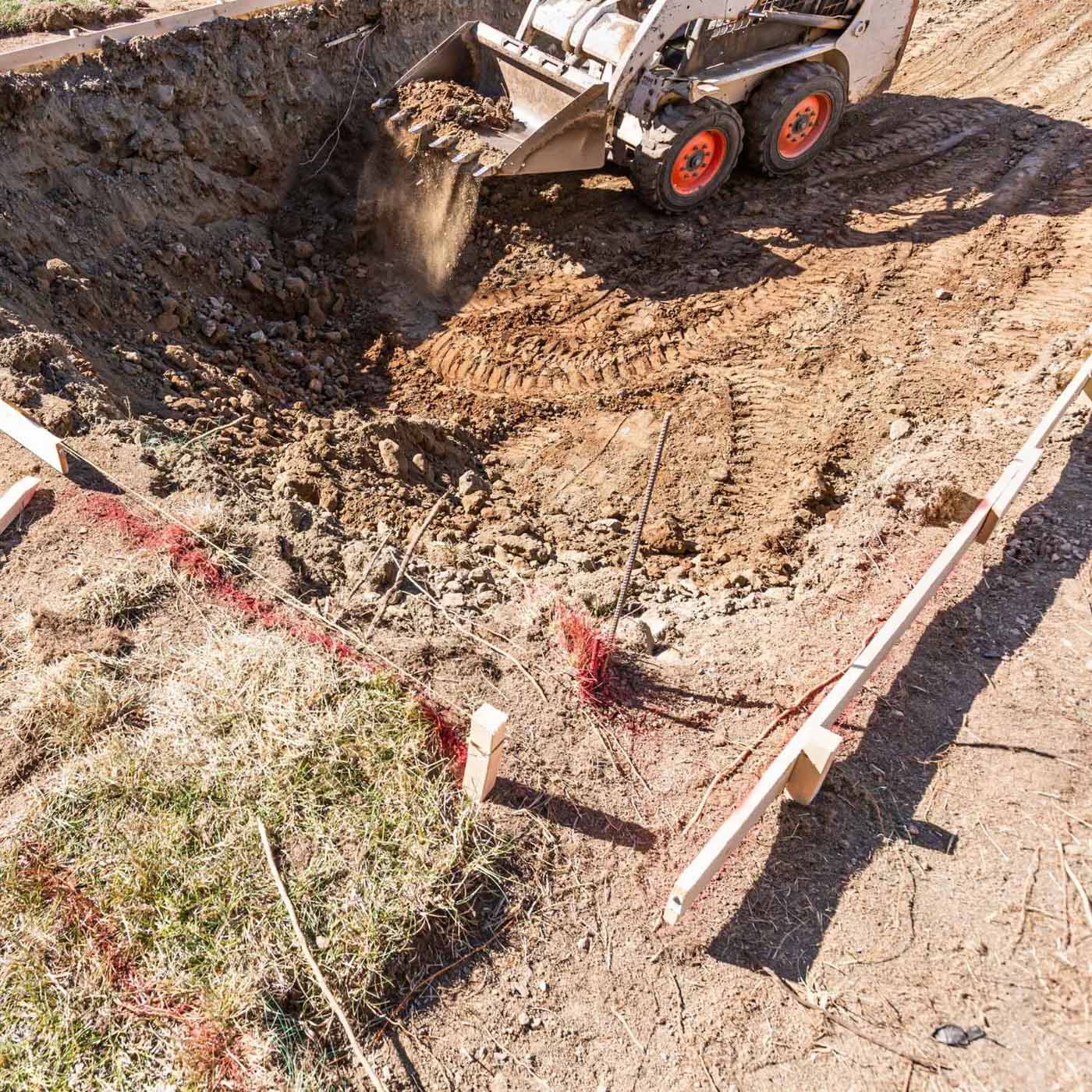
Drexel Hill sits within the Darby and Cobbs Creek Watershed, a drainage basin covering 31 municipalities where Darby Creek is documented to flash-flood during heavy rain events. That watershed-level pressure is the backdrop but on your individual property, the more immediate cause is usually a combination of factors that are common to this neighborhood specifically.
Most homes in Drexel Hill were built before 1950, which means the original grading was minimal and drainage infrastructure either did not exist or has been compromised by decades of soil settling and tree root growth. Add in the dense, low-absorption soil that sits over bedrock in this area, and you have a yard where rainfall has nowhere to go. At 44 inches of precipitation per year, that is not an occasional problem it is a recurring one that gets worse every spring and every time a summer storm drops significant rain in a short window.
The fix is not always complicated, but it does require understanding how water is actually moving across your specific lot before prescribing a solution. A site assessment is the right first step.
The national average for French drain installation runs between $5,000 and $9,250, and most Drexel Hill projects fall within or near that range depending on the length of the drain, the discharge situation, and whether grading work is needed alongside it. Smaller lots with straightforward discharge points tend to come in at the lower end. Properties where grading correction is also required, or where the discharge needs to be routed a longer distance to a proper outlet, will be higher.
What is worth putting that number in context against: foundation repair in this area can run $10,000 to $25,000 or more depending on the extent of the damage. Basement mold remediation is another significant cost that compounds over time when water intrusion goes unaddressed. A properly installed drainage system is not a luxury for a pre-1950 Drexel Hill home where the original foundation was not built to withstand sustained hydrostatic pressure, it is genuinely protective of the home’s structural integrity and long-term value.
The best way to get an accurate number for your property is a site visit. The scope varies enough from lot to lot that estimates without seeing the property are not reliable.
It depends on the scope of the work. Routine French drain installation or grading correction on a residential property in Upper Darby Township does not always require a permit, but larger projects particularly those that involve significant earthwork, changes to impervious surface coverage, or tie-ins to the municipal stormwater system may trigger permit requirements under Upper Darby Township’s Stormwater Management Ordinance No. 2945.
That ordinance is active and enforceable. It requires that development and redevelopment projects minimize impervious surfaces, and in some cases, redevelopment sites must reduce total impervious coverage by at least 20% from pre-development levels. If you are adding a patio, extending a driveway, or doing any hardscape work alongside your drainage project, those requirements can affect your project scope and what needs to be documented with the township.
Our familiarity with Delaware County municipal requirements means this is not something you have to research on your own. We know what triggers permit review in Upper Darby Township and will flag it before the project starts not after.
A French drain installed outside your home along the foundation perimeter or in the yard where water is pooling addresses the source of most basement moisture problems, which is water accumulating against the exterior of the foundation before it finds a way in. For Drexel Hill homes where the basement dampness is coming from surface water and poor yard drainage rather than a plumbing or waterproofing failure, an exterior drainage solution is often the right answer and the more permanent one.
The distinction matters because waterproofing companies tend to approach this problem from the inside interior drain tile, sump pumps, vapor barriers. Those systems manage water after it has already entered the foundation wall. An exterior French drain, combined with proper grading that slopes water away from the house, prevents that water from building up against the foundation in the first place. For pre-1950 Drexel Hill homes where the foundation was not designed to handle sustained hydrostatic pressure, stopping water at the source is a more durable fix than managing it after the fact.
That said, some situations do require interior solutions alongside exterior drainage work. A site assessment will clarify which approach or which combination makes sense for your specific property.
This is one of the most important questions to get right in a neighborhood like Drexel Hill, where lots are small and homes sit close together. Redirecting water without a clear plan for where it goes can push the problem onto an adjacent property which creates neighbor disputes and, in some cases, liability issues.
The answer starts with a proper site assessment that maps the existing drainage patterns on your lot and identifies a legitimate discharge point typically a storm drain, a swale, or a low area of your property that outlets to the street. Every solution we design for Drexel Hill properties accounts for lot constraints and neighboring properties before any work begins. The goal is to manage water within your property or route it to a proper outlet, not redirect it toward whoever is downhill from you.
In some cases, particularly on very tight lots where the only natural discharge path crosses a neighboring property, an easement conversation or a coordinated solution with the adjacent homeowner may be necessary. That is not common, but it is something the assessment will surface early before you have committed to an installation that creates a new problem while solving the original one.
Fall is generally the best window specifically September through early November, before the ground freezes. Installing drainage before winter means your system is in place and functional when snowmelt and spring rains arrive, which is when Drexel Hill properties tend to see the most acute flooding and standing water. Getting ahead of that cycle rather than reacting to it mid-spring, when schedules fill up fast, gives you more flexibility on timing and typically better project availability.
Spring installation is possible and very common it is when most homeowners reach their breaking point after watching the same corner of their yard flood for the third season in a row. The tradeoff is that spring is the busiest period for drainage work in Delaware County, so lead times are longer and you may be managing an active water problem while waiting for the project to start.
Summer installation works fine from a technical standpoint. The ground is workable, conditions are stable, and it is a good time to address drainage before fall rains and the first freeze arrive. What to avoid is waiting until the ground has frozen, which limits what can be excavated and affects how the backfill settles around the pipe. If your drainage problem is visible now, the right time to fix it is before the next season makes it worse.
Useful Links
Other Services we provide in Drexel Hill