

Hear from Our Customers
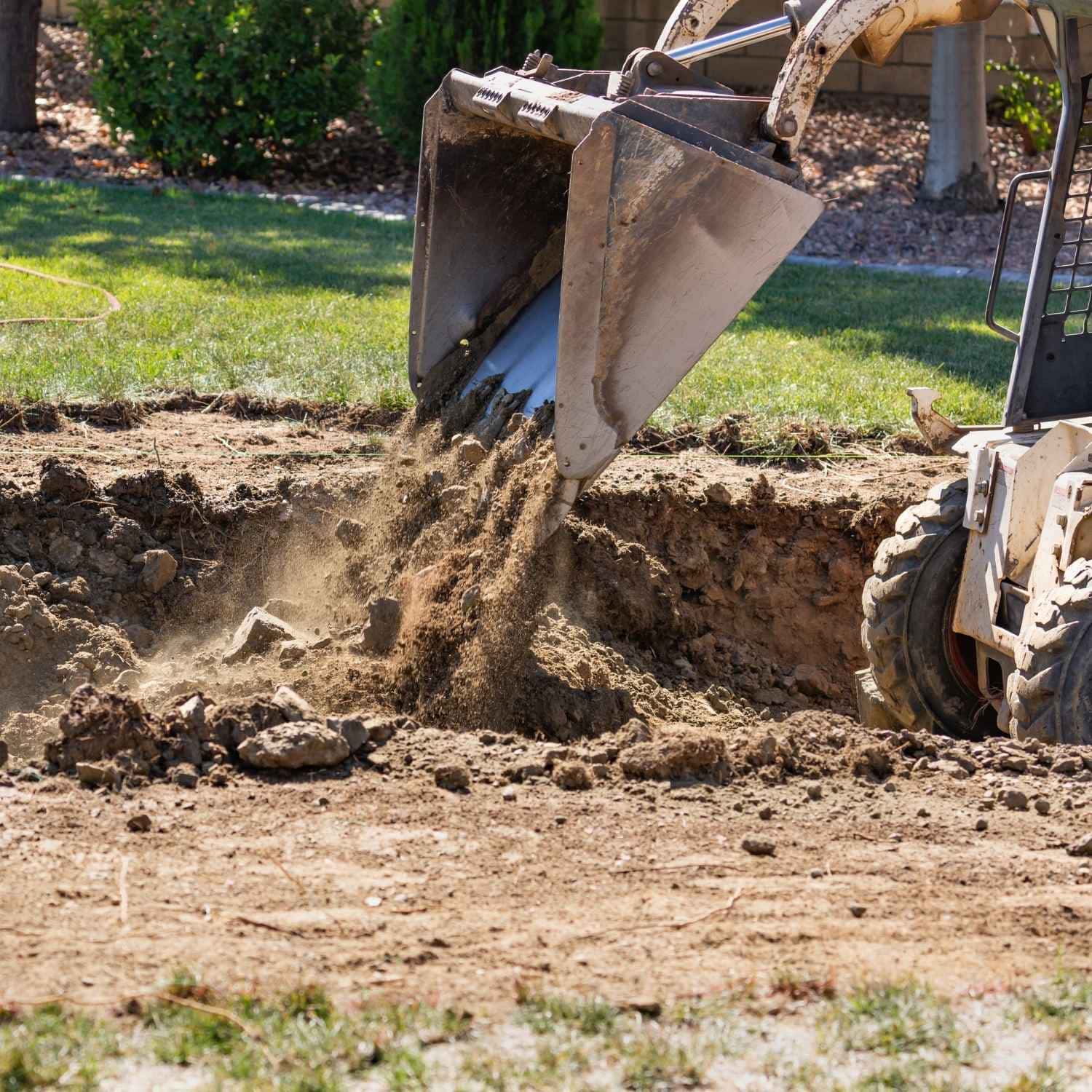
Most excavation problems in Norwood don’t start with bad intentions they start with contractors who don’t understand what they’re working with. The borough sits in the Darby Creek watershed, and the clay-heavy soils throughout southeastern Delaware County don’t forgive poor grading decisions. Water that has nowhere to go finds the path of least resistance, and in a neighborhood this dense, that path usually leads to your foundation.
When excavation and grading are done correctly, you stop reacting to every heavy rain. The slope works with your property instead of against it. Your basement stays dry. A retaining wall actually holds. A patio base doesn’t settle and crack two winters later. These aren’t dramatic transformations they’re the results of someone who planned the drainage before they touched the first shovelful of dirt.
Norwood’s residential lots average nearly 3,000 housing units per square mile. There’s very little room for error, and even less room for oversized equipment operated by someone who isn’t used to working in tight, confined spaces. We bring the right equipment, work carefully around your property lines and your neighbors’, and leave the site clean not just excavated.
We’re based in Aston, PA a few miles from Norwood and well within the same Delaware County terrain, soil conditions, and permitting environment. Owner Renato Spennato has been running projects throughout this area for over a decade, and his name shows up in the reviews not because it’s a marketing angle, but because he’s actually on the jobs in Norwood and across the surrounding communities.
What makes us different from a standard excavation company isn’t a tagline. It’s the fact that the same team that grades your yard can also build the retaining wall, install the patio, and finish the entire outdoor space. No handoffs between trades. No gap in accountability when something doesn’t line up. One crew, one project, one point of contact from start to finish.
We hold a PA contractor license and carry a BuildZoom score of 102 placing us in the top 11% of more than 125,000 licensed Pennsylvania contractors. That’s a third-party number you can look up yourself at buildzoom.com.
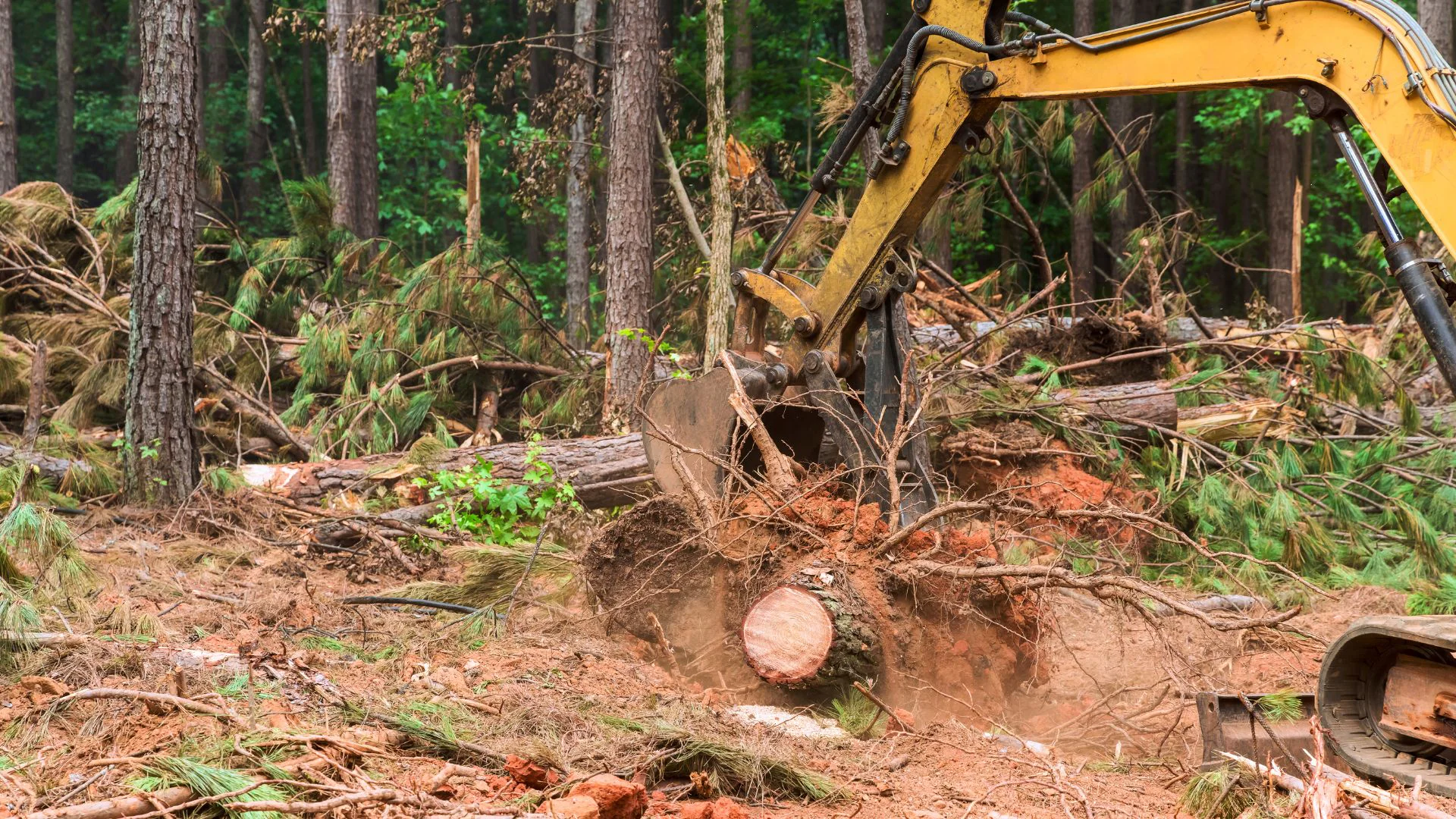
Before any equipment shows up, the first call goes to PA 811. In a borough like Norwood, where homes were built across several decades and underground utilities don’t always follow a predictable grid, this isn’t optional it’s the law, and it’s how you avoid turning a grading project into an emergency. Once utilities are marked, we assess the site for drainage patterns, soil conditions, and access constraints specific to your lot.
From there, the excavation and grading work is sequenced around what the finished project actually needs. If you’re prepping for a retaining wall, the dig follows the wall’s engineering requirements. If you’re correcting a drainage problem, the grade is established before anything else moves. Permit requirements through Norwood Borough’s building construction office are handled as part of the process not an afterthought you have to chase down yourself.
Because most Norwood residents commute out of the borough for work, you won’t be standing over the crew all day. You don’t need to be. The schedule is communicated upfront, the work happens when it’s supposed to, and the site is left in a condition that reflects the plan you agreed to not whatever was easier that day.

Ready to get started?
Residential excavation in Norwood covers a range of real, common situations: yard grading to correct drainage toward or away from a foundation, site preparation ahead of a patio or retaining wall installation, land clearing for a new outdoor living area, and excavation for footings or below-grade structures. The work that’s right for your property depends on what you’re starting with and in Norwood, that usually means older housing stock, compacted clay-heavy soils, and a lot configuration that wasn’t designed with modern outdoor living in mind.
The borough’s membership in the Eastern Delaware County Stormwater Collaborative isn’t just a municipal footnote. It reflects a real, documented drainage challenge that affects properties throughout this part of Delaware County. Any excavation or grading work here should account for how water moves across your lot, how it interacts with neighboring properties, and whether your project falls within a flood-sensitive area near Darby Creek or Muckinipattis Creek. Our process accounts for all of this before the first machine touches the ground.
Because we’re a full-service contractor not excavation-only the scope of what you can accomplish in one project is broader than most. Site prep, retaining walls, paving, and outdoor living construction can all happen under the same contract, with the same team, without the coordination headache of managing multiple contractors across multiple mobilizations.
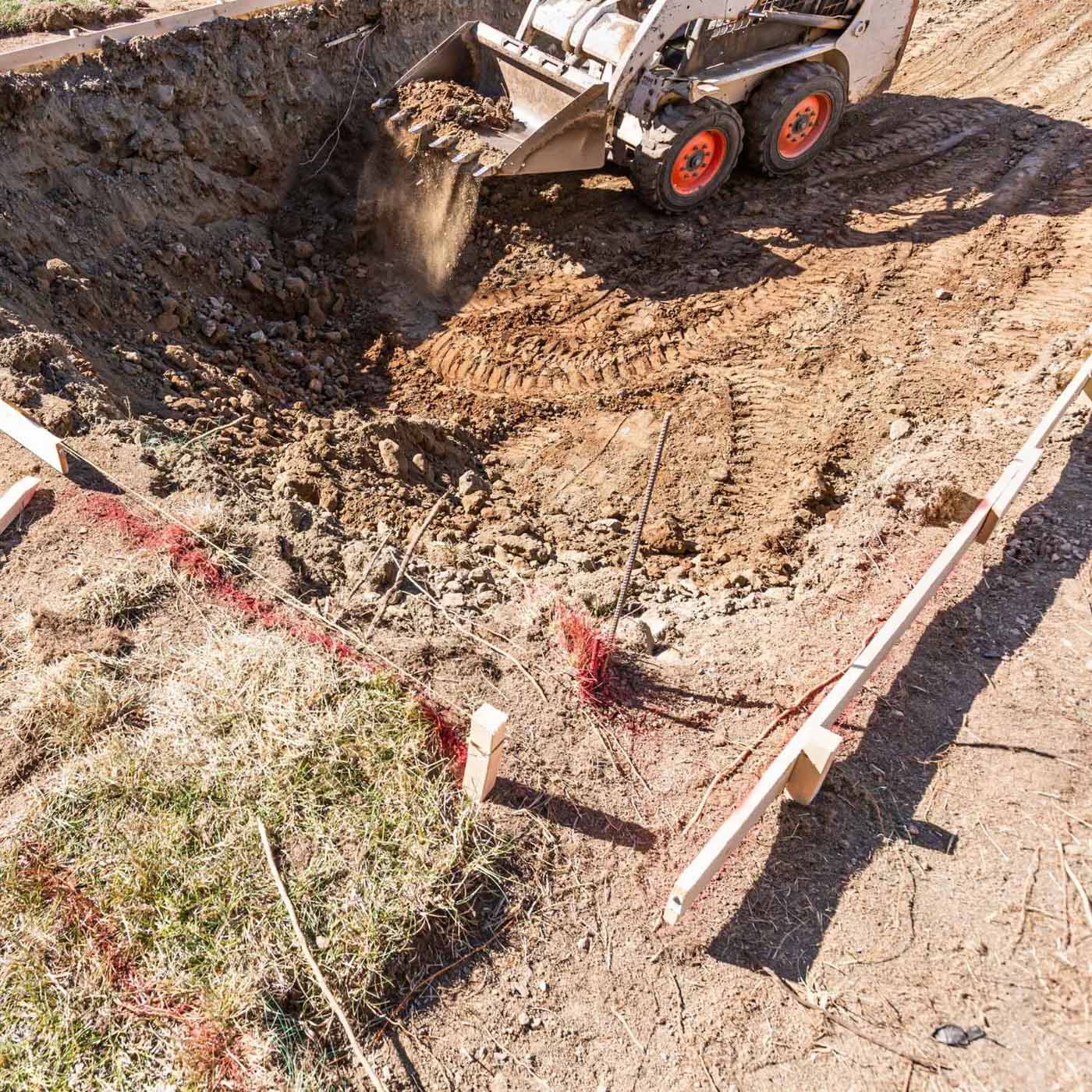
Yes, in most cases. Norwood Borough requires a building construction permit for excavation and grading work, and the borough’s code specifically includes excavation in how project costs are calculated for permitting purposes. The borough also has a dedicated chapter on grading and paving, a flood damage prevention ordinance, and zoning requirements under Chapter 300 that can apply depending on how the excavation changes the use or footprint of your property.
If your lot is near Darby Creek or Muckinipattis Creek, there may be additional flood zone considerations tied to FEMA’s Flood Insurance Rate Maps that affect what’s allowed and how the work needs to be done. Pulling permits isn’t just a formality it protects you when you sell the property and ensures the work is done to a documented standard. We handle the permit process as part of the project, so you’re not navigating the borough’s building construction office on your own.
Nationally, residential excavation averages around $3,975, with most projects falling somewhere between $1,600 and $6,700 depending on scope, soil conditions, and site complexity. In the Philadelphia metro area which includes Delaware County and Norwood labor rates typically run 15 to 25 percent higher than rural Pennsylvania averages, so it’s reasonable to expect costs toward the middle or upper end of that range for most Norwood projects.
What drives cost up in a borough like Norwood specifically is access and soil. Tight lots with limited equipment clearance take longer to work safely. Clay-heavy soils require more careful handling than sandy or loam-rich ground. And if your project includes drainage correction, retaining wall prep, or any work near the borough’s flood-sensitive areas, those factors add scope. The most useful thing you can do before budgeting is get a written estimate that breaks down what’s included not a ballpark number over the phone.
Excavation is the process of removing earth digging out a foundation, clearing a site, or cutting into a slope to make room for a structure. Grading is the process of shaping and leveling the remaining ground so it drains correctly and provides a stable base for whatever comes next. Most residential projects in Norwood require both, because the goal isn’t just to remove material it’s to leave the site in a condition that works long-term.
In a borough where the Darby Creek watershed creates real stormwater pressure on residential lots, grading is arguably the more consequential of the two. A site that’s excavated but not properly graded can redirect water toward your foundation, toward a neighboring property, or into low spots that stay saturated after every rain. Getting the grade right establishing correct slope, compacting fill properly, and accounting for how water moves across your specific lot is what separates a finished project from a problem you’ll be dealing with for years.
The most common signs are water pooling near your foundation after rain, low spots in the yard that stay wet long after a storm, a retaining wall that’s starting to lean or crack, or ground that’s visibly uneven in a way that’s getting worse over time. In Norwood, these issues are common not because homeowners have neglected their properties, but because the borough’s clay-heavy soils and position in the Darby Creek watershed create conditions that work against proper drainage on older residential lots.
If you’re planning to add a patio, retaining wall, or any kind of outdoor structure, that’s also a signal to assess the existing grade before you build. Pouring a patio base on improperly graded ground or against a slope that pushes water toward the house creates problems that are expensive to fix after the fact. A site assessment before the project starts is the most cost-effective move you can make.
For most standard residential excavation and grading projects in Norwood, the physical work takes anywhere from one to three days depending on scope and site conditions. Larger projects those involving significant land clearing, retaining wall prep, or drainage system installation can run longer. What adds time to a project isn’t usually the excavation itself; it’s the prep work that happens before equipment arrives.
Permit processing through Norwood Borough’s building construction office takes time, and the 811 utility marking process requires a minimum notice period before digging can begin. Scheduling those steps correctly at the start of the project is what keeps the job from stalling mid-way through. Spring is the busiest season for excavation in Delaware County homeowners who dealt with winter drainage issues want them resolved before the next wet season so booking earlier in the year gives you more flexibility on timing.
In many cases, yes but it depends on where the water is coming from. If the grade around your foundation is sloping toward the house rather than away from it, water is being directed into the soil right next to your basement wall every time it rains. Correcting that grade so the ground slopes away from the foundation at the right pitch is one of the most effective and least invasive ways to reduce water intrusion from the outside.
What grading can’t fix is water that’s coming in through a failed waterproofing membrane, a cracked foundation wall, or a high water table those are different problems that require different solutions. In Norwood specifically, the borough’s proximity to Darby Creek and Muckinipattis Creek means some properties sit in areas with naturally elevated groundwater, particularly after significant storm events. A site assessment will tell you whether the issue is a grading problem, a waterproofing problem, or a combination of both and that distinction matters before you spend money on a fix.
Useful Links