
Hear from Our Customers
Standing water doesn’t just kill grass. On a Morton property, it works against your foundation every single time it rains and on compact lots where homes sit close together, water that pools near your house has nowhere to go but down or sideways. Fix the drainage, and you stop that cycle entirely.
Morton sits in the Darby Creek watershed, where roughly 53% of the soil is classified as easily eroded. That’s not a statistic that lives in a government report it shows up in your yard every spring when the runoff from neighboring impervious surfaces overwhelms what little absorption your lot has left. Most of these homes were built before 1960, before anyone was engineering residential drainage to handle today’s storm volumes or the amount of concrete and asphalt that’s been added to these properties over the decades.
When the grading is corrected and a proper drainage system is in place, the difference is immediate and lasting. Water moves the way it’s supposed to. Your yard dries out after rain instead of staying soggy for a week. The foundation stays dry. And the landscaping you’ve invested in actually has a chance to thrive instead of drowning in place.
We’re based in Aston, PA right here in Delaware County, a short drive from Morton via PA 420. This isn’t a Wilmington or Chester County company picking up Delaware County jobs as a secondary market. This is the area we work in every day, on the same type of pre-1960s properties, the same compact lots, and the same Darby Creek watershed conditions that Morton homeowners deal with.
Renato and our crew have been doing this for over 15 years in this specific region. That means when we walk your property, we already understand the context the soil behavior, the freeze-thaw patterns that hit Delaware County every winter, and what it takes to build a drainage system that’s still doing its job five years from now.
There are no subcontractor handoffs here. The team that assesses your property is the same team that does the work and cleans up when it’s done. For a borough as tight-knit as Morton, that kind of accountability matters.

It starts with a site assessment not a sales pitch. Before anything is proposed, we walk the property and evaluate it: where water is entering, where it’s pooling, what the current grade looks like, and where a safe discharge point exists. On Morton’s compact lots, that last part matters more than most homeowners realize. A drainage system that simply redirects water toward a neighbor’s yard or an overwhelmed storm inlet isn’t a fix it’s a liability, especially given Morton Borough’s active stormwater management obligations as a member of the Eastern Delaware County Stormwater Collaborative.
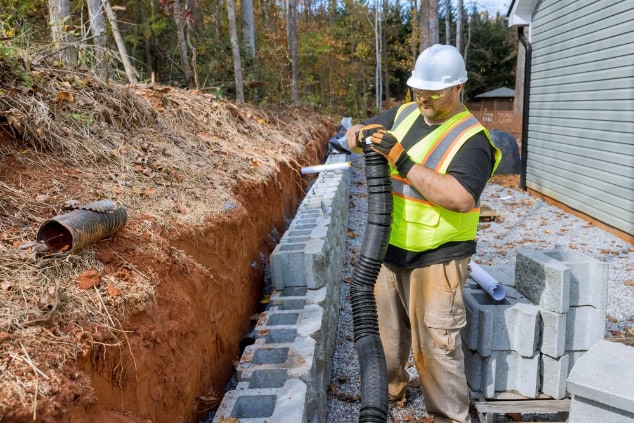
Once the assessment is complete, we recommend the right solution not the most expensive one available. Sometimes that’s a French drain installation with perforated pipe, gravel bed, and a defined outlet. Sometimes it’s targeted regrading to reestablish proper slope away from the foundation. Often it’s both, because on a pre-1960s Morton property, the grading has shifted and the original drainage infrastructure has long since worn out. Doing one without the other leaves half the problem in place.
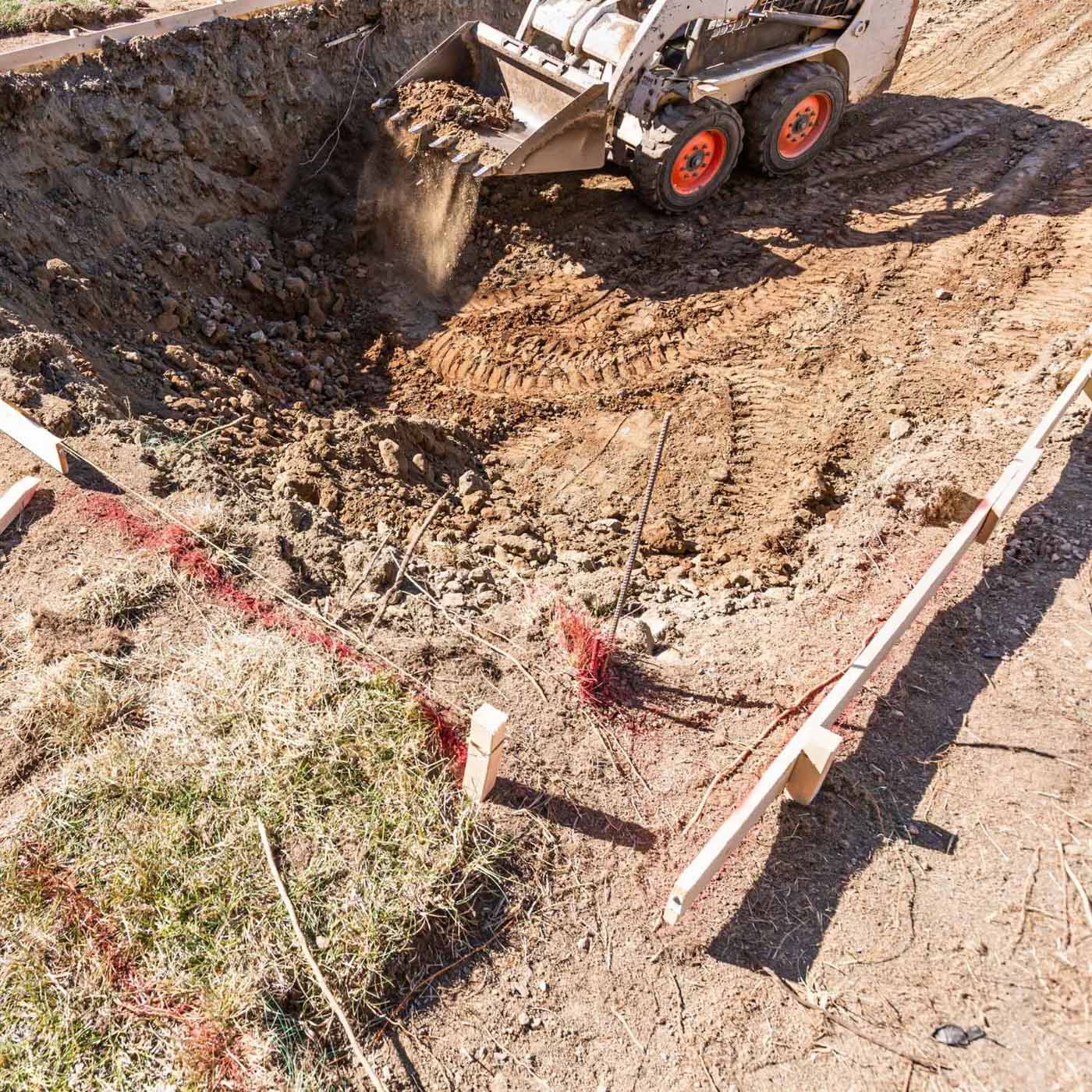
Installation is clean and efficient. We mark utilities before any digging starts. Our crew works to minimize disruption to the rest of your yard, and when the job is done, the site is left in order. No debris piles sitting for a week, no half-finished trenches. Delaware County winters don’t forgive poor planning, so every system we build is engineered to handle freeze-thaw cycling fully sloped pipe, quality gravel, sealed connections that won’t separate under frost pressure.

Ready to get started?
French drain installation in Morton isn’t a one-size-fits-all job. The lots here are small, the homes are old, and the soil in the Darby Creek watershed doesn’t absorb runoff the way a newer suburban development might. Every system we install is designed around those realities the specific dimensions of your property, the existing grade, the proximity to neighboring lots, and the most appropriate discharge point given Morton Borough’s stormwater compliance requirements.
A complete outdoor drainage system typically includes perforated pipe surrounded by a proper gravel bed, filter fabric to prevent soil migration, and a discharge point that moves water to the street or a defined outlet not toward a shared property line or a neighbor’s yard. Where grading is the underlying issue, we address that first, because no drain system performs correctly if the land isn’t sloped to direct water toward it in the first place. We handle both, as one integrated project, with one crew.
Costs for French drain installation in this region generally run in the $5,000–$9,250 range, depending on linear footage, soil conditions, and discharge complexity. That number looks different when you compare it to what foundation repair costs in the Philadelphia area typically $10,000 to $30,000 or more for damage that a properly installed drainage system prevents. For Morton homeowners with homes averaging around $367,000 in value, protecting that asset with the right outdoor drainage system isn’t optional. It’s just smart property management.

Morton sits in the Darby Creek watershed, where a significant portion of the soil is classified as easily eroded and doesn’t absorb water well under saturated conditions. Add to that the density of the borough over 7,700 people per square mile and you have a lot of impervious surface (driveways, rooftops, patios, sidewalks) generating runoff that has very little permeable ground to absorb it. When rain hits, it moves fast and pools quickly in low spots.
On top of that, most Morton homes were built before 1960, when residential grading standards were far less rigorous than they are today. Over the decades, property improvements like additions, widened driveways, and patios have added more impervious surface without any corresponding drainage upgrades. The result is a yard that was never designed to handle what it’s being asked to handle now. A proper drainage assessment will identify where the water is entering, where it’s pooling, and what combination of grading correction and drainage infrastructure will actually solve it not just manage it temporarily.
Regrading means reshaping the soil so that the land slopes away from your foundation and toward an appropriate outlet. It’s the foundation of any drainage solution if the grade isn’t right, water will always find its way back to the low spots near your house regardless of what else you install. French drain installation is a separate but complementary fix: a trench filled with gravel and perforated pipe that collects subsurface water and channels it to a defined discharge point.
On most Morton properties, the honest answer is that you need both. The original grading on pre-1960s homes has often shifted over decades of freeze-thaw cycles and settling. And the original drainage features if they existed at all are long past their useful life. Doing only one of these leaves part of the problem untouched. Regrading without a drain system means water still has nowhere to go once it reaches the low point. Installing a French drain on improperly graded land means the drain is fighting the slope instead of working with it. The most effective and lasting fix addresses both in the same project.
It does, though maybe not in the way most homeowners expect. Drainage isn’t a feature that shows up on a listing like a renovated kitchen or a new deck. What it does is remove a significant liability. Buyers in the Delaware County market and their home inspectors will flag standing water, foundation moisture, and poor grading as red flags that either kill a deal or reduce the offer. A property with a documented, properly installed drainage system is easier to sell and less likely to get beaten up in negotiation.
More directly, proper drainage protects the value you already have. Foundation repair in the Philadelphia region runs $10,000 to $30,000 or more. Basement mold remediation adds to that. Repeated landscape replacement on a soggy yard compounds the cost further. With Morton homes averaging around $367,000, you’re protecting a significant asset. The cost of a French drain installation typically in the $5,000 to $9,250 range is a fraction of what deferred drainage problems eventually cost, and it removes the conditions that lead to those much larger expenses.
It depends on the scope of the work. For most standard residential French drain installations that don’t involve significant earth disturbance or changes to stormwater discharge into the municipal system, a permit may not be required. However, Morton Borough is a member of the Eastern Delaware County Stormwater Collaborative and operates under an MS4 stormwater permit which means the borough has active regulatory obligations around how stormwater is managed and where it’s discharged. Any drainage work that affects neighboring properties or the municipal storm sewer system can attract borough-level attention.
The safest approach is to have your contractor assess the project scope before work begins and confirm whether a permit or notification is required for your specific situation. We handle permit coordination when it’s needed and ensure that every system is designed to discharge water appropriately to the street or a defined outlet rather than simply redirecting it in a way that creates a new compliance issue. If you’re unsure whether your planned project triggers any local requirements, that’s a good question to raise during the site assessment.
For a standard residential French drain installation, most projects are completed in one to two days. The timeline depends on the linear footage of pipe being installed, whether regrading is part of the scope, how accessible the work area is, and how complex the discharge situation is. On Morton’s compact lots, where working space is tighter than in more sprawling Delaware County suburbs, our crew works efficiently to minimize disruption to the rest of the yard.
Timing within the year also matters. Spring is the peak season for drainage work in Delaware County it’s when standing water problems are most visible and most urgent after the freeze-thaw cycle and early-season rains. If you’re dealing with a chronic problem, getting the work done in late spring or summer means the system is fully in place and tested before the following fall and winter. Scheduling earlier in the season also gives you more flexibility once spring inquiries peak in March and April, availability tightens quickly across the Delaware County market.
Yes, and it’s one of the more common scenarios on Morton’s older housing stock. When water consistently pools within several feet of a foundation wall, it creates hydrostatic pressure the weight and force of saturated soil pushing against the exterior of the foundation. On pre-1960s homes, which make up the majority of Morton’s residential properties, foundation materials and waterproofing methods weren’t built to handle sustained hydrostatic pressure the way modern construction is. Over time, that pressure leads to seepage, efflorescence on basement walls, minor cracking that worsens with each freeze-thaw cycle, and eventually structural issues that are expensive to repair.
The important distinction is that most of these problems start outside, not inside. A wet basement is usually a symptom of an outdoor drainage failure improper grading, inadequate runoff management, or a drainage system that’s no longer functioning. Addressing the exterior drainage first is almost always the right sequence. Interior basement waterproofing systems can manage water after it enters, but they don’t stop the hydrostatic pressure that causes the damage in the first place. Fixing the yard drainage and correcting the grade around the foundation is what actually removes the source of the problem.
Useful Links