
Hear from Our Customers

Standing water in your yard isn’t just annoying it’s a signal that something underneath isn’t working. In Colwyn, where most homes were built before World War II and the original grading has had 80-plus years to settle and shift, that signal shows up fast. Water that used to drain away from your foundation is now moving toward it. That’s not a cosmetic problem. That’s a foundation problem waiting to happen.
When you fix the drainage properly grade corrected, system installed, discharge point placed where the water actually needs to go you stop that cycle for good. No more swampy yard after every rain. No more wet basement smell every spring. No more watching your landscaping drown in a puddle that won’t dry out for days.
Colwyn’s dense lot layout makes this more urgent than in most surrounding towns. There’s very little permeable ground here. Rooftops, driveways, and paved alleys cover nearly every surface, and when rain falls, it runs off fast with nowhere to go. A drainage system that’s properly designed for that kind of runoff pressure is the difference between a yard that drains and a yard that floods every single storm.
We’re based in Aston, PA and have been working across Delaware County for over 15 years. That’s not a number we throw out to sound impressive it means we’ve worked through multiple wet springs, heavy storm seasons, and freeze-thaw cycles across communities just like Colwyn. We know what Delaware County soil does under pressure. We know how older borough properties in Colwyn drain, and more often, how they don’t.
Colwyn’s position in the Darby Creek watershed puts it in a different category than most of the county. The Delaware County Conservation District has formally documented flooding and stormwater problems across this watershed going back generations. We understand that context, and we factor it into how we approach every project here.
You’ll deal with one crew from the first visit to the final cleanup. No subcontractors, no handoffs, no wondering who’s showing up.

It starts with a site assessment not a sales pitch. We walk the property, read the grade, identify where water is entering and where it has nowhere to go. On a Colwyn lot, that assessment matters more than most. Small parcels with tight setbacks and aging infrastructure don’t leave much room for error, and the wrong drainage solution on a property like this can push water onto a neighbor’s yard or into the borough’s already-stressed storm sewer system. Colwyn Borough has an active Stormwater Management Ordinance and holds an NPDES MS4 permit drainage work here needs to be done right, not just done.
Once we understand what the property is doing, we design a solution around it. That might mean regrading to correct slope and redirect surface runoff. It might mean a French drain installation in Colwyn to intercept subsurface water before it reaches your foundation. Often it’s both because surface grading and subsurface drainage have to work together, or neither one works well.
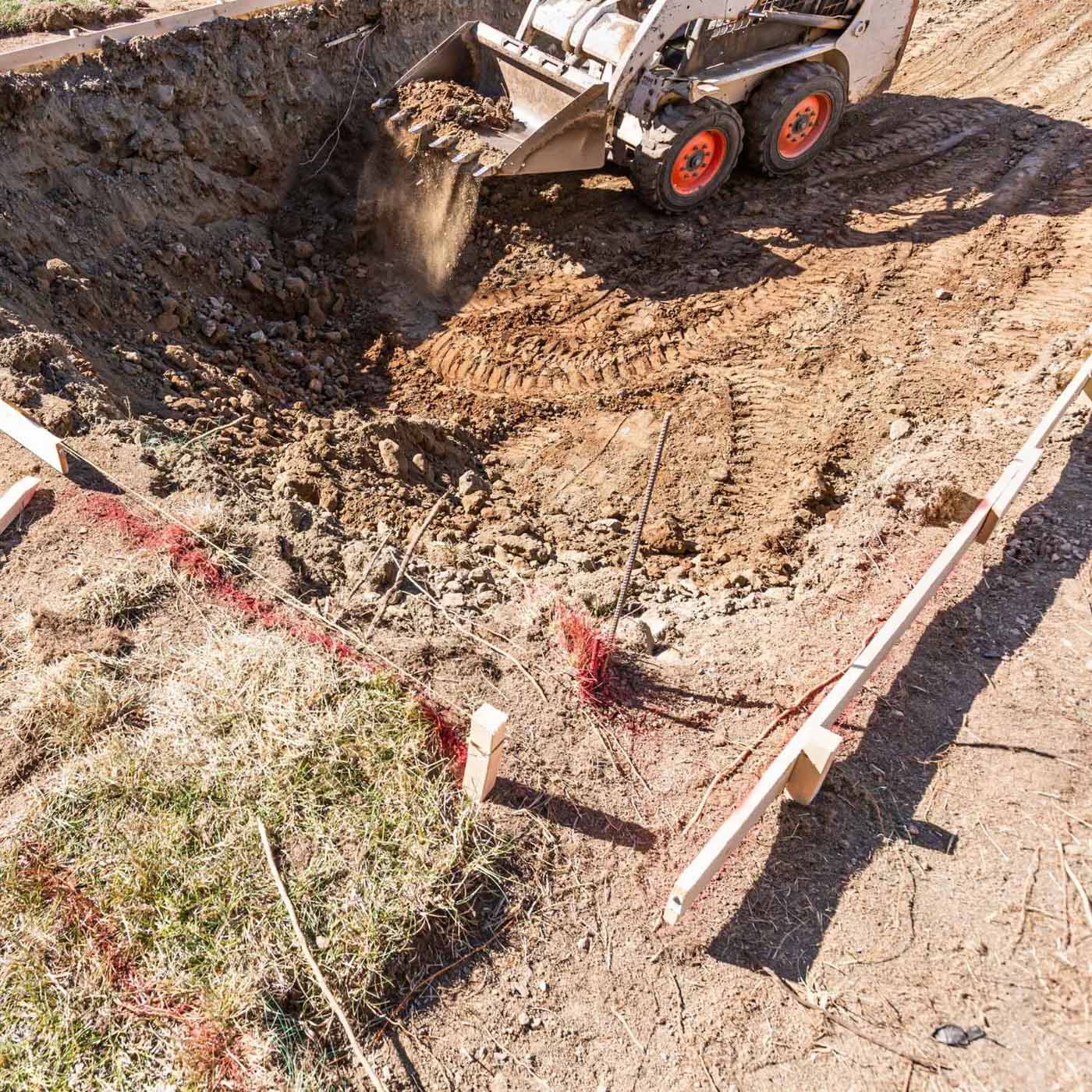
Installation is straightforward from there. We excavate, place the system, backfill, and restore the disturbed area. On a small Colwyn lot, we take the cleanup seriously you shouldn’t be left with a torn-up yard after the job is done.
Ready to get started?
Every drainage project we take on in Colwyn starts with grading. That’s not optional it’s the foundation of everything else. If the slope around your home is directing water toward the foundation instead of away from it, no drain system in the world will fully compensate for that. We correct the grade first, then we build the drainage system on top of a surface that’s actually working in your favor.
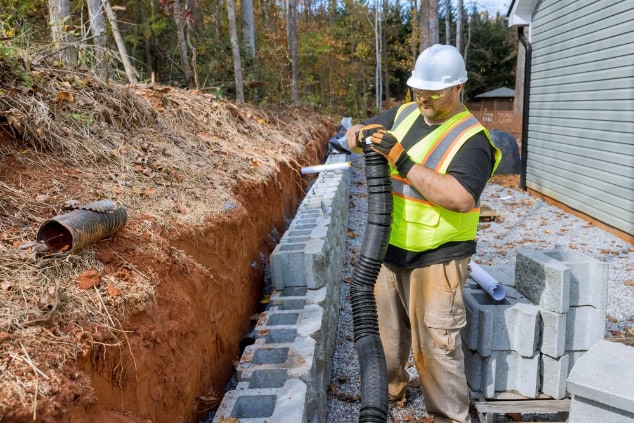
From there, the solution depends on what your property needs. French drain installation in Colwyn, PA is one of the most common fixes for subsurface water a perforated pipe bedded in gravel that intercepts groundwater and redirects it away from your home. Surface channel drains handle concentrated runoff from driveways, patios, and low spots. Downspout extensions and pop-up emitters manage roof runoff that would otherwise dump directly against your foundation. We also handle retaining walls and hardscape modifications when the drainage issue is tied to a grade change or landscape structure.
If your property sits in or near Colwyn’s FEMA-designated Zone A floodplain, we factor that into the design from the start. Properties near Darby Creek and Cobbs Creek face a different level of water pressure during significant rain events, and the solution has to be sized accordingly not undersized for a dry-weather estimate.

Colwyn is one of the most densely covered boroughs in Delaware County nearly every surface is a roof, a driveway, or a paved alley. When rain falls, there’s almost no permeable ground left to absorb it. That water moves fast, and it moves toward the lowest point it can find. If that lowest point happens to be your yard, your window well, or the soil against your foundation, you’ll see flooding from storms that wouldn’t cause a problem on a larger, more open lot.
There’s also the age factor. Most homes in Colwyn were built before World War II, and the original grading around those foundations has had decades to settle. What was once a slope that directed water away from the house may now be nearly flat or worse, slightly tilted toward it. That’s a common finding on pre-1950 properties throughout the borough, and it’s one of the first things we look for during a site assessment.
A French drain is a buried system a perforated pipe wrapped in filter fabric and surrounded by gravel that intercepts water moving through the soil and redirects it away from your home or toward a designated discharge point. It’s one of the most effective tools for dealing with subsurface water that’s saturating your yard or seeping into your basement from below grade.
Whether it’s the right fix for your specific situation depends on where the water is coming from. If the problem is surface runoff pooling in a low spot, a French drain alone may not solve it you’d also need grading work or a surface channel drain to address what’s happening above ground. That’s why we assess before we recommend. A lot of homeowners in Delaware County have paid for a French drain installation that didn’t fully work because the grading issue driving the problem was never addressed. We look at both together, because that’s the only way to get a result that lasts.
It depends on the scope of the work. Colwyn Borough has an active Stormwater Management Ordinance and holds an NPDES MS4 permit through the Pennsylvania DEP. For drainage projects that significantly alter how runoff leaves your property or that involve substantial grading or changes to impervious coverage there may be borough-level requirements that apply. The borough is also part of the Eastern Delaware County Stormwater Collaborative, which means there’s a regional layer of stormwater oversight in addition to local code.
For most residential drainage projects, permitting requirements are straightforward, but they shouldn’t be ignored. Work that redirects water improperly onto a neighboring property or into the storm sewer in a way that exceeds its capacity can result in complaints or violations down the road. We evaluate permit requirements as part of the project planning process so you’re not caught off guard after the work is done.
Cost depends heavily on what the property actually needs. A basic French drain installation in Delaware County for a single problem area might run in the range of $2,500 to $5,000. A more comprehensive project that includes grading corrections, multiple drain runs, surface channels, and proper discharge points can reach $7,000 to $12,000 or more depending on lot size, access, and the complexity of the water problem.
For Colwyn specifically, the tight lot sizes and older housing stock can affect cost in both directions. Smaller lots mean less linear footage of drain pipe in some cases, but the precision required on a narrow urban parcel where the discharge point has to be carefully placed to avoid affecting neighboring properties adds time and planning to the project. The most useful thing we can tell you about cost is this: a properly installed drainage system is a fraction of what foundation repair or basement mold remediation costs in the Philadelphia region. Getting it right the first time is the better investment.
Colwyn Borough sits at the confluence of Darby Creek and Cobbs Creek, and portions of the borough carry a formal FEMA Zone A designation Area of Special Flood Hazard based on the Flood Insurance Study dated November 18, 2009. Properties within or near that mapped zone face a higher baseline risk during significant storm events, and the risk is real. The Delaware County Conservation District has formally documented that the Darby Creek watershed has been plagued by flooding due to overdevelopment and failed stormwater controls going back generations.
Even if your specific property isn’t within the mapped floodplain boundary, Colwyn’s watershed position means that heavy rain events put pressure on the entire borough’s drainage infrastructure not just the properties closest to the creek banks. A drainage system that’s sized and designed for that level of runoff pressure will perform very differently than one designed for a dry suburban lot. If you’re not sure whether your property falls within the floodplain, the FEMA Flood Map Service Center lets you check your address directly.
The honest answer is that you usually need both and the order matters. Grading determines where water flows across the surface of your property. If the slope around your foundation is flat or negative, water will pool against the house regardless of what drainage infrastructure you install underground. Fixing the grade first gives the drainage system something to work with. Installing a drain system without correcting the grade is like bailing out a boat without plugging the hole.
On older Colwyn properties, grading problems are especially common because the original slopes have had 80-plus years to shift. Soil settles, landscaping gets added and removed, and what was once a functional grade becomes a liability. During our site assessment, we read the existing slope, identify where water is entering the problem area, and determine whether the fix is primarily a grading issue, a drainage infrastructure issue, or a combination of both. That assessment is what drives the recommendation not a standard package we apply to every yard we walk.
Useful Links