
Hear from Our Customers

Most homeowners don’t think about grading until they’re watching water pool against their foundation after a hard spring rain. In Media, that’s not a rare scenario. The borough sits within the Crum Creek watershed, and the clay-heavy soils throughout central Delaware County hold water instead of draining it. A yard that looks level can still be routing runoff directly toward your house. Proper excavation and grading changes that and it changes it permanently.
When the grade is right and the drainage is planned from the start, you stop fighting the same problems every season. Basements stay dry. Retaining walls hold. Patios don’t shift and crack because the base was never properly prepared. For Media homeowners investing in outdoor living improvements and in a borough where homes range well into the $700s, that investment is real getting the site work right is what makes everything built on top of it last.
Media’s housing stock is predominantly Victorian-era and early 20th century. Many of these properties have never had their original grading properly addressed. Settled soil, eroded slopes, and drainage systems that were designed for a different era are common conditions in the borough’s older neighborhoods. Correcting those conditions isn’t just a cosmetic improvement it protects the structural integrity of a home that may be 100 years old or more.
We’re based in Aston about 10 to 15 minutes from Media via Baltimore Pike. This isn’t a regional company dispatching crews from an hour away. We’re a Delaware County operation that has been working the same soils, navigating the same permit offices, and serving the same type of residential properties you have in Media and throughout the surrounding area.
Out of more than 125,000 licensed Pennsylvania contractors, we hold a BuildZoom score of 102 placing us in the top 11% statewide. That’s a third-party ranking based on verified license status, project history, and review quality. You can look it up yourself.
What separates us from the excavation-only companies serving Media is straightforward: the same crew that digs your site can also build the retaining wall, install the patio, and finish the outdoor space. No handoffs. No coordination gaps. One team that knows your property from the first shovel to the last stone.
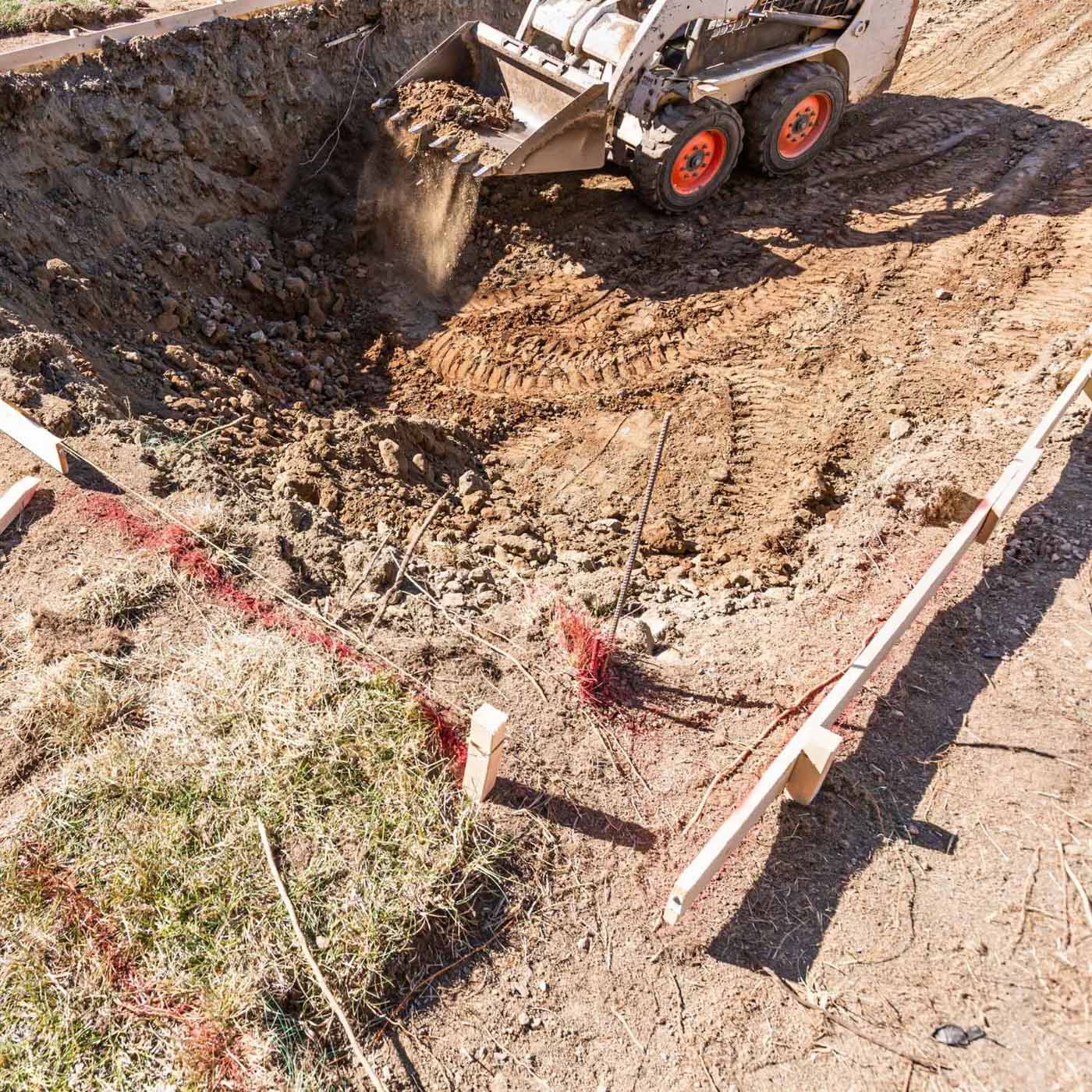
It starts with a site visit, not a phone estimate. Media Borough lots are compact some of the smallest in Delaware County at roughly 0.8 square miles total and the only way to understand what your property actually needs is to walk it. During that visit, we look at existing grade, drainage patterns, soil conditions, equipment access via your street, and anything that affects how the work gets done. If your property falls within one of Media’s three designated historic districts Courthouse Square, Lemon Street, or the Providence Friends’ Meeting House District that’s also flagged early, because exterior work visible from a public way requires a Certificate of Appropriateness from the Historic Architectural Review Board before anything starts. Most contractors working in Media don’t know that. Getting caught without it after work has begun is a problem you don’t want.
Once the scope is clear, we handle permitting before equipment arrives. Pennsylvania’s 811 utility marking law requires all underground lines to be located before any digging begins in a built-out borough like Media, where infrastructure is dense and sometimes decades old, that step is non-negotiable. The excavation itself is planned around the finished outcome: proper slope away from foundations, compacted base layers suited to Delaware County’s clay soil behavior, and drainage routing that accounts for how this specific property handles water. When the dig is done, the site is left clean not because it’s a nice gesture, but because Media’s residential streets don’t have room for a construction mess that lingers.
If the project continues into a retaining wall, patio, or full outdoor living build, the same crew carries it through. The excavation was planned with that finished project in mind from day one.
Ready to get started?
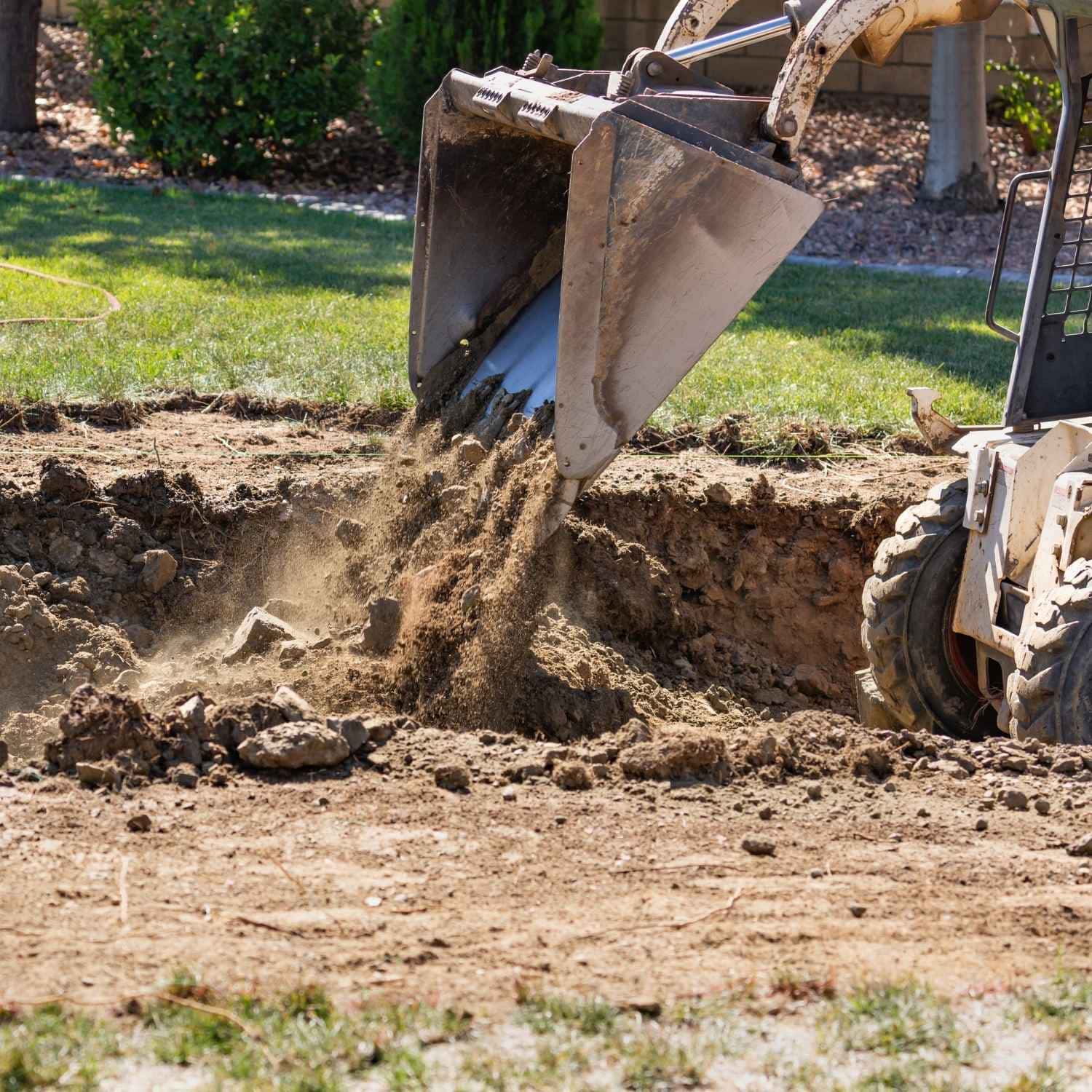
The excavation work we do in Media covers the full range of residential site needs: yard regrading for drainage correction, site preparation for patios, retaining walls, and outdoor living structures, foundation-adjacent digging for additions, land clearing, and slope stabilization. Our fleet includes bulldozers, excavators, and loaders sized for residential-scale work on the kind of compact borough lots that Media’s neighborhoods are built on. Bringing oversized equipment onto a narrow residential street in Media isn’t just inconvenient it damages curbs, disrupts neighbors, and creates liability. Equipment selection here is a judgment call that comes from local experience.
For homeowners in the 19063 ZIP code, it’s worth knowing that your mailing address may place you in Media Borough, Upper Providence Township, or Nether Providence Township and the governing authority, permit requirements, and applicable ordinances differ depending on which side of the line your property sits on. Our familiarity with Delaware County’s municipal landscape means that distinction gets sorted out before work begins, not after.
Every project includes drainage planning, soil and terrain analysis, and a clear scope before equipment arrives. For homeowners whose projects extend beyond excavation into hardscape and outdoor living, we carry the work through to completion retaining walls, patio installation, walkways, outdoor kitchens without handing the job off to a second contractor who wasn’t there for the site prep.

In most cases, yes. Any excavation or grading that materially changes existing drainage patterns or runoff characteristics requires a permit in Delaware County municipalities. Media Borough operates under its own ordinances, and the general rule is that work affecting grade or stormwater flow needs to be permitted before it starts. Small-scale gardening or minor work that doesn’t change runoff may be exempt, but anything involving a significant dig, slope correction, or site preparation for a structure typically requires approval.
There’s also an additional layer in Media that most contractors aren’t aware of. If your property falls within one of the borough’s three designated historic districts Courthouse Square, Lemon Street, or the Providence Friends’ Meeting House District any exterior alteration visible from a public way requires a Certificate of Appropriateness from the Historic Architectural Review Board before work can begin. This applies on top of standard building permits. A contractor who doesn’t flag this early can put you in a compliance situation that’s expensive and time-consuming to resolve.
Nationally, residential excavation averages around $3,975 per project, with a typical range of roughly $1,600 to $6,700 depending on scope, soil conditions, depth, and what the site requires. In the Philadelphia suburban market which includes Media and the surrounding Delaware County area labor and material costs run approximately 15 to 25 percent higher than rural Pennsylvania rates. That means your realistic range for a residential excavation project in this area sits closer to $2,000 on the low end for straightforward grading work, and well above $6,000 for more complex site preparation involving significant depth, tight access, or drainage infrastructure.
The biggest cost variables are soil type and site conditions. Delaware County’s clay-heavy soils are denser and harder to move than sandy or loamy ground, which affects both labor time and equipment requirements. Tight lot access common on Media Borough’s residential streets can also add to the cost if equipment has to be repositioned or if hand work is needed in areas a machine can’t reach. The most reliable way to understand what your specific project will cost is a site visit and a written estimate based on what’s actually there.
Excavation refers to the actual removal of soil digging down to create a foundation, clear a site, or make room for a structure. Grading is the process of shaping and leveling the remaining soil to achieve a specific slope or drainage pattern. They’re related, but they’re not the same thing, and most residential projects in Media require both.
Here’s why that matters specifically for properties in this area: Media’s older housing stock much of it Victorian-era, built over 100 or more years ago often sits on ground that has settled, eroded, or shifted over time. The original grading may have been adequate when the home was built, but decades of soil movement, root growth, and drainage changes have altered how water moves across the property. Simply excavating without correcting the grade leaves the drainage problem in place. And in a watershed like Crum Creek, where heavy spring rain events are a recurring reality for Delaware County homeowners, drainage that isn’t properly addressed tends to show itself quickly. The right approach plans excavation and grading together, with the finished drainage outcome driving both.
Clay soil is the dominant soil type throughout central Delaware County, and it behaves differently from the sandy or loamy soils you’d find in other parts of Pennsylvania. Clay holds water instead of draining it. It compacts under load in ways that can shift a patio base or destabilize a retaining wall over time. And it expands and contracts with moisture changes, which means a base layer that was compacted correctly in dry conditions can behave differently after a wet spring.
For excavation and grading work in Media, this means the process has to account for soil behavior not just visual grade. Proper compaction technique, appropriate base material selection, and drainage routing that accounts for how clay soils actually move water are all part of doing this work correctly in Delaware County. A contractor who treats Media’s soil the same way they’d treat a sandy New Jersey lot is setting up the finished project to fail. Local experience with these specific soil conditions isn’t a nice-to-have it’s what determines whether the work holds up over time.
Spring roughly March through May is the peak demand window for excavation and site preparation in Media and throughout Delaware County. Homeowners are planning outdoor living projects, and our schedules fill quickly once the ground thaws. If you’re planning a patio, retaining wall, or any outdoor build that requires site prep, getting your estimate and scheduling done in late winter gives you the best chance at a spring start date.
Fall particularly September and October is actually an excellent time for grading and drainage correction work. The ground is still workable, the soil is typically drier than spring conditions, and compaction results tend to be more stable before winter freeze sets in. We often offer more flexible scheduling in the fall shoulder season as well. Winter excavation is possible but significantly more expensive frozen ground increases equipment wear and labor time, and compaction in cold conditions is harder to achieve correctly. If your project isn’t urgent, avoiding a winter start date is generally the right call for both cost and quality reasons.
Yes and for most Media homeowners, that’s the better approach. When excavation and the finished hardscape are handled by the same crew, the site prep is planned with the finished project in mind from the start. The depth, base material, compaction method, and drainage routing are all calibrated for what’s being built on top, not handed off to a second contractor who may have done things differently if they’d been there from the beginning.
The practical risk of splitting the work is coordination gaps. If your excavation contractor leaves a base that isn’t properly prepared for the retaining wall or patio going in next, the second contractor either has to redo work or build on a compromised foundation. On compact Media Borough lots where there isn’t a lot of margin for error and neighboring properties are close those gaps tend to show up as drainage problems, wall movement, or surface cracking within a few seasons. We handle excavation, grading, retaining walls, patios, walkways, and outdoor living construction as a single-team scope. The same crew that prepares your site finishes it, which means accountability runs through the entire project, not just one phase of it.
Useful Links