

Hear from Our Customers

Standing water isn’t just an eyesore. In Sharon Hill, where most homes were built between 1940 and 1969 and lots run tight against one another, water that doesn’t drain has nowhere to go except toward your foundation. That’s when a soggy yard becomes a wet basement, and a wet basement becomes a mold problem, and a mold problem becomes a repair bill that dwarfs what it would have cost to fix the drainage in the first place.
What a properly graded and drained yard actually gives you is control. Water moves away from your home, your foundation stays dry, and your outdoor space is usable again not just after a dry week, but after a real storm. For Sharon Hill homeowners who are actively investing in their properties, that kind of reliability is the whole point.
Delaware County’s freeze-thaw winters add another layer to this. Systems that aren’t installed with the right materials and slope don’t just underperform they fail. Ice expands in poorly bedded pipe joints, frost heave shifts drainage channels off grade, and by spring you’re dealing with the same flooding plus a damaged system underneath it. Getting it done right the first time isn’t a premium it’s the only version that holds up here.
We’re based in Aston, PA connected to Sharon Hill by the same Chester Pike corridor that runs through the heart of your borough. We’re not a regional chain dispatching crews from a distant office. We’re a Delaware County operation that has worked on properties throughout this inner-ring corridor for over 15 years, including the dense row homes and single-family houses that make up most of Sharon Hill’s residential streets.
When our crew shows up, we’re the same team from the initial assessment through final cleanup. There’s no subcontractor handoff, no miscommunication between crews, and no moment where you’re trying to figure out who’s actually responsible for the work. Every project from a targeted regrading job to a full French drain installation gets the same level of attention from start to finish.
That consistency matters in Sharon Hill, where your drainage problem can quickly become your neighbor’s drainage problem. The borough’s compact lots don’t leave much room for error, and we don’t take shortcuts that create new issues down the line.

It starts with a site assessment. Before any equipment touches your yard, we walk the property and read how water is actually moving across it where it’s coming from, where it’s pooling, and why the current grade isn’t directing it away from your home. This step is what separates a real fix from a temporary one. A lot of drainage problems in Sharon Hill aren’t just about missing pipe they’re about land that was graded for a 1955 landscape and hasn’t been corrected since.
Once we understand what’s happening, we recommend the solution that actually fits the problem. That might be a French drain installation, a catch basin at a low point, targeted regrading, a dry well for roof runoff, or some combination. We’ll tell you what you need and just as importantly, what you don’t. Sharon Hill Borough requires permits for drainage work that involves altering or replacing drainage piping, and we handle that coordination as part of the project. You won’t be left figuring out the borough’s permit process on your own.
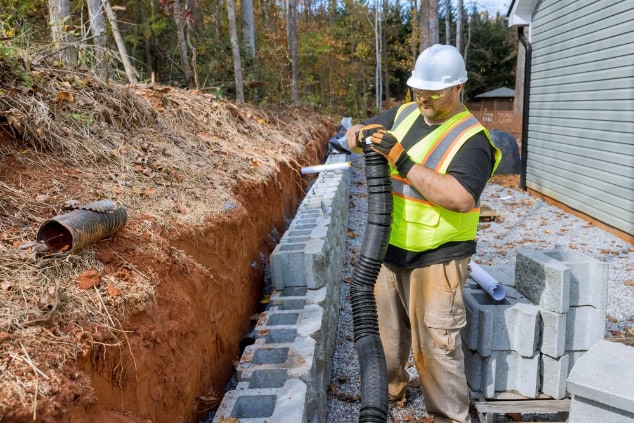
Installation is clean and methodical. We trench, bed, and slope the system correctly for Pennsylvania’s climate not just for the dry season. When the work is done, we restore your yard. You’re left with a functioning outdoor drainage system and a property that handles rain the way it should have all along.
Ready to get started?
Sharon Hill’s residential properties come with a specific set of challenges that a generic drainage approach won’t solve. Lots are small. Homes are old. The original grading on most of these properties was done decades ago before concrete patios, extended driveways, and basement conversions changed how water moves across the land. And Sharon Hill Borough’s own stormwater ordinances (§ 316-40 and § 298-33) restrict where water can be discharged, which means the system has to be designed to manage runoff on-site, not just push it toward the street or a sewer connection.
The outdoor drainage systems we install are designed around those realities. French drains are sloped and bedded for Pennsylvania’s freeze-thaw cycles, not just for summer rain. Catch basins are placed at the actual low points of your property, not wherever is easiest to trench. Dry wells and daylight outlets are positioned to meet borough discharge requirements while keeping water moving away from your foundation and your neighbor’s property line.
Every job also includes grading evaluation as a baseline because installing drainage infrastructure on land that’s still sloped toward the house just moves the problem underground. If your grade needs correction before a drain goes in, we’ll tell you that upfront. The goal is a yard that drains correctly in February and in July, not just when conditions are ideal.
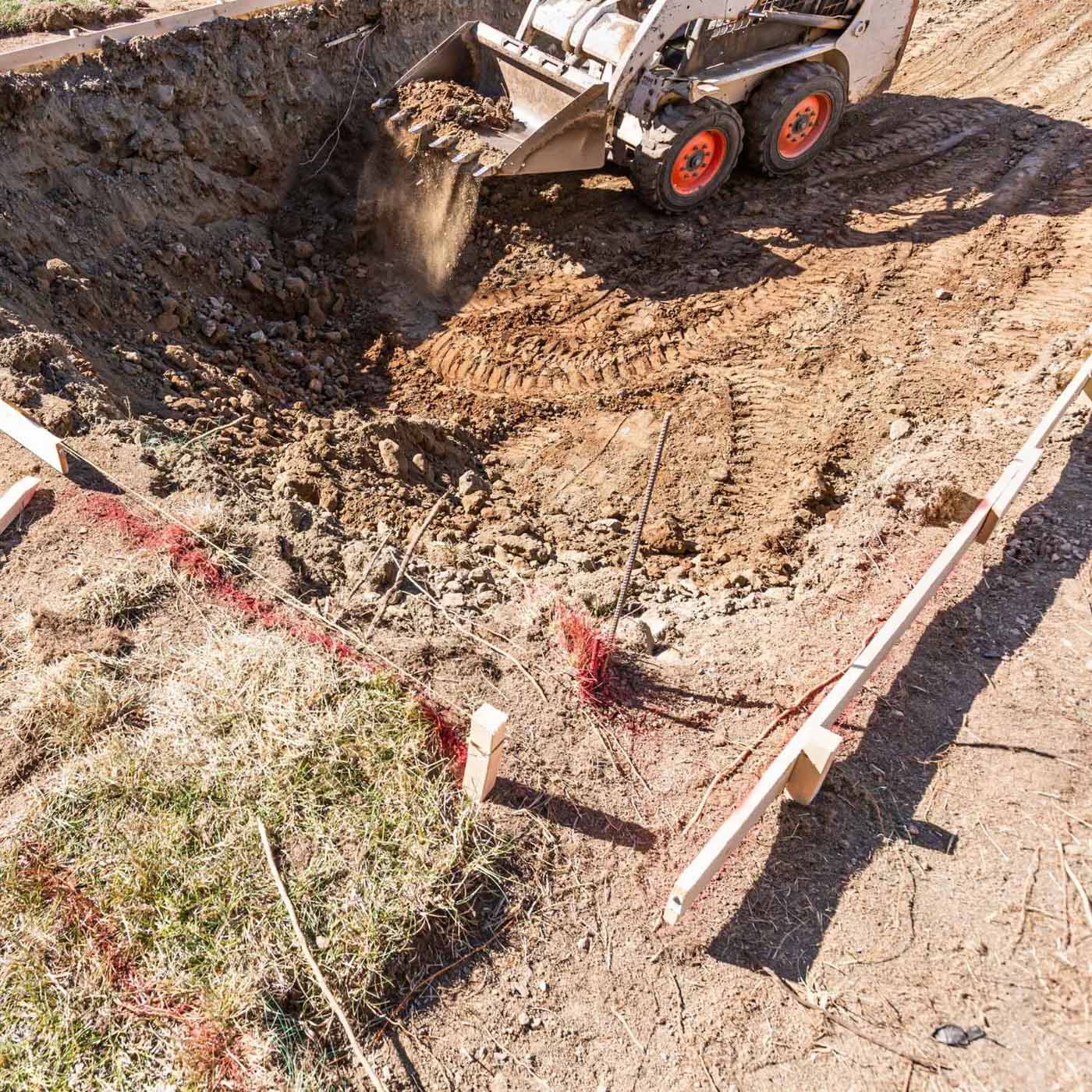
The honest answer is that most properties need both evaluated before you commit to either. Regrading corrects the slope of the land so water naturally flows away from your home and toward a safe discharge point. A French drain intercepts water that’s already moving underground or pooling at a specific low point and redirects it. In Sharon Hill, where most homes were built between 1940 and 1969, the original grading has often been disrupted by decades of small changes a concrete patio added in the 80s, a driveway extension, soil settling around the foundation. These shifts can make a yard that once drained fine hold water now.
A site assessment will tell you which problem you’re actually dealing with. Sometimes regrading alone solves it. Sometimes a French drain is the right tool. Sometimes the grade needs to be corrected first so the drain has somewhere useful to send the water. We won’t recommend a $9,000 system if a targeted regrade is what the property actually needs.
French drain installation generally runs between $5,000 and $9,250 for a residential property, with a full range of $500 to $18,000 or more depending on the length of the system, the complexity of the drainage path, and what the discharge point requires. Cost is typically calculated per linear foot somewhere between $10 and $100 per foot and labor makes up the large majority of that total, usually 80 to 85 percent.
In Sharon Hill specifically, a few factors can affect where your project lands in that range. Small, dense lots often mean shorter drain runs, which can keep costs lower. But older properties sometimes have buried obstacles original drainage pipe, utility lines, concrete footings from past additions that add time and complexity to the excavation. The most accurate number comes after a site visit, not a phone estimate.
Yes, in most cases. Sharon Hill Borough requires permits for any work that involves the addition, alteration, replacement, or relocation of drainage piping on a residential property. Plumbing permits for drainage work typically process within one to three business days. General building permits can take up to 15 business days, so timing matters if you’re working around a specific season or weather window.
Beyond the permit itself, Sharon Hill’s stormwater ordinances have specific rules about where water can be discharged. Borough ordinance § 316-40 prohibits connecting roof drains to streets or sewers, and § 298-33 prohibits discharging stormwater into the sanitary sewer system. That means your drainage solution has to manage water on your property directing it to a dry well, a daylight outlet, or appropriate stormwater infrastructure not just push it off your lot into the municipal system. A contractor who isn’t familiar with these requirements can create code violations that become your problem after the job is done. We handle permit coordination as part of every project.
Yes and the math makes a strong case for acting sooner rather than later. Foundation repair for serious water intrusion issues typically runs $10,000 to $30,000 or more, depending on the extent of the damage. A properly installed drainage system that prevents that intrusion costs a fraction of that. The connection is direct: water that pools within 10 feet of a foundation creates hydrostatic pressure against the wall. Over time, that pressure leads to basement seepage, wall cracks, mold, and eventually structural issues.
In Sharon Hill’s older housing stock, this risk is compounded by the fact that many homes were built with minimal foundation waterproofing by today’s standards. The original builders assumed the grading of the land would do the work and for a while, it did. But 60 to 80 years of soil settling, impervious surface additions, and aging infrastructure have changed how water moves on these properties. Correcting the drainage now is genuinely protective, not cosmetic.
It’s one of the more important questions to ask, and most homeowners don’t think to raise it until after a bad winter. Delaware County averages January lows around 25.5°F, which means drainage systems go through repeated freeze-thaw cycles every year. Pipe that’s installed without adequate slope holds standing water, which freezes, expands, and can crack the pipe or push it off grade. Poorly bedded gravel allows frost heave to shift the system over time. By spring, you may have a drain that’s technically in the ground but no longer functioning correctly.
The way to avoid this is proper installation from the start correct slope so water doesn’t sit in the pipe, appropriate pipe bedding and depth for the local frost line, and quality materials rated for Pennsylvania’s climate. We install drainage systems designed to hold up through Delaware County winters, not just to look right in September. If a system is going to be in the ground for 20 years, it needs to work in February, not just May.
In a borough as compact as Sharon Hill, yes and it can create more than just a neighborly dispute. When drainage on a small lot isn’t managed correctly, water that pools on your property eventually finds a path of least resistance, which is often the property line. If that runoff is consistently discharging onto a neighboring lot, it can create a municipal code issue under Sharon Hill’s stormwater ordinances, not just a personal conflict.
This is one of the reasons the borough’s ordinances are specific about on-site water management. The expectation is that stormwater generated on your property stays on your property directed to appropriate infiltration or discharge points, not pushed off the edge of your lot. In practical terms, this means drainage solutions in Sharon Hill need to be designed with the full water pathway in mind, from where it enters your property to where it safely exits. A system that just moves water to your property line isn’t a solution it’s a shifted problem. We design around your lot’s boundaries and the borough’s discharge requirements from the start.
Useful Links
Other Services we provide in Sharon Hill