
Hear from Our Customers

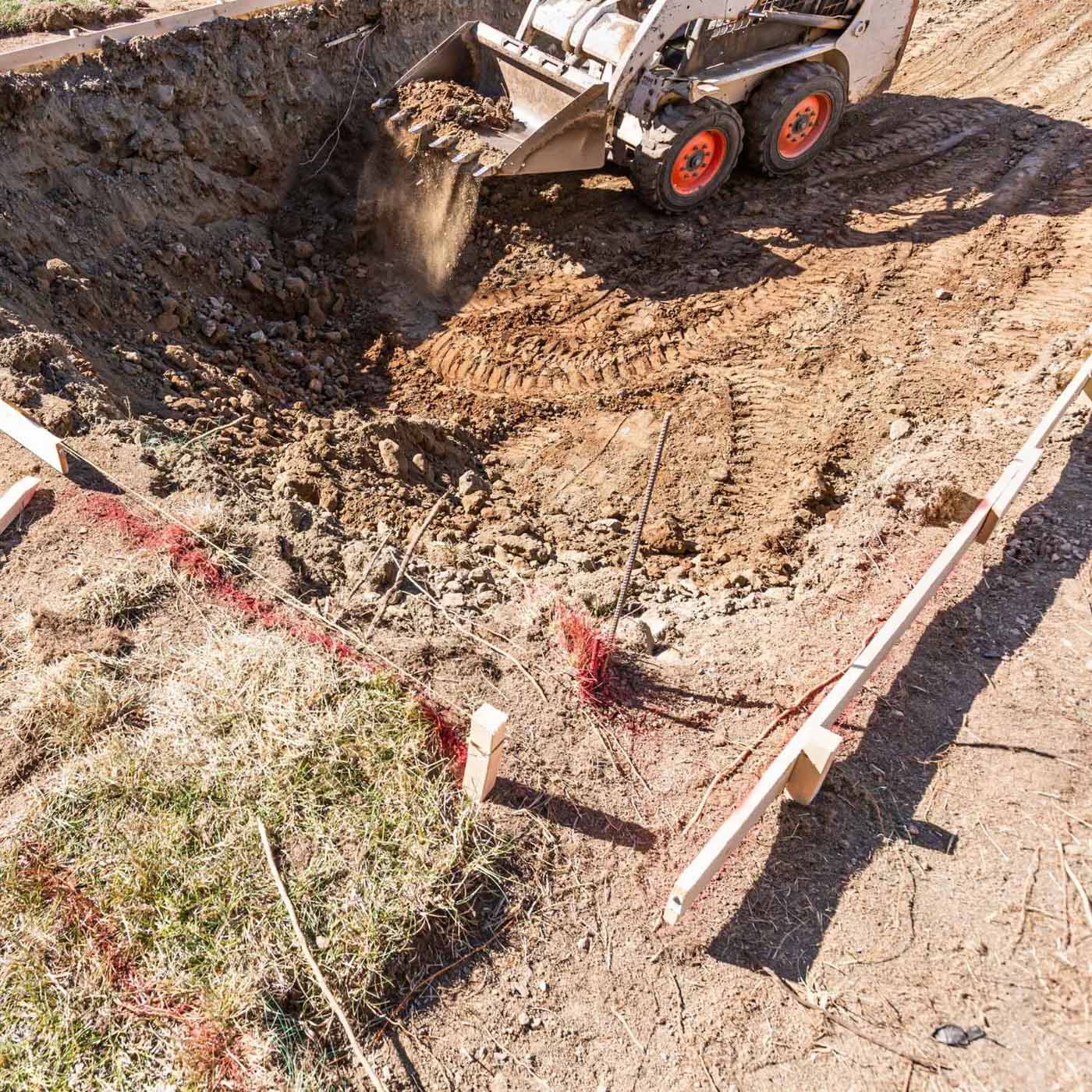
Standing water on a one-to-three-acre lot in Chadds Ford isn’t just an eyesore. It’s pressure building against your foundation, soil eroding under your lawn, and a landscape investment slowly being undone every time it rains. When that water finally has somewhere to go, the difference shows up fast dry lawn after storms, stable soil on your slopes, and a yard that looks and functions the way it should.
Chadds Ford’s terrain is part of what makes it worth living here. But those same rolling hills that define the Brandywine Valley mean water doesn’t sit still it moves, and it moves toward the lowest point on your property. If that lowest point happens to be near your foundation, your patio, or a section of lawn you’ve spent years maintaining, you feel it every spring. Clay-heavy soil makes it worse. Water that can’t percolate just pools, and pooling water on a property this size creates problems that surface grading alone won’t fix.
A properly installed outdoor drainage system in Chadds Ford one that accounts for your slope, your soil, and where water actually enters your property gives you a yard that drains cleanly and holds up through Pennsylvania’s wet springs and heavy summer storms. That’s the outcome. Not just dry grass, but a protected asset.
We’ve been working Delaware County properties for over 15 years, with our base in Aston, PA about 15 minutes from Chadds Ford on Route 1. That proximity means we’re not a crew driving in from outside the region to figure out your yard. The terrain here, the soil conditions, the seasonal drainage patterns along the Brandywine Valley corridor it’s all familiar ground to us because we work it regularly.
What sets our work apart is the model. One crew handles everything from the initial site walk to the final grade. No subcontractors, no handoffs, no situation where the person who assessed your property has nothing to do with the crew doing the digging. On a property in Chadds Ford where the landscaping is an investment in its own right that kind of accountability matters.
Grading and drainage get handled together, not as two separate scopes. That matters because one without the other rarely solves the problem completely.
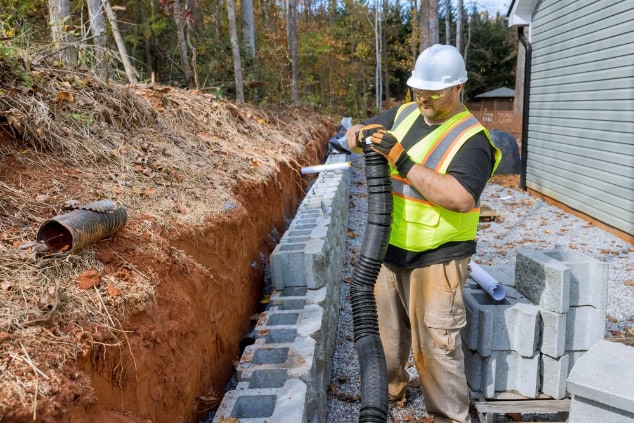
It starts with a site assessment a real walk of your property, not a quote over the phone. The goal is to understand where water enters, how it moves across your lot, and where it needs to go. On a one-to-three-acre Chadds Ford property, that picture is more complex than it is on a quarter-acre suburban lot. Slopes feed into each other, natural swales carry water in unexpected directions, and downspout discharge points can compound what’s already a challenging drainage pattern.
From there, we design the right solution around what your property actually needs. Sometimes that’s a French drain installation. Sometimes it’s regrading to redirect flow before any pipe goes in the ground. Often it’s both working together grading to establish proper slope, drainage infrastructure to move water off the property cleanly. Because Chadds Ford Township’s stormwater ordinance requires a permit when grading disturbs more than 5,000 square feet or creates 500 or more square feet of new impervious coverage, we handle permit compliance as part of the project not left for you to sort out after the fact.
Installation follows with the same crew that walked the property and designed the system. Once the work is done, we restore the disturbed areas. You’re not left with a trench across your lawn and a pile of excavated soil to deal with.

Ready to get started?
The drainage work we do on a Chadds Ford property has to account for a few things that don’t apply everywhere. The lots are large, the terrain rolls, the soil holds water, and the winters here run freeze-thaw cycles that will destroy a poorly installed system within a few seasons. Our installations are built to handle all of it proper pipe grade, the right gravel bed, materials selected for Pennsylvania’s climate, and discharge points that comply with the township’s stormwater requirements and the water quality standards tied to the Brandywine Creek watershed.
French drain installation in Chadds Ford on a property like yours typically involves more than just trenching and pipe. It means assessing how multiple drainage components catch basins, outlet points, graded swales need to work together across a larger area. Downspout tie-ins, surface inlets, and connection to existing drainage infrastructure all factor into the design. Our goal is a system that handles both routine spring rains and the kind of heavy storm events that the Brandywine Valley sees when major weather moves through.
Grading and drainage get scoped together when both are needed, so the finished grade supports the system and the system handles what the grade directs toward it. If you’re in a newer subdivision like The Enclave where drainage patterns are still establishing themselves, or on an older estate property where the original drainage infrastructure is decades past its useful life, the assessment will tell you exactly what you’re working with and what the right fix looks like.

It depends on the scope, but the threshold gets reached more often than most homeowners expect. Chadds Ford Township’s stormwater management ordinance updated in May 2024 requires a Grading/Stormwater Management permit when a project creates 500 square feet or more of new impervious coverage, or when grading disturbs more than 5,000 square feet of land. On a one-to-three-acre property, a drainage installation that involves significant excavation or regrading can hit that threshold without much trouble.
The permit process also ties into the township’s NPDES requirements, meaning drainage discharge has to meet state water quality standards not just move water off your property. Given that all stormwater in Chadds Ford ultimately flows toward the Brandywine Creek, a waterway with active conservation and water quality protections, that’s not a formality. It’s a real regulatory consideration. We handle the permit process as part of the project so you’re not navigating township requirements on your own.
Regrading reshapes the surface of your land to redirect how water flows across it. A French drain is a subsurface system a perforated pipe surrounded by gravel that captures water underground and carries it to a discharge point. They solve different problems, and in a lot of cases, they work best together.
On a Chadds Ford property with significant slope changes, you might need regrading to correct how water moves across the upper portions of your lot, plus a French drain to capture what accumulates at the base of a slope or near your foundation. Clay-heavy soil in the Brandywine Valley area reduces how much water percolates naturally, which means surface regrading alone often isn’t enough the water still has nowhere to go once it reaches the low point. A combined grading and drainage approach addresses both the surface flow and the subsurface accumulation, which is usually what it takes to actually solve the problem on a property this size.
The honest answer is that it’s usually both, and the only way to know for sure is a site assessment. That said, there are some patterns that point in one direction or the other. If water pools in the same low spot after every rain and slowly drains away over a day or two, you likely have a grading issue the surface slope is directing water to a place it can’t escape. If water sits for several days, soaks into the soil unevenly, or keeps coming back even after dry periods, there’s probably a subsurface issue as well, often tied to clay soil that’s saturated and can’t absorb any more moisture.
In Chadds Ford, the combination of rolling terrain and clay-heavy Piedmont soil means both factors are usually in play. Properties on elevated lots deal with runoff flowing in from uphill. Properties in lower-lying areas near the Brandywine Creek corridor can face groundwater pressure on top of surface accumulation. A proper site walk one that traces where water enters your property, how it moves, and where it ends up is the only way to diagnose which problem you’re actually dealing with before recommending a fix.
A properly installed French drain should last 30 to 40 years. The variables that shorten that lifespan are installation quality, material selection, and how well the system was engineered for the local climate. Pennsylvania’s freeze-thaw cycle is hard on drainage infrastructure. Pipe that wasn’t set at the right grade, gravel beds that weren’t sized correctly, or materials that weren’t rated for repeated freeze-thaw stress can fail significantly faster sometimes within five years, requiring full excavation and reinstallation.
The other factor in Delaware County is soil. Clay-heavy soil around drain pipe that wasn’t properly wrapped in filter fabric will allow fine particles to migrate into the gravel bed over time, reducing permeability and eventually clogging the system. Proper filter fabric installation, the right aggregate, and correct pipe slope are the details that determine whether your system is still working in 2055 or needs to be dug up in 2030. These aren’t upsell items they’re the difference between a drainage system and a drainage problem waiting to happen.
French drain installation in Chadds Ford typically runs between $5,000 and $9,000 for a standard residential system, with more complex installations on larger lots reaching $15,000 to $18,000 or more. On a property here where lots average one to three acres and drainage systems often need to cover significant distances with multiple components the higher end of that range is more common than the lower end.
The cost is driven by a few things: the length of the drain run, how much excavation is involved, whether regrading is needed alongside the drainage work, the number of catch basins or inlet points required, and what the discharge solution looks like given your property’s position relative to the Brandywine Creek watershed and township discharge requirements. A site assessment gives you a specific number based on what your property actually needs not a ballpark built around a quarter-acre suburban lot that has nothing to do with the scale of your project.
Fall is generally the best window for drainage installation in this region, and there are a few practical reasons for it. The ground is workable not frozen like winter, not saturated from spring rains. You can excavate cleanly, set pipe at the right grade, and backfill without fighting soil conditions that compromise the installation. Getting the system in before the ground freezes also means it’s ready to handle snowmelt and early spring rain, which is when Chadds Ford properties see their heaviest drainage demand.
Spring is when most homeowners realize they have a drainage problem standing water after winter thaw, basement seepage, saturated lawn through April and May. But spring is also the hardest time to install drainage correctly because the ground is often too wet to excavate without disturbing the soil structure. If you’re dealing with a problem right now, it’s worth getting an assessment done so you understand exactly what the fix looks like and then timing the installation for fall when conditions are right and the work will hold.
Useful Links
Other Services we provide in Chadds Ford