
Hear from Our Customers
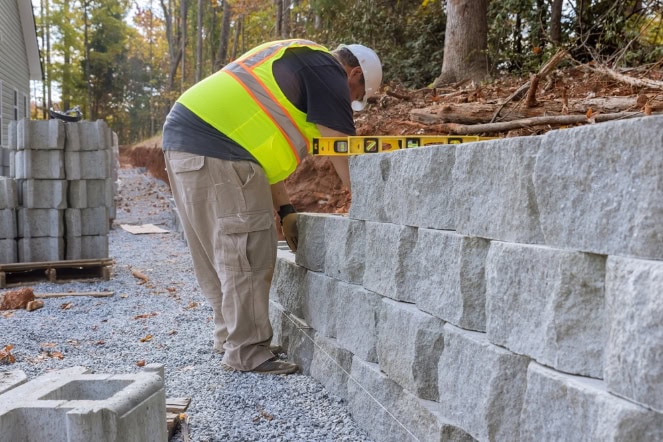
Most retaining wall problems in Aldan don’t start with the wall itself. They start behind it. Water builds up in the soil, clay expands and contracts with every freeze and thaw, and eventually the wall starts to lean, crack, or push forward. By the time it’s visible, the damage has been building for seasons. A wall built with proper drainage perforated pipe, gravel backfill, weep holes positioned to actually move water stops that cycle before it starts.
For Aldan homeowners specifically, this matters more than it does in a lot of other places. The borough sits inside the Darby Creek watershed, where roughly half the soil is classified as easily eroded and the drainage infrastructure is under constant stress. That’s what the data shows, and it’s what you see after a hard rain when soil is washing off sloped properties and pooling against foundations.
When the drainage is handled correctly and the wall is built to match the site, what you get back is usable space. A slope that was just mud and erosion becomes a level yard, a terraced garden, or a patio that actually functions. On Aldan’s smaller lots where 97% of the land in the borough is residential and every square foot counts that’s a meaningful change.
We’re based in Aston, PA Delaware County, same as Aldan. I hold an active Pennsylvania contractor license (PA057623) and a BuildZoom score of 102, which puts us in the top 11% of over 125,000 licensed contractors statewide. That’s not a number pulled from a brochure it’s a verified rating based on licensing, insurance, and documented project history across the county.
What actually sets us apart is simpler than a score. The same crew that assesses your property designs the wall, builds it, and handles the cleanup. I’m the person who shows up for the on-site visit, not a salesperson who hands the job off to a team I’ve never worked with. That matters when something comes up two years later and you need someone who actually remembers your project.
We’ve worked throughout Delaware County from properties along Providence Road to yards backing up to the older streetscapes that define boroughs like Aldan. The clay soil, the tight lots, the aging housing stock this is familiar ground for us.
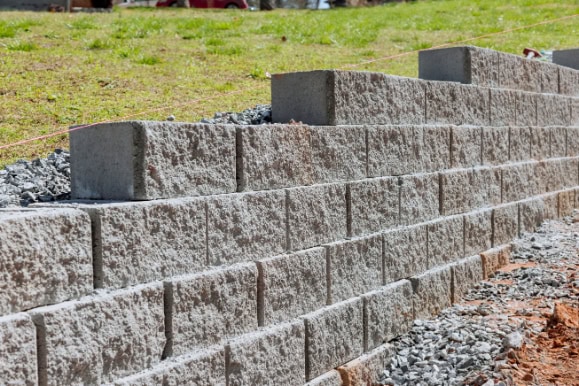
It starts with a site visit not a phone estimate. Retaining wall costs in Delaware County range from $40 to over $300 per linear foot depending on height, materials, drainage needs, and site access. There’s no accurate number until someone has actually looked at your property, assessed the slope, checked the soil, and identified where the water is going. That’s where every project we do begins.
Once the site is assessed, the drainage plan comes before the design. In Aldan’s clay-heavy soil, this step isn’t optional it’s what determines whether the wall performs for 40 years or starts showing movement after a couple of winters. From there, material selection happens based on what the wall actually needs to do: natural stone for longevity, VERSA-LOK modular block for structural walls that need engineered pinning without frost footings, concrete block where the load and budget call for it.
One thing that catches Aldan homeowners off guard: Aldan Borough’s zoning ordinance (Chapter 256) requires a zoning permit for any retaining wall, regardless of height. That’s different from Pennsylvania’s state-level code, which exempts walls under four feet. We handle the permit process the application, the required documentation, the 24-hour pre-work notice to the Building Official so the project is authorized before a single shovel goes in the ground. No surprises at resale. No violations to sort out after the fact.
Ready to get started?
Every retaining wall we build is designed around the specific conditions of the site not a standard template applied to every job. In Aldan, that means accounting for clay soil that expands when wet and contracts when dry, freeze-thaw cycles that create lateral pressure behind any wall without adequate drainage, and the stormwater dynamics that come with sitting inside the Darby Creek watershed. The borough holds an active MS4 permit from the Pennsylvania DEP, which means stormwater management isn’t just a homeowner concern it’s a regulatory one.
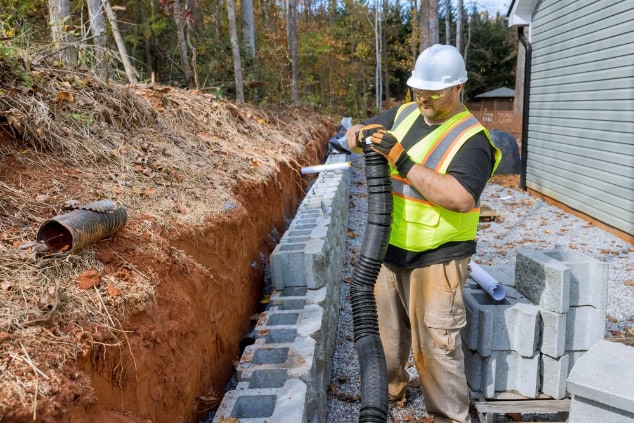
For most Aldan properties, that translates into walls built with perforated drainage pipe running the length of the wall, compacted gravel backfill to move water away from the structure, and weep holes positioned to prevent hydrostatic pressure from building up behind the face. Material options include natural stone (40–100+ year lifespan), VERSA-LOK modular block (engineered for structural walls, frost-resistant), and concrete block (30–50 year performance for mid-range budgets). The right choice depends on wall height, load, aesthetics, and what the site demands and that conversation happens at the property, not over the phone.
For Aldan’s Victorian-era and Cape Cod homes many built in the 1920s through the 1950s the longevity question is real. A home that’s already 80 years old deserves a wall built to outlast the next owner. That’s the standard every project we complete here is held to.
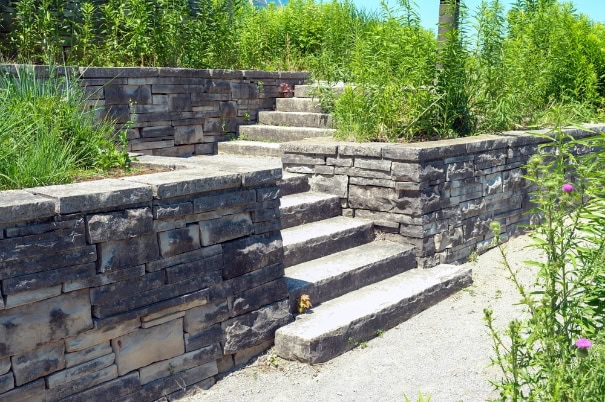
Yes and this is one of the most important things to know before starting any retaining wall project in Aldan. Unlike Pennsylvania’s state-level building code, which generally exempts walls under four feet from requiring a building permit, Aldan Borough’s own zoning ordinance (Chapter 256) requires a zoning permit for the erection, alteration, or substantial replacement of any retaining wall regardless of height. That means even a two-foot garden wall technically requires a permit application submitted to the Borough Zoning Officer.
On top of the zoning permit, walls over four feet in height require a separate building permit under the Pennsylvania UCC. Walls over four feet that also support a surcharge meaning there’s a structure, driveway, or significant weight load above them may require an engineer’s seal. Aldan’s building code also requires that work not begin on footings or foundation walls until the required inspection has been completed, and contractors must give at least 24 hours notice to the Building Official before starting work.
Skipping the permit process in a dense, closely-monitored borough like Aldan isn’t worth the risk. Unpermitted work can result in fines, a forced removal order, or complications when you go to sell the property. We handle the permit process from start to finish so you don’t have to navigate it yourself.
The honest answer is that it depends on what the wall needs to do and how long you need it to last. In Delaware County’s climate where freeze-thaw cycles put cyclical stress on any structure holding back soil the material choice matters more than it would in a warmer region. Water infiltrates the soil, freezes, expands, and pushes against the wall face. If the material isn’t rated for that kind of repeated stress, or if the drainage behind the wall isn’t handling the water load, you’ll see movement within a few seasons.
Natural stone is the longest-lasting option 40 to 100+ years when properly installed and it handles freeze-thaw well because it’s not a rigid, uniform structure that cracks under pressure. VERSA-LOK modular block is a strong choice for structural retaining walls because the pinning system provides engineered stability without requiring frost footings, which is a real advantage in southeastern Pennsylvania’s soil conditions. Concrete block performs well in the 30–50 year range and is a practical mid-range option for walls where budget is a factor but longevity still matters. Timber walls are the least durable choice in this climate typically 10–30 years and in Aldan’s clay-heavy, moisture-prone soil, they tend to sit at the lower end of that range.
Retaining wall costs in Delaware County generally range from $40 to $345 per linear foot, with most residential projects falling somewhere between $3,500 and $10,000 total. That’s a wide range, and it exists for a real reason: wall height, material selection, drainage requirements, and site access all affect the final number significantly. A low, decorative garden wall on flat ground costs very differently than a structural wall holding back a significant slope on a tight Aldan lot where equipment access is limited.
For Aldan homeowners specifically, drainage is almost always a line item that can’t be skipped. Given the clay soil, the freeze-thaw cycles, and the borough’s position in the Darby Creek watershed, a wall without a proper drainage system behind it is going to cost more to repair or replace in a few years than the drainage would have cost upfront. That’s the engineering reality of this area.
The only way to get an accurate number is an on-site assessment. Anyone quoting you a firm price over the phone without seeing the property is guessing, and those guesses tend to shift once work starts. We visit the property first, assess the slope, soil, and drainage conditions, and give you a quote based on what’s actually there.
The most common cause of retaining wall failure is hydrostatic pressure water building up behind the wall because there’s nowhere for it to drain. When that pressure builds, it pushes against the wall face. Over time, the wall bows, cracks, or topples. In Aldan’s clay-heavy soil, this problem is compounded by the fact that clay holds water rather than draining it, and expands when saturated. Add Delaware County’s freeze-thaw cycles water infiltrating the soil, freezing, expanding, and loosening the structure and a wall without drainage is under serious stress every winter.
Visible warning signs include leaning or bowing in the wall face, cracks running horizontally (which indicate pressure from behind), soil or gravel washing out from behind or beneath the wall, and water staining or seepage through the wall face. If you’re seeing any of these, the wall is already under stress and the issue will get worse, not better, on its own.
For Aldan’s older housing stock many homes date to the 1920s through the 1950s original retaining structures were often timber or dry-stacked stone without any engineered drainage. Those walls are commonly at or past the end of their functional life, especially given the borough’s documented stormwater challenges. If your wall was there when you bought the house and you don’t know when it was built, it’s worth having it assessed before the next hard winter.
For most residential retaining wall projects in Aldan, the actual installation takes one to three days once work begins. Larger walls, more complex drainage systems, or difficult site access can extend that timeline, but the majority of single-wall residential projects are completed within a standard work week. The longer part of the process is typically what happens before installation starts the site assessment, design, material ordering, and permit approval.
In Aldan specifically, the permit timeline is worth factoring in. Because the borough requires a zoning permit for any retaining wall, you’ll need to account for the time it takes the Borough Zoning Officer to review and approve the application before work can legally begin. That process can take a few days to a few weeks depending on the borough’s current workload and whether any additional documentation is required. We submit the permit application as part of the project process, so you’re not managing that separately but it does mean the project timeline from first contact to completed wall is typically two to six weeks, with most of that time in the pre-construction phase.
Seasonal timing also matters. Spring and fall are the most common installation windows in Delaware County. Spring demand tends to be highest homeowners see the damage winter left behind and want it addressed before summer. Booking earlier in the season means better scheduling availability and avoids the mid-summer backlog that pushes timelines out.
A well-built retaining wall can, yes and in Aldan’s market, the math is more compelling than it might seem. Property appraisers generally estimate 100–200% returns on well-designed retaining walls, meaning the cost of the wall can come back at or above its value when the home sells. Aldan’s median home value has risen from roughly $109,900 in 2000 to over $259,000 today, which means outdoor improvements represent a more meaningful percentage of total property value than they did a generation ago.
The practical case is just as strong as the financial one. On Aldan’s smaller residential lots the borough is just 384 acres with over 4,200 residents a retaining wall that converts an eroding slope into usable yard space is adding functional square footage to a property that doesn’t have much to spare. A level patio, a terraced garden bed, or a stable lawn where there was previously just runoff and mud is a visible, tangible improvement that buyers notice.
There’s also a risk-reduction angle worth considering. A failing or absent retaining wall on a sloped property can actively reduce value through visible erosion damage, water intrusion concerns, or the cost a buyer will mentally assign to fixing it. In a borough where properties are close together and soil movement can affect neighboring lots, a properly engineered wall protects your investment on multiple fronts.
Useful Links