
Hear from Our Customers

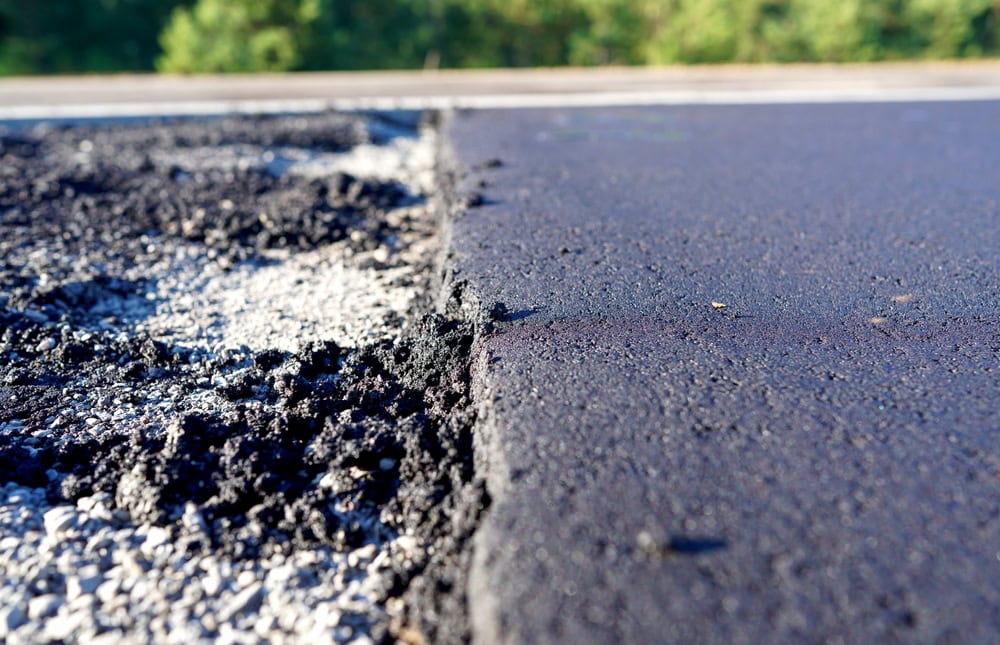
Most driveways in Middletown don’t fail because of bad asphalt. They fail because whoever installed them skipped the part you can’t see the base. When the crushed aggregate underneath isn’t properly compacted and graded, water finds its way in. It freezes. It expands. And by spring, you’ve got cracks turning into potholes. That’s the freeze-thaw reality for every property in this township, and it’s not going away.
Middletown’s creek-adjacent geography adds another layer to this. Properties near Ridley Creek and Chester Creek and throughout Glen Riddle, Bortondale, and the surrounding neighborhoods deal with drainage conditions that put real pressure on driveways that weren’t graded correctly from the start. Water that pools beneath the surface doesn’t just cause cosmetic damage. It undermines the entire structure over time.
When the base is done right and drainage is graded away from your foundation, a properly installed asphalt driveway in Middletown should last fifteen to twenty years. Sealcoating it every two to three years keeps oxidation and water infiltration from aging the surface prematurely. That maintenance cycle costs a fraction of what crack repair costs and crack repair costs a fraction of what full replacement costs. The math isn’t complicated, and neither is the decision.
A lot of the companies showing up in search results for paving in Middletown, PA are Central Pennsylvania operations that built a page targeting the town name. They’ve never pulled a permit at the Middletown Township municipal building. They don’t know the stormwater management requirements that apply when you’re expanding impervious surface. They’re not going to be easy to reach six months after the job.
We’re based in Aston which shares a border with Middletown Township to the south. We work in Delaware County because we’re from Delaware County. That means we know what the township requires before a driveway project starts, we carry the insurance the township demands before any permit is issued, and we’re reachable when you have a question after the job is done.
This isn’t a regional chain or a seasonal crew chasing work. It’s a local operation that handles paving, hardscaping, and landscaping across the county and has reason to protect its reputation in every neighborhood it serves, including yours.
It starts with a site visit and a written estimate that tells you exactly what’s included excavation depth, base material, asphalt thickness, edge work, and cleanup. No vague quotes. No add-ons at the end. Pennsylvania’s Home Improvement Consumer Protection Act requires written contracts for this type of work, and we follow that without being asked.
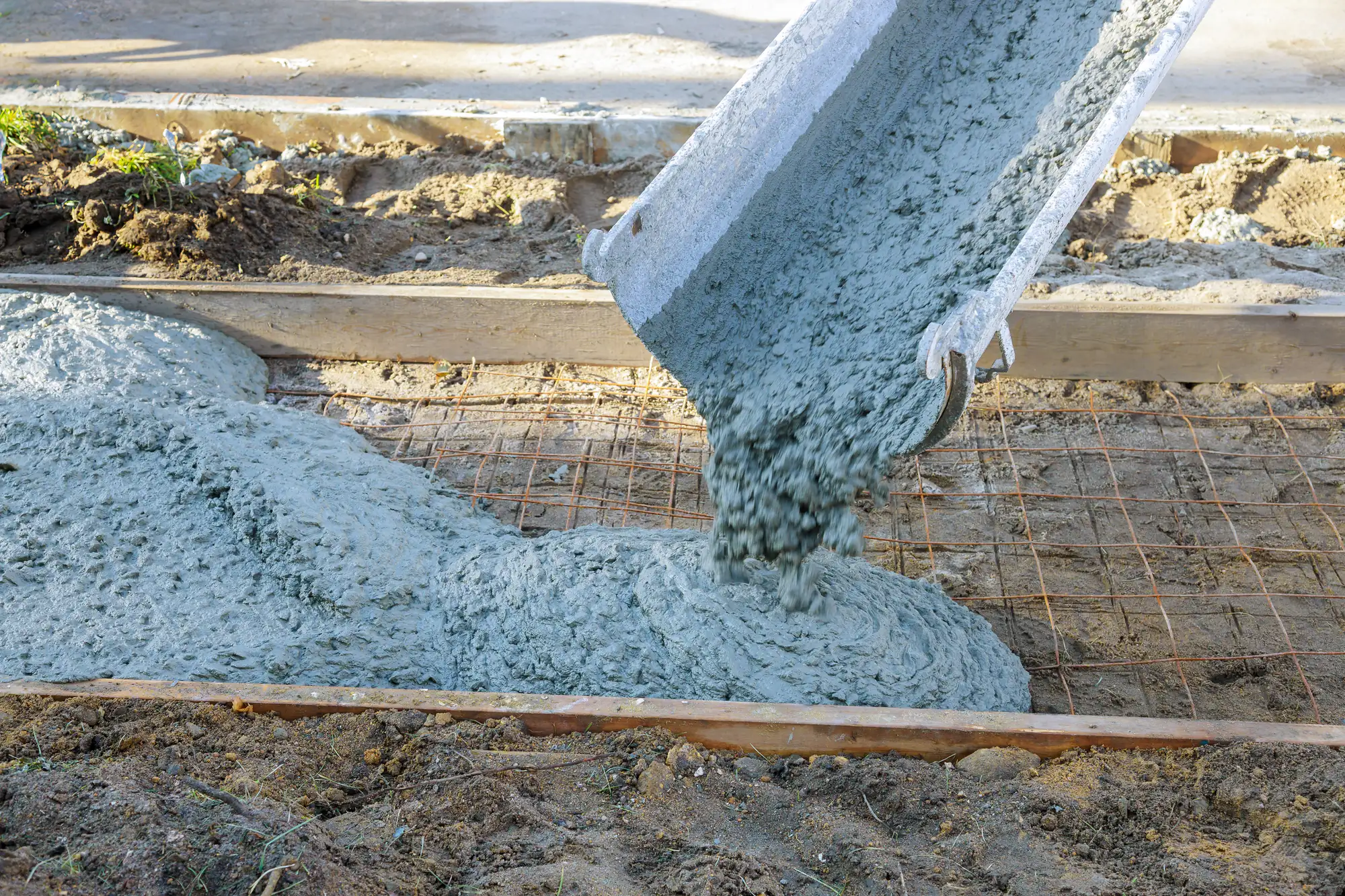
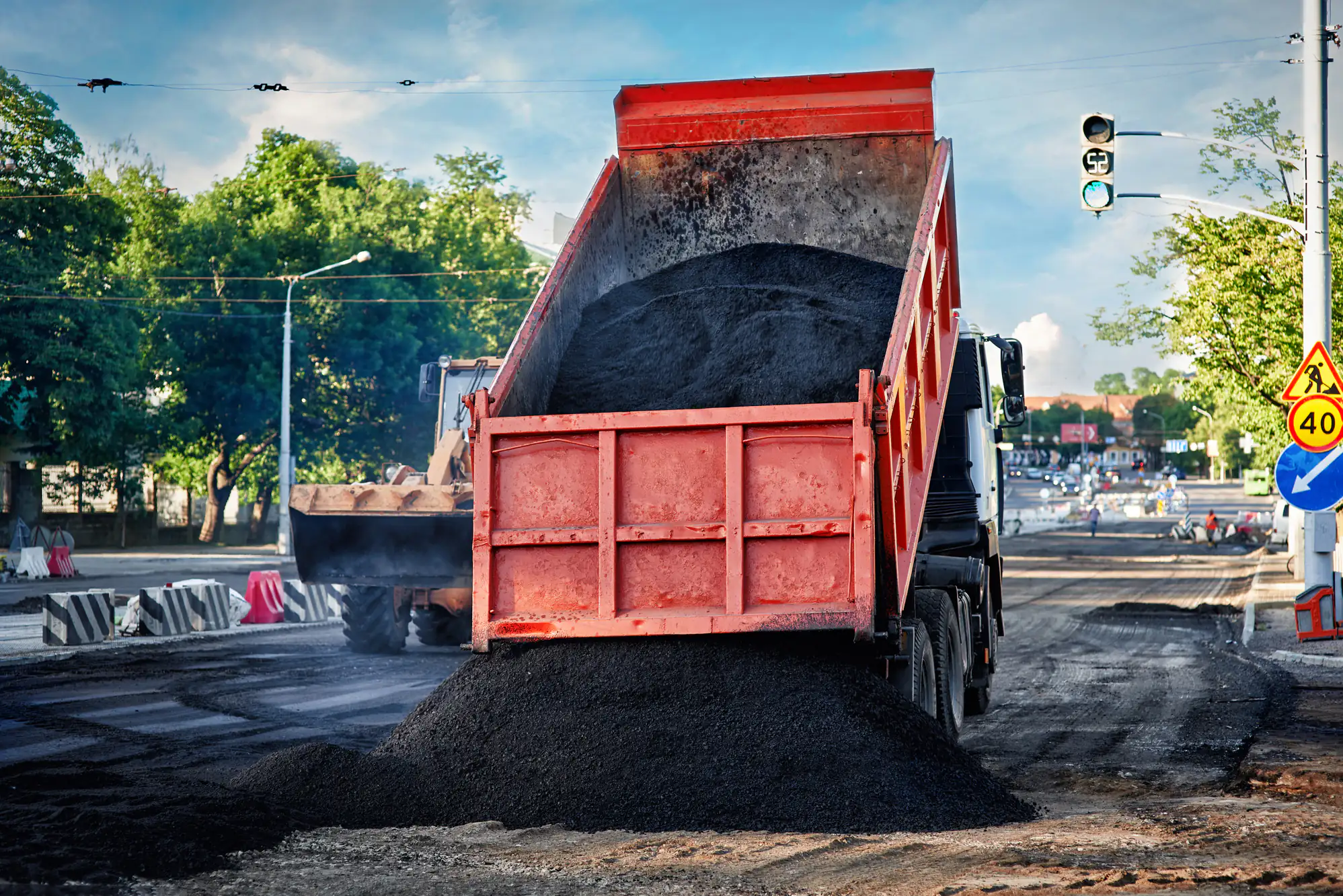
Once the project starts, the first thing that happens is excavation and removal of the existing surface if there is one. Then the subgrade is graded for drainage this is the step that determines whether water runs away from your property or sits beneath your new driveway and slowly destroys it. A compacted crushed aggregate base goes in next, and the depth depends on your site conditions. For properties near the creek corridors in Middletown Township, drainage grading gets extra attention. After the base is compacted and verified, hot-mix asphalt is applied and compacted in lifts to reach the specified thickness.
Timing matters in southeastern Pennsylvania. The optimal installation window is spring through fall when ambient temperatures are above 50°F and the asphalt can be properly compacted before it cools. If you’re thinking about a new driveway and fall is approaching, that’s not a reason to wait. It’s actually the last good window before winter closes the season and another freeze-thaw cycle does more damage to what’s already there.
Ready to get started?
Asphalt driveway installation with us covers the full scope site excavation, grading, compacted aggregate base, hot-mix asphalt application, edge detailing, and site cleanup. There’s no phase of the job that gets handed off to a subcontractor. The same crew that does the prep does the pour, which means one point of accountability from start to finish.
Driveway sealcoating is available as a standalone service for existing driveways in good structural condition, and as a scheduled maintenance service for driveways we’ve installed. In Middletown Township’s climate with road salt runoff from Baltimore Pike and Route 352, summer UV exposure, and the freeze-thaw cycles that hit every winter an unsealed driveway oxidizes and becomes brittle faster than most homeowners expect. A professional sealcoat application every two to three years is what keeps that from happening. The application window in this area runs roughly April through October, when temperatures are reliably above 50°F and dry conditions hold for at least 24 to 48 hours after application.
For Middletown Township projects, we handle the permitting process, including verifying whether your project triggers stormwater management plan requirements under Chapter 198 of the township code. If your driveway connects to a state-maintained road like Route 1 or Route 352, PennDOT Highway Occupancy Permit requirements get addressed before work begins. You don’t have to figure that out yourself.
Yes, driveway construction in Middletown Township requires a permit, and there are specific requirements your project has to meet before one gets issued. The township code specifies minimum driveway widths and curb radius requirements, and any contractor pulling a permit must have a current Certificate of Insurance for both liability and workers’ compensation on file with the township before that permit is approved. If your project expands the impervious surface on your property beyond certain thresholds, you may also need to submit a Stormwater Management Site Plan under Chapter 198 of the township code.
This is one of the more common gaps with out-of-area contractors who build landing pages for Middletown without ever having worked here. They don’t know what the township requires, and they’re not going to find out until there’s a problem. We handle the permitting process as part of the job verifying what’s required, carrying the insurance the township demands, and making sure your project is compliant before the first shovel goes in.
For a standard residential asphalt driveway in Delaware County, the installed cost typically runs between $3,148 and $7,448 depending on size, site conditions, and scope. On a per-square-foot basis, that’s roughly $7 to $15 installed. A typical 600-square-foot driveway lands somewhere between $2,400 and $4,800, though site-specific factors can move that number in either direction.
What drives cost up in Middletown specifically is site preparation. Properties near the creek corridors Glen Riddle, Bortondale, and areas adjacent to Ridley Creek or Chester Creek often require more detailed drainage grading to prevent water from accumulating beneath the surface. That’s not an upsell. It’s the work that determines whether your driveway lasts eight years or twenty. A contractor who quotes you significantly less than this range is almost certainly cutting the base prep, which is the part you can’t see and the part that matters most. Get a written estimate that specifies excavation depth, base material, and asphalt thickness then compare accurately.
A properly installed asphalt driveway in Middletown Township should last fifteen to twenty years. The word “properly” is doing a lot of work in that sentence. Middletown sits at the boundary between two climate zones, which means genuine four-season weather including the freeze-thaw cycles that are the primary mechanical force behind driveway failure in this region. Water enters small cracks, freezes, expands, and widens those cracks into structural damage. If the base beneath the asphalt wasn’t compacted correctly or graded for drainage, that process accelerates significantly.
The driveways that fail in five to eight years almost always have the same story: the base was rushed or skipped, drainage wasn’t addressed, and the surface had no stable foundation to resist ground movement over winter. The driveways that last two decades were installed with proper excavation, a compacted aggregate base, and careful drainage grading. Sealcoating every two to three years extends that lifespan further by preventing oxidation and keeping water from penetrating the surface in the first place. That maintenance cycle is cheap compared to the alternative.
Resurfacing sometimes called an overlay means applying a new layer of asphalt over your existing surface without removing what’s underneath. It’s less expensive than full replacement and works well when the base beneath your current driveway is still structurally sound. If your driveway has surface cracking, minor weathering, or oxidation but isn’t heaving, sinking, or showing signs of base failure, resurfacing can add years to its life at a fraction of the replacement cost.
Full replacement makes sense when the damage goes deeper than the surface. Potholes, significant cracking, areas where the driveway is sinking or shifting, or drainage problems that are causing water to pool these are signs that the base itself has been compromised. In Middletown Township, where clay-heavy soils and proximity to creek corridors can create subsurface drainage challenges, base failure is more common than homeowners expect. The way to tell the difference is a site assessment. A contractor who recommends full replacement without looking at your base conditions isn’t giving you a real answer they’re guessing. We evaluate the actual condition before recommending a scope.
Spring and fall are the optimal paving windows in southeastern Pennsylvania roughly March through May and September through November, when ambient temperatures are consistently between 50°F and 75°F. At those temperatures, hot-mix asphalt can be laid and compacted properly before it cools. Summer paving is possible but requires more attention to temperature management. Winter paving is generally not recommended because asphalt cools too quickly in sub-freezing conditions to achieve proper compaction, which directly affects the long-term durability of the surface.
For Middletown homeowners, fall is worth paying attention to specifically. It’s simultaneously the best remaining installation window of the year and the last one before winter closes the season. A driveway that’s already cracking or showing drainage issues going into a Delaware County winter is going to come out of that winter in worse shape. If you’ve been putting off the decision, fall is the time to act not because of any sales pressure, but because the calendar and the climate are genuinely working against you if you wait until spring to start the conversation.
This is a fair question, and Middletown Township homeowners have good reason to ask it. The BBB has issued formal alerts about door-knock paving scams that specifically target older, established homeowners in affluent suburban communities which describes a lot of Middletown. The typical pattern is a contractor who claims to have leftover asphalt from a nearby job, offers a discounted deal, collects a deposit, delivers substandard work or nothing at all, and becomes unreachable. The demographic that gets targeted most often is exactly the demographic that makes up a large portion of this township.
A legitimate paving contractor in Middletown Township will be registered as a PA Home Improvement Contractor with the Attorney General’s Office you can verify that online before you sign anything. They’ll carry liability and workers’ compensation insurance and will provide a certificate without hesitation. They’ll give you a written estimate that specifies what’s included, not a handshake quote on a clipboard. And they’ll have a verifiable local presence a real address, a real website, third-party reviews you can read, and a name attached to the business. We check every one of those boxes. If a contractor you’re talking to can’t check them, that’s your answer.
Useful Links