
Hear from Our Customers
Most patio problems in Saint Davids don’t show up on day one. They show up after the second or third winter a sunken corner here, a heaved paver there, a crack running through concrete that was never going to hold up in this climate. Delaware County sees 40-plus freeze-thaw cycles every year. That’s 40-plus chances for a poorly built base to fail. When a patio is installed without proper compaction and drainage, the ground does what it always does and the surface follows.
A well-built patio starts below grade. The base work excavation depth, compacted aggregate, drainage slope is what separates a patio that lasts from one that needs to be rebuilt in three years. Saint Davids properties add another layer to this: mature oak and maple canopies that hold moisture, older homes with existing hardscaping that may have been installed before modern base standards existed, and lots that often slope in ways that require real drainage planning. These aren’t complications they’re just what good installation looks like here.
When it’s done right, you get an outdoor space you actually use. A place for dinner on a Friday night, a morning coffee spot that doesn’t feel like an afterthought, or a backyard that finally looks like it belongs next to the house you’ve been maintaining for years. That’s the outcome. Not just a surface a space.
We’re based in Aston, PA Delaware County, same as Saint Davids. This isn’t a regional operation that drives in from Chester County to pick up jobs. Renato Spennato has been working in this county for over 15 years, and his name is on every project. That matters more than it sounds. In a community like Saint Davids, where neighbors talk and word travels, reputation is the whole business model.
The team that shows up on day one is the same team that finishes the job. No subcontractors, no handoffs, no wondering who’s actually responsible when something needs to be addressed after completion. Our customers have mentioned Renato by name in their reviews not just “great company,” but the specific person who showed up, communicated clearly, and delivered what he said he would. That kind of accountability is what most homeowners in the 19087 zip code are looking for and rarely find.
It starts with a conversation about how you actually use your yard. Not a sales pitch a real conversation about what’s working, what isn’t, and what you want the space to feel like when it’s done. From there, the design takes shape around your home’s architecture, your lot’s specific conditions, and the materials that make sense for both.
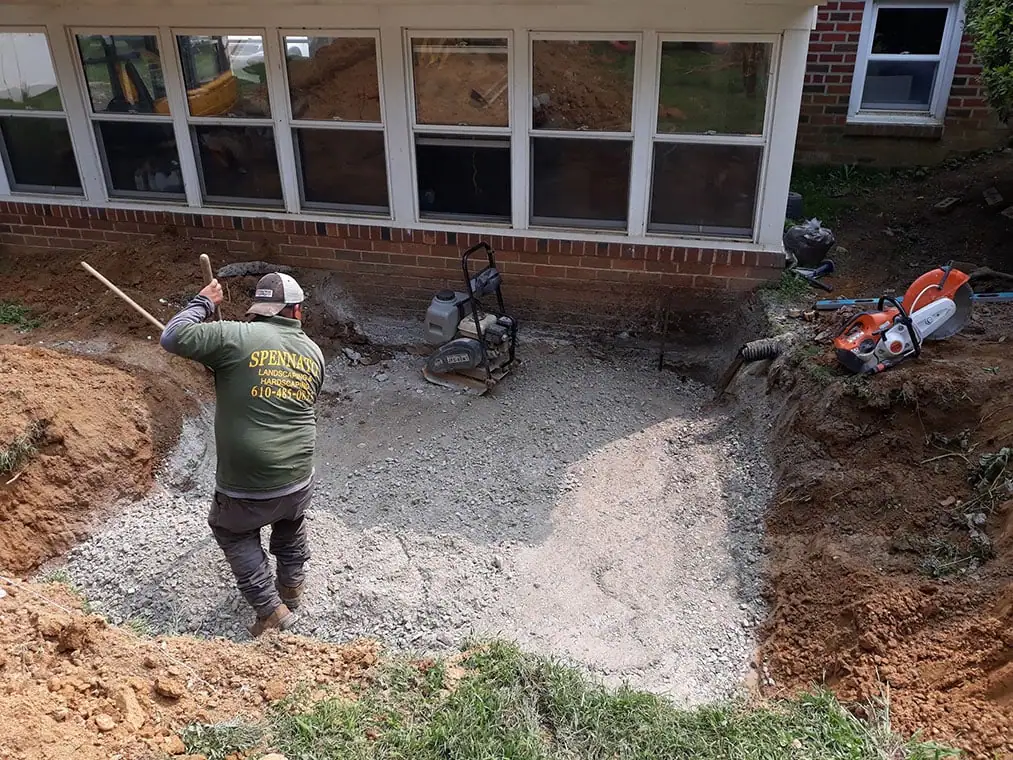
Before anything is installed, the site gets excavated and prepared properly. That means establishing the right drainage slope, laying and compacting a crushed gravel base to the depth this climate demands, and accounting for anything specific to your property root systems from mature trees, existing hardscaping that needs to come out, or grading that affects how water moves across your yard. If your project involves significant impervious surface area, Radnor Township may require a grading permit in addition to standard construction permits that’s something we handle as part of the process, not something you’re left to figure out on your own.
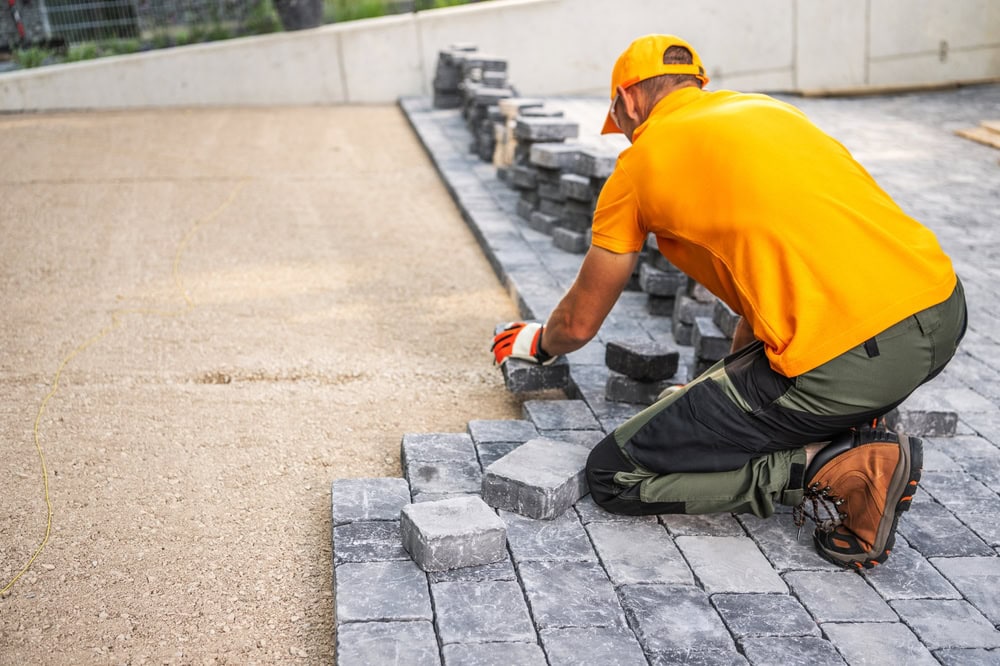
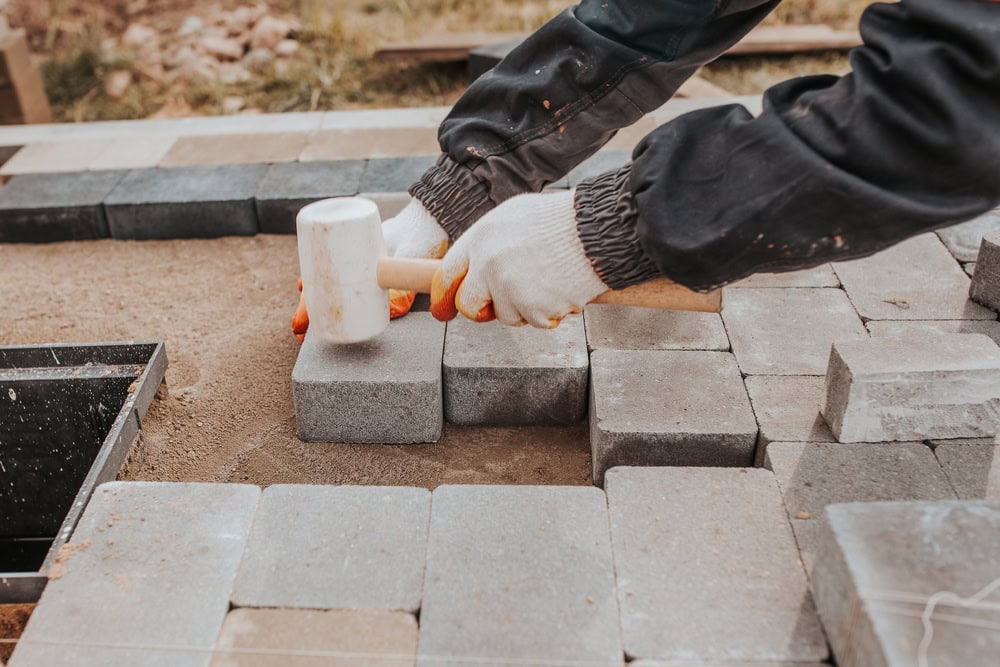
Once the base is solid, the surface goes in pavers, flagstone, Pennsylvania Bluestone, or concrete, depending on what fits your home and your goals. Joints are filled with polymeric sand, edges are secured, and the surface is sealed where appropriate. The job ends with a full cleanup. You’re not left with a pile of debris and a half-finished edge. When we leave, the patio is done.
Ready to get started?
Saint Davids is a neighborhood where material choices actually matter. Stone colonials and craftsman-style homes along Saint Davids Road and the corridors near Eastern University have an architectural character that a standard poured concrete slab simply doesn’t complement. Pennsylvania Bluestone and natural flagstone are the materials most consistent with how this neighborhood looks and how its homes were built and they’re what a lot of homeowners here are drawn to when they start thinking about backyard patio ideas or a front-entry redesign.
That said, not every project calls for natural stone. Interlocking concrete pavers offer more design flexibility, easier long-term repairs, and a strong ROI especially for larger patio footprints where the cost of full natural stone becomes significant. Stamped and colored concrete is a reasonable option for homeowners focused on budget or working with a smaller space, like the condo and townhome units in the Saint Davids Park area along East Lancaster Avenue. The honest answer is that the right material depends on your home, your lot, and what you’re trying to accomplish and that’s the conversation we start with before anything else.
Covered patio additions pergolas, shade structures, integrated outdoor rooms are also part of what we offer. If you’re thinking beyond a flat surface and want a space that works across more of the year, that’s a direction worth exploring during the design conversation.

It depends on the scope of the project, but in many cases yes. Radnor Township requires construction permits for new hardscaping and exterior alterations, and all contractors must be licensed with the Township before working on your property. That’s a local requirement that not every contractor from outside the area knows about or complies with. If you hire someone who isn’t licensed with Radnor Township, you could end up with unpermitted work that creates problems at resale or during a future inspection.
Beyond the standard construction permit, Radnor Township also has a grading permit requirement that kicks in when new or replacement impervious surfaces exceed 499 square feet. A standard patio in Saint Davids can hit that threshold, and when it does, the Township requires engineered site plans showing existing and proposed impervious coverage. The grading permit fee is $1,500, and the process has its own submission requirements. We handle all of this as part of your project the right paperwork, submitted correctly, so you’re not left managing a Township process you’ve never dealt with before.
The freeze-thaw cycle is the main thing to plan around. Delaware County sees 40-plus freeze-thaw cycles per year, and each one puts stress on any patio surface that wasn’t installed with a proper base. The material on top matters less than what’s underneath but material choice still plays a role in long-term durability.
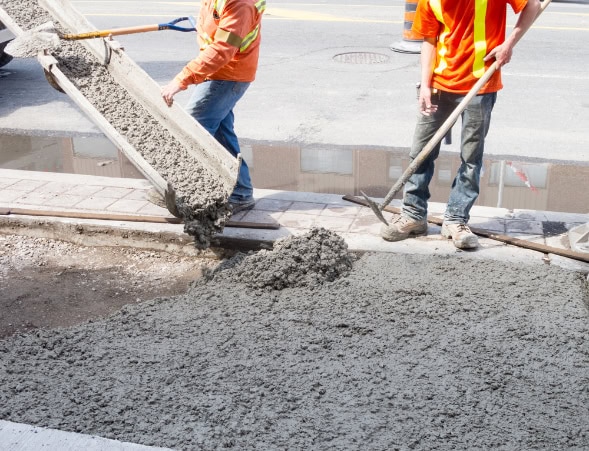
Interlocking concrete pavers are generally the most forgiving in this climate because individual units can shift slightly without cracking and can be reset if a section does heave. Natural flagstone and Pennsylvania Bluestone are beautiful and appropriate for the architectural character of Saint Davids homes, but they require careful base work and proper jointing to hold up well through winter. Poured concrete is the most vulnerable it’s a single continuous surface, so when the ground moves, it cracks. Stamped concrete carries the same risk. If you’re investing in a patio for a home in the 19087 zip code, the base preparation matters more than anything else, and the material conversation should happen after that foundation is understood.
Most patio installations in Saint Davids and Wayne fall between $3,500 and $12,000, with a general range of $15 to $50 per square foot depending on the material. A basic concrete patio sits at the lower end. Interlocking pavers land in the middle. Natural flagstone and Pennsylvania Bluestone which are the materials most consistent with the homes in this neighborhood sit at the higher end of that range.
For properties in the 19087 zip code, where median home values run well above $700,000, a patio in the $8,000 to $15,000 range for premium materials is a reasonable and well-documented investment. Professionally installed patios return more than 80% of their cost at resale, and pavers specifically tend to outperform poured concrete in ROI. The more useful way to think about cost is this: a patio built with a proper base and quality materials is a one-time expense. A patio built cheaply is an expense you pay twice once to install it and once to fix it after a few Delaware County winters.
A standard residential patio somewhere in the 300 to 500 square foot range typically takes two to four days of on-site work once the project is underway. Larger or more complex installations, or projects that include covered structures, seating walls, or significant grading work, can run longer. The timeline also depends on material availability and where your project falls in our schedule.
What affects the overall timeline more than the installation itself is the planning and permitting phase. In Radnor Township, if your project requires a grading permit or design review, that process adds time before the first shovel goes in. Starting the conversation in late winter January through March gives you the best chance of having your patio ready before summer. Homeowners who reach out in spring often find that contractors are already booked out several weeks, and the projects that get prioritized are the ones that were planned ahead.
This is a genuinely common situation in Saint Davids, where the residential streets are lined with mature oaks, maples, and sycamores that have been growing for decades. The short answer is yes with the right approach. The key is understanding where the root systems are and designing the patio layout to work around them rather than through them. Cutting major roots during excavation can stress or kill a mature tree, and it can also destabilize the base over time as the root system continues to shift.
Interlocking pavers are often the better choice in tree-adjacent installations because they can be reset if roots cause minor movement later something that’s much harder to address with poured concrete. In some cases, the patio boundary gets adjusted slightly to give the root zone more clearance. A good site assessment before design is finalized will identify where the roots are and how the layout should respond to them. This is part of the initial consultation process, not an afterthought.
The installation window in this area runs from April through October. Spring and early summer are the most popular times for obvious reasons homeowners want the space ready for summer. But that popularity also means contractors book up fast, and projects that weren’t planned ahead can get pushed to late summer or fall.
Fall installations are completely viable in Saint Davids. October is typically still warm enough to allow proper base curing before the ground freezes, which usually happens in November in Radnor Township. The risk with late-season installs is cutting it too close to the first hard frost which is why timing matters and why starting the conversation in late winter gives you real options. March inquiries tend to get better scheduling attention than May inquiries, and the design process benefits from not being rushed. If your current patio is showing the effects of last winter heaving, cracking, sunken sections spring is also when most homeowners in Saint Davids realize a replacement conversation is overdue.
Useful Links
Other Services we provide in Saint Davids