
Hear from Our Customers
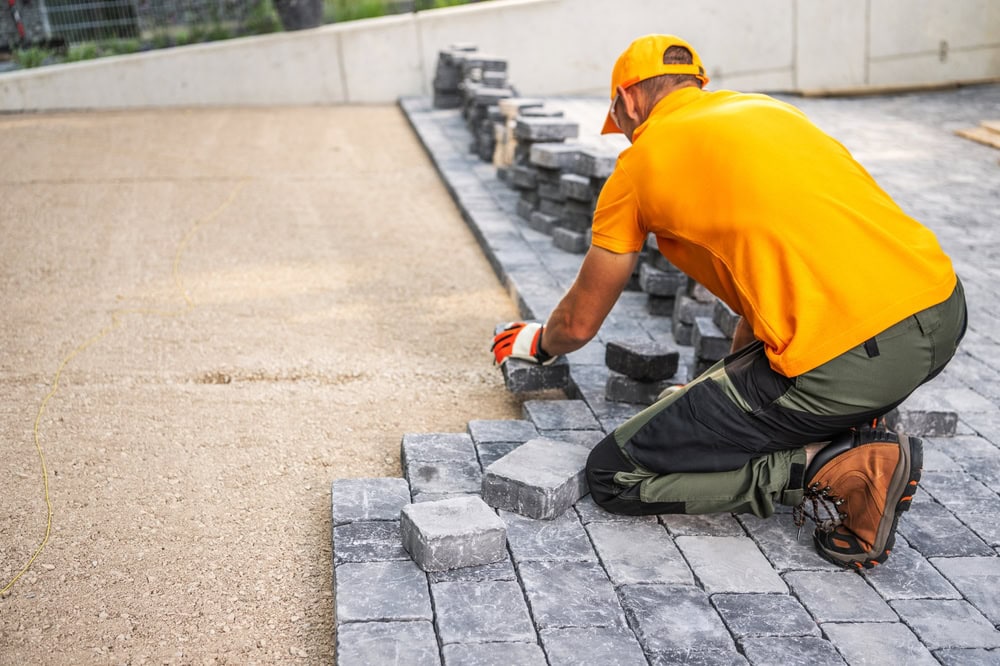
When a patio is built right, you stop thinking about it. No rocking pavers after the first hard freeze. No puddles collecting against your foundation after a rainstorm. No weeds pushing through joints that were never properly filled. You just walk outside and use the space and that’s exactly what it should feel like.
Ridley Park’s housing stock is old. Most homes here were built between the 1940s and 1960s, which means a lot of yards are still dealing with original concrete slabs that were poured without proper drainage in mind. When those slabs fail and they do water doesn’t just pool on the surface. It can work its way toward your foundation, especially on lots where the grade wasn’t designed for modern drainage expectations. A properly installed paver patio corrects that. The base work, the slope, the edge restraints all of it works together to move water away from your home, not toward it.
The other thing worth knowing is that a well-designed patio adds real, measurable value to your property. Professionally installed patios return more than 80% of their cost at resale, and paver installations specifically outperform plain concrete by 30–50% on ROI. In a neighborhood where homes are selling in the $285,000–$300,000 range, that’s not a small thing. It’s one of the better investments you can make in a property you’ve owned for years.
We’re based in Aston, PA a straight shot down Chester Pike from Ridley Park. This isn’t a regional company that geo-tagged your borough on a landing page. We’re a Delaware County operation that has been working in Ridley Park neighborhoods, on these soil types, through these winters, for over 15 years.
Renato Spennato runs the business and stays involved in the work. When you reach out, you’re talking to someone who knows the difference between a yard with good natural drainage and one that needs careful engineering before a single paver goes down. In Ridley Park, where Stoney Creek drainage patterns and the proximity to the Delaware River can affect how water moves through a property, that kind of local familiarity isn’t a selling point it’s just necessary.
One crew handles your project from start to finish. No handoffs, no subcontractors showing up mid-job, no accountability gaps. If something comes up during or after the build, you have one name and one number and that person answers.
It starts with a real conversation about how you use your yard. Not a sales pitch an actual assessment of your space, your drainage patterns, your goals, and your budget. Ridley Park lots tend to run on the smaller side compared to newer Delaware County developments, so a lot of the early design work is about making the space feel intentional rather than just filling square footage. Whether you’re thinking about a simple paver patio off the back door, a flagstone design that fits the character of an older cape or colonial, or a covered structure for summer shade, that conversation shapes everything that comes after.
Once the design is set, the permit piece gets handled. Standard paver patio installations in Ridley Park require a Zoning Permit not a full Building Permit which keeps the process relatively straightforward. If you’re adding a covered structure like a pergola or pavilion, that does require a full Building Permit, and we manage that process for you. Either way, no work starts until everything is properly permitted and the Borough’s contractor registration requirements are met.
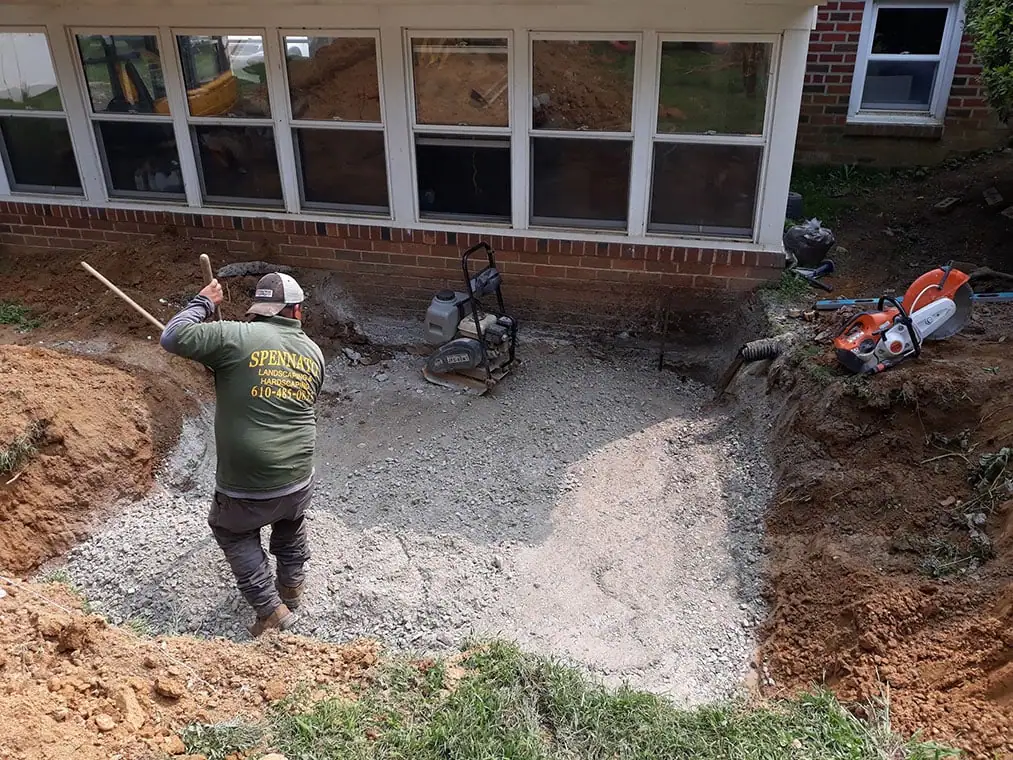
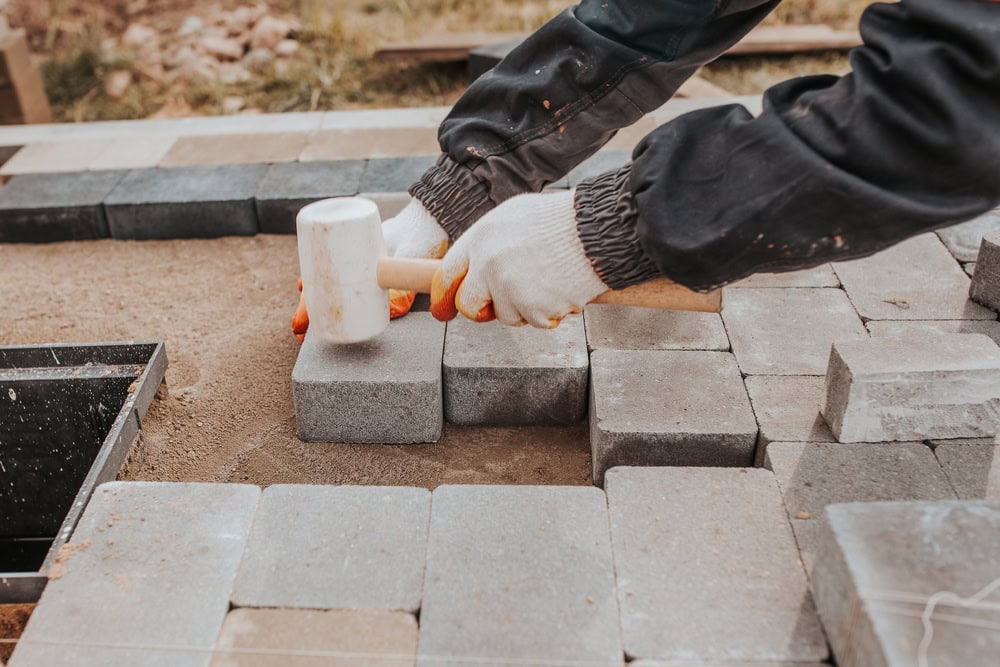
The installation itself begins with full excavation, removal of any existing slab or surface material, and base preparation. This is where most patios either succeed or fail long-term. A minimum five-inch compacted aggregate base, proper drainage slope away from the foundation, solid edge restraints, and polymeric sand in every joint that’s what separates a patio that holds up through forty-plus freeze-thaw cycles from one that needs attention every other spring. After the surface is set and the final cleanup is done, you’ll have a clear picture of what was built and why it was built that way.
Ready to get started?
Ridley Park homes have character. The capes, colonials, and split-levels that line these streets were built with a specific aesthetic and the material you put in your backyard should complement it, not clash with it. That’s why the material conversation matters before anything else gets decided.
Interlocking concrete pavers are the most popular choice for good reason. They handle freeze-thaw movement better than poured concrete, they’re repairable if one section ever shifts, and they come in enough styles and colors to work with almost any home. For homeowners who want something with more texture and organic character, Pennsylvania Bluestone and natural flagstone are worth a serious look they age well, develop a natural patina over time, and feel right at home on a property with mature trees and established landscaping. Concrete is also on the table for buyers who have specific budget constraints or prefer a clean, uniform surface, though it’s worth understanding the long-term trade-offs before committing.
For smaller Ridley Park yards, the design conversation often centers on how to define zones without the space feeling overcrowded. A well-laid patio that creates a clear dining area and a separate lounge space even in a modest footprint can completely change how a backyard functions. If you’re also thinking about a covered patio for shade during the humid Delaware County summers, that’s a conversation worth having early, since covered structures follow a different permit path in Ridley Park and factor into the overall project timeline.

For a standard paver patio the kind that sits on a compacted aggregate base without any structural foundation or frost wall Ridley Park Borough requires a Zoning Permit only. That’s a simpler and faster process than a full Building Permit, and it’s something we handle as part of the project. You don’t need to navigate the Borough’s permit office on your own.
Where it gets more involved is if you’re adding a covered structure a pergola, a pavilion, or any roofed element attached to the patio. Those are treated differently under Ridley Park’s code and require a full Building Permit, which factors into the project timeline. One important detail worth knowing: Ridley Park doubles the permit fee for any work that starts without the proper permits in place. That’s not a risk worth taking, and it’s one of the reasons working with a contractor who knows the local requirements matters more than people often realize.
Most patio installations in the Delaware County area fall somewhere between $3,500 and $12,000, depending on the size of the project, the material you choose, and what the existing site conditions look like. On a per-square-foot basis, that typically works out to $15–$50, with natural stone and premium pavers sitting toward the higher end and concrete toward the lower end.
For Ridley Park specifically, a few things can affect where a project lands in that range. Older homes often have existing concrete slabs that need to be removed before new work can begin, which adds to the overall cost. Properties with mature trees and Ridley Park has plenty of them sometimes require extra care during excavation to avoid root systems that are close to the surface. Neither of these is a dealbreaker, but they’re the kind of site-specific factors that should be part of the estimate conversation upfront, not surprises that show up mid-project.
In most cases with older Ridley Park homes, replacement is the smarter call. Concrete patios from the 1950s and 1960s were typically poured without the base depth or drainage engineering that’s standard today. Patching the surface doesn’t fix what’s happening underneath and if the base has shifted or eroded, the same problems will keep coming back regardless of how many times the surface gets repaired.
Replacing it is also an opportunity to correct drainage issues that may have been there from the beginning. A lot of original concrete slabs in Ridley Park were poured flat or with a slight slope toward the house rather than away from it which means every rain event pushes water toward your foundation instead of away from it. A properly installed paver patio with a correctly engineered slope solves that problem permanently. It’s a bigger upfront investment than a patch job, but it’s the kind of work that doesn’t need to be done again in five years.
Southeastern Pennsylvania averages more than 40 freeze-thaw cycles every winter. Each one puts stress on whatever is beneath your patio surface. When the ground freezes, it expands. When it thaws, it contracts. If the base underneath wasn’t compacted properly or if it wasn’t deep enough to begin with that repeated movement is what causes pavers to rock, concrete to crack, and edges to pull away from the border.
The questions worth asking any contractor before you hire them are simple: How deep is your aggregate base? What compaction standard do you build to? How do you handle drainage slope? What do you use in the joints? A contractor who can answer those questions specifically not vaguely is one who actually does that work. The base is the part of a patio you’ll never see once it’s finished, but it’s the only part that determines whether the surface above it holds up over time. In a climate like Delaware County’s, there’s no shortcut that doesn’t eventually show up as a problem.
Smaller yards actually benefit from more intentional design, not less. The goal isn’t to fill the entire backyard with hardscape it’s to define the space so it functions like a real outdoor room rather than just an open patch of ground behind the house. For most Ridley Park lots, that means thinking about how you actually use the space: where you’d want to eat dinner outside, where you’d put a few chairs for an evening, where the transition from the patio to the lawn should be.
Material and edge choices do a lot of the work in a compact space. A well-laid paver pattern with a defined border creates visual structure that makes a smaller patio feel deliberate rather than cramped. Natural flagstone can add organic texture that suits the older architectural character of many homes in Ridley Park. If you’re also thinking about a pergola or shade structure to make the space usable on hot summer afternoons, that’s worth factoring into the design from the start it changes how the overall footprint gets laid out and affects the permit process as well.
Ridley Park Borough requires contractors to register with the municipality before performing work within its boundaries. It’s a straightforward requirement, but it’s one that not every contractor bothers to follow and if something goes wrong on a project performed by an unregistered contractor, the homeowner can end up in a difficult position when it comes to permits, inspections, and any dispute resolution.
The simplest way to verify is to ask the contractor directly whether they’re registered with Ridley Park Borough and whether they’ll be pulling the required Zoning Permit before work begins. A contractor who’s done business in this area regularly will know the answer without hesitation. We operate as a properly registered, insured contractor throughout Delaware County and handle the permit process as a standard part of every project not as an afterthought. If you’re comparing estimates from multiple contractors, that’s one of the most useful questions you can ask, because the answer tells you quickly whether you’re dealing with someone who knows how to operate here or someone who’s just hoping no one checks.
Useful Links
Other Services we provide in Ridley Park