
Hear from Our Customers
Lima’s mature tree canopy is one of the things that makes this community feel the way it does quiet, established, and nothing like the denser suburbs closer to the city. But those same trees mean root systems that complicate excavation, shade patterns that hold moisture longer, and clay-heavy soil that doesn’t drain the way sandy or gravelly ground does. When you add Pennsylvania’s freeze-thaw cycle to that mix, a patio built on a shallow or poorly compacted base isn’t going to last. It’s going to heave, shift, and crack usually within the first few winters.
What you actually want is a patio that looks the same in year ten as it did the day our crew left. That means a properly excavated base minimum five inches of compacted aggregate at 95% proctor density with drainage sloped away from your foundation and edge restraints that keep everything locked in place. It also means material choices that fit your home. Lima’s housing stock skews older, and a lot of the homes here have real architectural character. Flagstone, Pennsylvania Bluestone, and natural stone pavers look like they belong on a Lima colonial or a farmhouse near the Tyler Arboretum. Stamped concrete does not.
When the work is done right, you get a patio that requires almost no upkeep, holds its value, and actually adds to your property not one you’re calling someone about two winters later.
We’re based in Aston about eight to ten miles south of Lima in the same county. Renato Spennato’s name is on the business, and he’s been doing this work in Delaware County communities for over fifteen years. That’s not a regional chain with a local phone number. That’s a contractor who knows Middletown Township’s permit requirements, understands what the soil conditions around Rocky Run actually do to a patio base, and has seen firsthand what happens when base prep gets cut short on a wooded lot in Lima.
There are no subcontractors handed your job on installation day. The team that walks your property during the consultation is the team that builds your patio. And when the job is done, you have one number to call not a call center, not a voicemail that never gets returned. That matters more than most people realize until they’ve needed it.
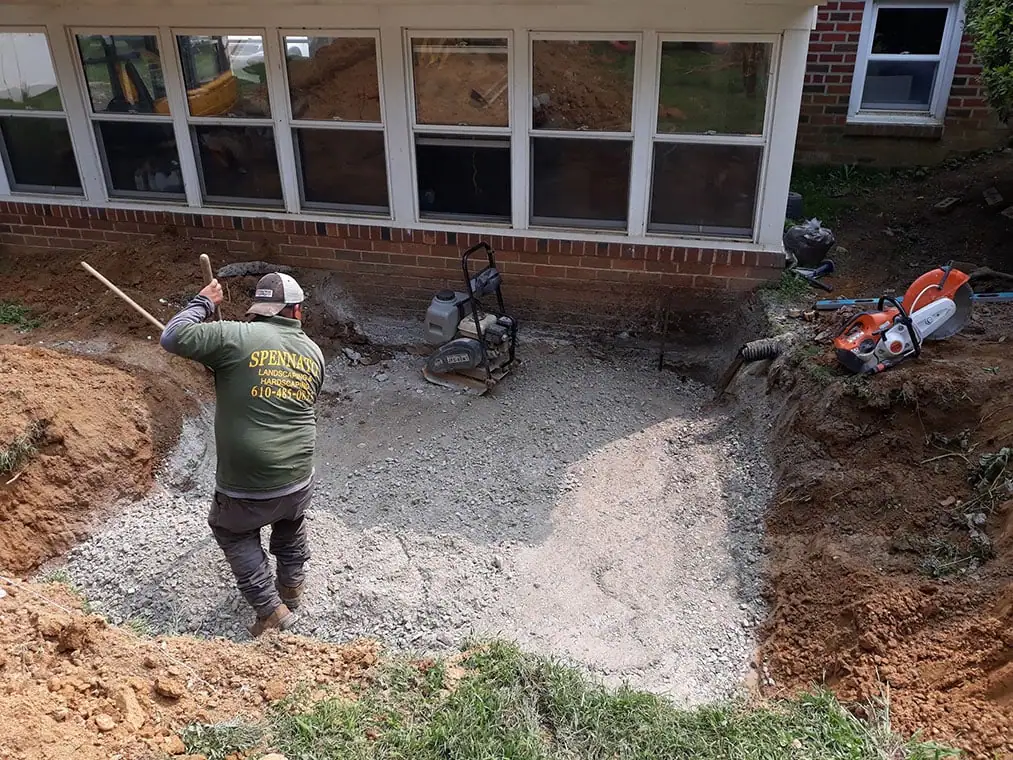
It starts with a consultation on your property. Not a phone estimate, not a number pulled from square footage alone an actual walkthrough where the conditions of your specific lot get factored in. Lima yards have real variables: mature trees with root systems that affect where excavation can happen, grade changes that might need a retaining wall to create a usable level surface, and drainage patterns that determine how the base needs to be engineered. All of that gets assessed before a number is put in front of you.
From there, you get a written, itemized estimate. The range we work within $15 to $50 per square foot, with most projects landing between $3,500 and $12,000 is published openly, so you’re not walking into a conversation blind. Once you move forward, the design gets finalized around your specific space, your home’s character, and how you actually plan to use the patio. Material selection happens here too, and for Lima’s older homes, that conversation often leads toward flagstone or natural stone over concrete.
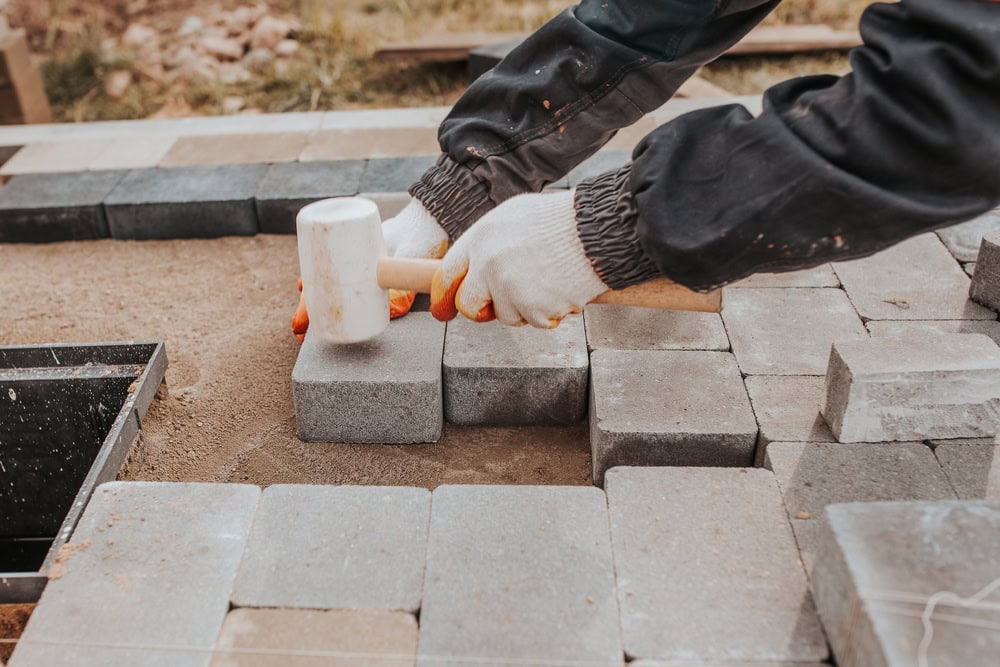
Installation begins with excavation and site preparation, followed by base compaction, surface material placement, polymeric sand jointing, and sealing. One good note for Middletown Township homeowners: ground-level paver patios don’t require a building permit here, which means no waiting on approvals and no administrative delays before work can start. The site gets cleaned up completely when the job is finished not mostly finished, actually finished.
Ready to get started?
We install paver patios, flagstone patios, natural stone patios, and concrete patios and the right choice depends on your home, your yard, and what you want the space to do. For Lima properties, flagstone and Pennsylvania Bluestone come up often. The older homes in this community, many of them mid-century colonials or historic farmhouses, have a character that natural stone complements in a way that manufactured pavers or stamped concrete simply don’t. If you’re near the Tyler Arboretum area or on one of the wooded stretches off Middletown Road, that material conversation matters.
Beyond material, the scope of what gets built varies. Some Lima homeowners want a straightforward backyard patio a clean, level space to use the yard they’ve had for decades. Others are looking at covered patio ideas to extend the usable season through spring and fall, or small patio designs that work around the root systems and established landscaping that come with a mature lot. Retaining walls, walkways, and outdoor kitchen integration are all options depending on what the space calls for.
What doesn’t change across any of these projects is the base. Clay-heavy soil and freeze-thaw winters are not forgiving of shortcuts. Every installation we complete regardless of surface material or project size gets the same compacted aggregate base, the same drainage engineering, and the same edge restraint system. That’s what makes the difference between a patio that lasts and one that doesn’t.

For ground-level paver patios in Lima, the answer is no Middletown Township’s building code does not require a permit for ground-cover paver patios. That’s confirmed directly in the Township’s own FAQ documentation. It’s one of the more homeowner-friendly aspects of working in this jurisdiction, and it means your project can move from signed contract to installation start without waiting on a permit approval cycle.
Where permits do come into play is with elevated structures decks over 30 inches above grade require a permit in Middletown Township and with certain structural additions like covered roofed structures or retaining walls above a specified height. If your project involves any of those elements, Middletown Township’s Planning and Development Department at 27 North Pennell Road in Media handles those questions at 610-565-2700. We can help you understand what your specific project requires before anything gets scheduled.
Our pricing runs $15 to $50 per square foot, and most residential patio projects in the Lima area land between $3,500 and $12,000. Where your project falls within that range depends on the size of the patio, the material you choose, and the site conditions on your specific lot. A straightforward paver patio on a level yard with easy access is going to cost less than a flagstone installation on a wooded Lima lot that requires root navigation, grade adjustment, or a retaining wall to create a usable surface.
Lima’s clay-heavy soil and mature tree coverage do add complexity to some installations that wouldn’t exist on a simpler suburban lot and that complexity affects cost. But it also affects longevity. A contractor who prices a Lima patio the same as a flat, open lot in a newer subdivision is probably cutting something somewhere. The base preparation required for this area’s soil and freeze-thaw conditions is not optional if you want the patio to hold up. We provide written, itemized estimates so you know exactly what you’re paying for before any work starts.
For Lima’s older housing stock mid-century colonials, historic farmhouses, and established properties with real architectural character natural stone tends to be the right answer. Flagstone and Pennsylvania Bluestone in particular have a look and texture that fits homes with age and history behind them. They don’t look like an addition that was tacked on. They look like they belong.
Stamped concrete is a popular option in newer suburban developments, but it can look out of place on a Lima property with mature landscaping, an older foundation, and a home that has genuine character. Concrete also carries a long-term risk in Pennsylvania’s climate it expands and contracts with freeze-thaw cycles and is prone to cracking over time in ways that individual pavers are not. With pavers or natural stone, a single damaged unit can be replaced without disturbing the rest of the surface. With a concrete slab, a crack is a crack. For a Lima home that you want to look right for the next twenty years, natural stone or quality pavers are usually the better long-term investment.
This is one of the most common real-world challenges on Lima lots, and it’s worth understanding before you start planning. Large root systems especially from the mature oaks and hardwoods that define Lima’s tree canopy can run wide and shallow, directly into the area where excavation needs to happen. Depending on the root layout, that can affect where the patio can realistically be placed, how deep excavation can safely go without damaging the tree, and what drainage solutions need to be built into the design.
It’s not a reason to avoid a patio. It’s a reason to work with a contractor who actually assesses the lot before committing to a layout. The design process should account for root zones, shade patterns that affect drainage and moisture retention, and the fact that leaf fall from Lima’s canopy creates ongoing considerations for joint sand and surface drainage. A patio designed around your specific trees rather than a generic template dropped onto your yard is going to perform better and look better over time.
Most residential patio installations take between two and five days of active work, depending on the size of the project, the material being used, and the site conditions. A straightforward paver patio on a prepared lot moves faster than a flagstone installation on a Lima yard that requires grade correction, root navigation, or a retaining wall. The design and planning phase consultation, estimate, material selection, scheduling typically happens in the weeks before installation begins.
Timing matters in Delaware County. The ideal installation windows are spring and early fall, when temperatures are moderate and the ground is workable. Paver work can proceed in temperatures above freezing, so fall installations are possible in Lima, but the dense leaf fall from the community’s mature tree canopy creates site prep considerations that can add time. If you’re planning a patio for spring or summer use, the late winter and early spring planning window January through April is when our schedule fills up. Getting on the calendar early is the difference between a patio that’s ready for summer and one that gets pushed to fall.
The most important thing to verify is whether the contractor is going to be reachable after the job is done. It sounds basic, but contractor abandonment after project completion is one of the most documented complaints in this industry BBB data backs that up consistently. For Lima homeowners, many of whom have been in their properties for decades and are making a deliberate, long-term investment, that concern is real and reasonable. Ask directly: who do you call if something needs to be addressed six months from now? Get a name, not a company email.
Beyond post-completion accountability, ask specifically about base preparation. In Middletown Township’s clay-heavy soil, the base is everything. A contractor who can’t explain their compaction process, their drainage slope, or their edge restraint system in plain terms is probably not building a base that will hold up through five or ten Delaware County winters. Also confirm they know the local permit requirements ground-level paver patios in Middletown Township don’t require a building permit, and a contractor working regularly in this area should know that without hesitation. Local knowledge isn’t a bonus. It’s a baseline.
Useful Links