
Hear from Our Customers
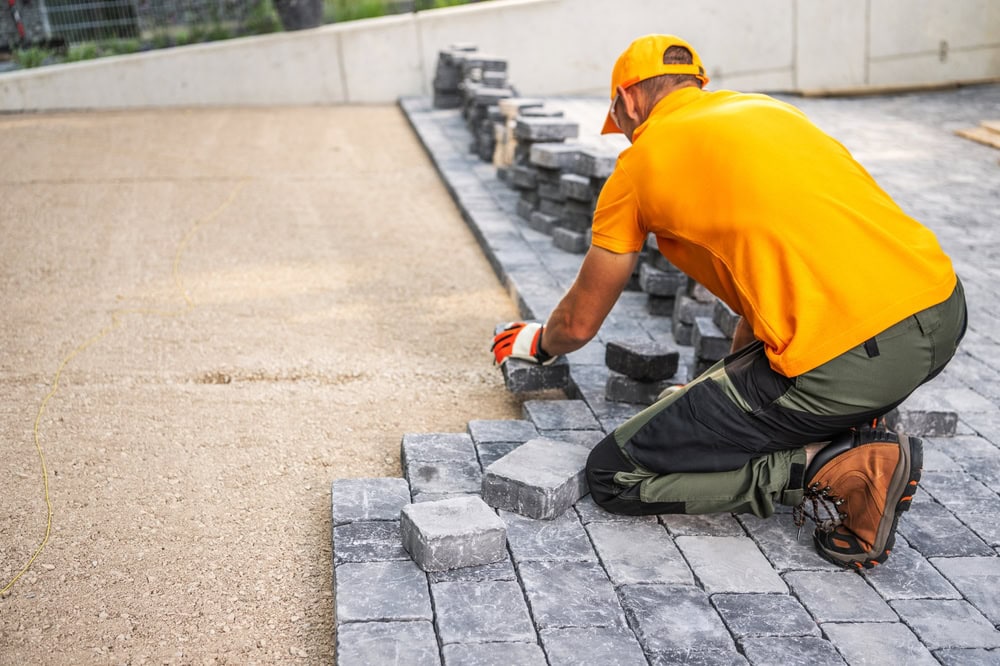
Most Lansdowne backyards were never designed with outdoor living in mind. They came with the house a strip of lawn, maybe an old concrete slab that’s been heaving and cracking for years and nobody ever gave them a second thought. That changes when you put a well-built patio back there. Suddenly you have a place to actually use.
What a properly installed patio gives you is not complicated: a level, durable surface that handles real Pennsylvania weather, drains correctly, and looks like it belongs to your house. For the older homes that make up most of Lansdowne’s housing stock Victorian twins, Craftsman bungalows, brick row homes along streets like Baltimore Avenue that last part matters more than people realize. The wrong material or the wrong scale can look completely out of place. The right design makes the whole property feel more complete.
Lansdowne also sits within the Darby Creek watershed, which means drainage is not just an aesthetic concern. A patio graded even slightly wrong can push water toward your foundation instead of away from it. Every installation we do accounts for this proper slope, correct base depth, and drainage that works with your property’s specific conditions, not against them.
We’re based in Aston, PA Delaware County, same as you. Renato Spennato has been doing this work in Lansdowne and surrounding communities for over 15 years, and our business is still built around one straightforward idea: the person you talk to during the quote is the same person responsible for the finished product.
There are no subcontractors brought in for the base work while a different crew handles the surface. No accountability gap when something needs to be addressed after the job is done. One team, one point of contact, one standard of work across the whole project. That is not a small thing in a category where the most common complaint by a wide margin is a contractor who stops returning calls the moment the final payment clears.
Lansdowne homeowners tend to be invested in their borough. They know about the Lansdowne Theatre renovation, they shop the Saturday Farmers Market, they chose this community deliberately. When you hire locally and hold a contractor accountable, that accountability is real. We’ve been building that kind of reputation across Delaware County for a long time.
It starts with a conversation about your yard, your goals, and your budget. Lansdowne lots are not one-size-fits-all a narrow backyard behind a twin on a tree-lined block needs a completely different approach than a wider corner lot. We look at the actual space before making any recommendations, because a design that ignores your mature oak tree or your existing drainage grade is going to create problems down the line.
From there, you get a clear written quote with material options and pricing broken down so you understand what you are paying for. We publish pricing openly $15 to $50 per square foot depending on material, with most projects landing between $3,500 and $12,000 so you are not walking into a sales call blind. Once you are ready to move forward, permitting gets handled properly. Lansdowne Borough’s form-based zoning code has specific requirements for outdoor construction, including documentation, contractor registration, and insurance certificates naming the borough as certificate holder. That process is not something you should have to figure out on your own.
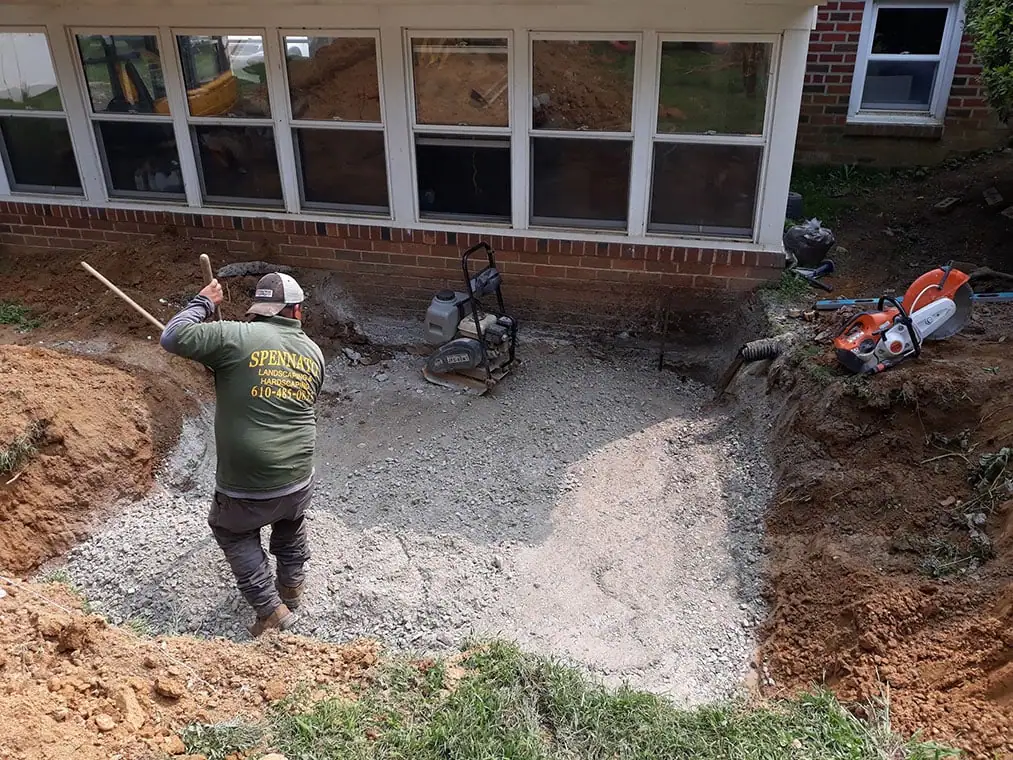
Installation starts with excavation and base preparation the part most homeowners never see but that determines everything about how the patio holds up over time. A minimum five-inch compacted aggregate base, correct drainage slope, and solid edge restraints go in before a single paver or stone is set. That foundation is what keeps the surface level after five, ten, twenty Pennsylvania winters.
Ready to get started?
The surface material you choose matters more in Lansdowne than it does in newer suburban communities, because the homes here have a specific architectural character that goes back over a century. A modern stamped concrete pattern can look jarring against a 1905 brick Victorian. Natural flagstone, Pennsylvania Bluestone, and brick pavers tend to complement older homes in a way that feels intentional rather than tacked on.
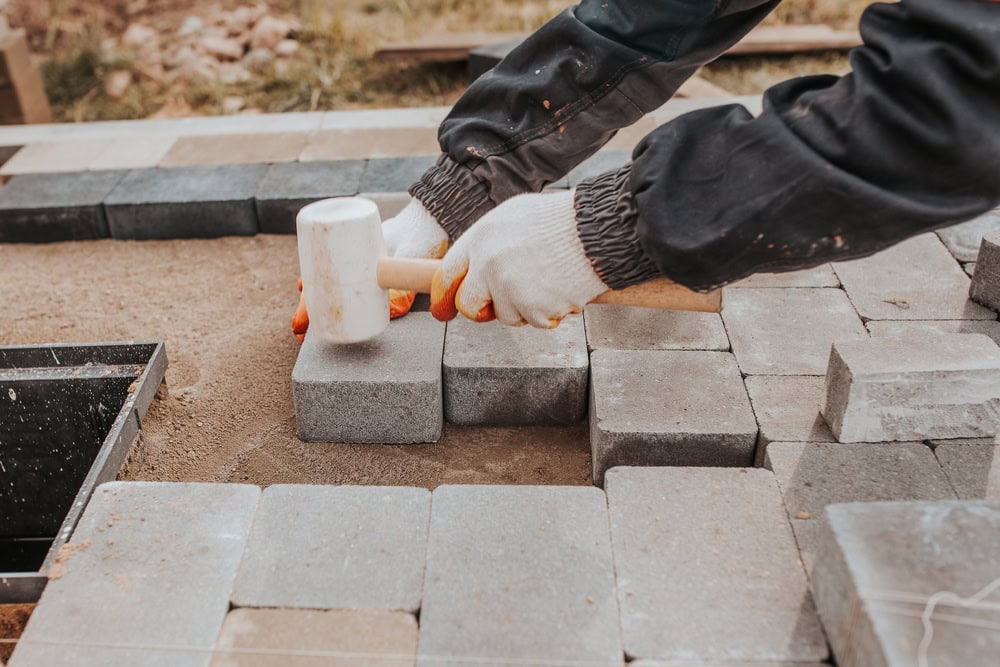
For homeowners who want the most durable and repair-friendly option, interlocking concrete pavers are hard to beat. Individual pavers can be removed and reset if settling occurs which matters in older properties where the ground has had decades to shift. Flagstone and natural stone offer a more organic look that pairs well with Lansdowne’s Craftsman bungalows and Victorian-era architecture. Poured and stamped concrete is a more budget-conscious option and can work well when the design and base preparation are done correctly but it is less forgiving in Pennsylvania’s freeze-thaw conditions, and it cannot be spot-repaired the way pavers can.
Covered patio structures are also available for homeowners looking to extend usability into the shoulder seasons. Lansdowne’s building code specifically adopts standards for patio covers on one- and two-family dwellings, so the permitting pathway for covered installations is established. If you work from home and a growing share of Lansdowne residents do a covered outdoor space becomes a genuinely functional extension of your day, not just a weekend amenity.

Yes, and the process in Lansdowne is more involved than in many neighboring boroughs. The borough adopted a form-based zoning code in 2008, which means you will need zoning approval before a construction permit can be issued. The borough explicitly recommends consulting with the Zoning Officer before submitting any application, because the form-based code adds requirements beyond what a standard residential zoning ordinance would ask for.
For the construction permit itself, the borough requires a signed contract between the property owner and contractor, the contractor’s Pennsylvania registration card and number, project drawings and details, and proof of general liability and workers’ compensation insurance with Lansdowne Borough named as the certificate holder. If your property falls within or near one of the borough’s four National Register of Historic Places districts, there may be additional review requirements depending on the scope of the project. We handle this process and have the documentation ready, which saves you a significant amount of time and frustration.
For most residential projects in Delaware County, patio installation runs between $15 and $50 per square foot depending on the material you choose. That puts most completed projects somewhere between $3,500 and $12,000. Natural flagstone and Pennsylvania Bluestone sit toward the higher end of that range. Interlocking concrete pavers fall in the middle. Poured concrete is typically the most affordable option upfront, though it carries higher long-term risk in Pennsylvania’s freeze-thaw climate if the base preparation is not done correctly.
For Lansdowne specifically, compact lot sizes mean most projects are on the smaller end of the square footage spectrum which keeps total costs more manageable than you might expect. The more important number to think about is long-term value. Professionally installed patios return more than 80 percent of their cost at resale, and paver installations specifically deliver 30 to 50 percent better ROI than plain concrete. In a market where Lansdowne home values have risen nearly 13 percent year-over-year, that return is meaningful.
The honest answer depends on what your home looks like and what you want the finished patio to feel like. For the Victorian twins, Craftsman bungalows, and brick row homes that make up the majority of Lansdowne’s housing stock, natural stone and flagstone tend to be the most architecturally compatible options. Pennsylvania Bluestone in particular has a regional character that reads as authentic next to century-old homes rather than out of place.
Brick pavers are another strong option for older properties they carry a historical resonance that complements pre-war architecture, and they are significantly more durable and repairable than poured concrete. If budget is a primary concern, stamped concrete can be designed to approximate the look of stone or brick, but it is worth understanding the trade-off: concrete cannot be spot-repaired when a section cracks or settles, and in Pennsylvania’s climate it is more vulnerable to freeze-thaw damage over time. For a home you plan to stay in for years, the material that holds up and can be maintained is almost always the better investment.
Southeastern Pennsylvania experiences roughly 40 or more freeze-thaw cycles per year. What that means practically is that water gets into any small gap or crack in a patio surface, freezes, expands, and forces that gap wider. Over several winters, a patio with inadequate base preparation will heave, sink, crack, and become uneven sometimes dramatically. If you have lived in Lansdowne for any length of time, you have probably seen exactly this on older driveways and sidewalks throughout the borough.
The fix is not a better surface material it is a better base. A minimum five-inch compacted aggregate base, properly graded for drainage, is what separates a patio that stays level for 25 years from one that starts failing after three winters. Polymeric jointing sand between pavers also helps by locking the surface together and resisting the weed growth and moisture infiltration that accelerates freeze-thaw damage. This is work that happens underground and out of sight, which is exactly why it is the part most contractors cut corners on. It is also the part that determines everything about how your patio performs long-term.
Absolutely and in many cases, a smaller, well-designed patio does more for a compact Lansdowne backyard than a larger one would. The goal is proportion. A patio that fills every square foot of available space can feel like it is swallowing the yard rather than enhancing it. A 150 to 200 square foot patio with defined edges, appropriate material, and a clear relationship to the house and existing landscaping can completely transform how a backyard feels and functions.
Compact lots also tend to come with mature trees, established plantings, and sometimes complex drainage grades all of which need to be accounted for in the design. Lansdowne’s tree canopy is one of the things residents love most about the borough, and working around established root systems without damaging them requires real planning. A contractor who treats your 40-year-old oak as an obstacle to work around carelessly is going to create problems you will not see until years later. The design conversation should start with what is already there, not with a template dropped onto your yard from a catalog.
This is the right question to ask, because the most common complaint in this industry documented consistently in BBB data is contractors who become unreachable the moment a project is finished. You call about a drainage issue six months later and get nothing. That pattern is common enough that it should factor into how you evaluate contractors before you hire anyone.
A few things worth looking at: How long has the contractor been operating in the area? A business that has been active in Delaware County for 15-plus years has a track record that a newer operation does not. Is there a named owner or operator you can hold accountable, or is it an anonymous LLC with a rotating crew? Does the contractor publish pricing openly, or do they withhold it to control the sales process? These are not foolproof signals, but they are meaningful ones. We commit to a 24 to 48 hour callback on quotes and clear communication throughout the project and because Renato Spennato is the person running the business, not a call center, that commitment has a real name attached to it.
Useful Links