
Hear from Our Customers
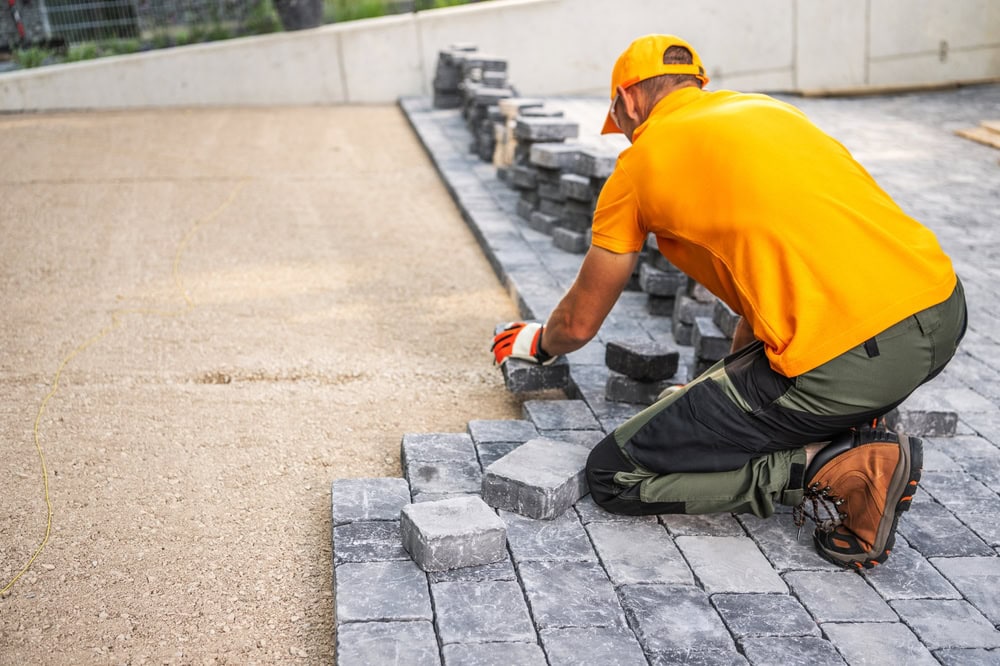
East Lansdowne homes were built mostly between 1911 and the 1940s. The lots are compact, the drainage is older, and the backyards are modest by design. A patio that actually works here isn’t the biggest one you can fit it’s the one built around how your yard flows, where the water goes, and how you actually want to use the space. That’s a different kind of thinking than most contractors bring to the table.
Delaware County winters are no joke. Freeze-thaw cycles hit hard every year water gets into the ground, freezes, expands, and contracts, repeatedly. Patios that fail after two or three winters almost always come back to the same root cause: the base work wasn’t done right. A properly compacted crushed aggregate base, correct drainage slope away from your foundation, and solid edge restraints aren’t optional extras. They’re what separates a patio that lasts 25 years from one that starts rocking and sinking before your third winter is over.
Beyond durability, a professionally installed patio adds real, measurable value to your home. Paver installations return more than 80% of their cost at resale and in East Lansdowne, where homes move quickly and buyers notice outdoor condition, that matters. You’re not just creating a space to enjoy this summer. You’re making a lasting improvement to one of your most significant financial assets.
We’re based in Aston, PA a Delaware County address, not a national platform that farms out leads to whoever’s available. Renato Spennato has been working throughout Delaware County’s boroughs for over 15 years, including the older, tight-lot communities of the eastern county like East Lansdowne, Lansdowne, Yeadon, and Aldan. That experience isn’t just a number. It means we understand what pre-WWII lots look like beneath the surface where drainage issues hide, how settled soil behaves under excavation, and what it takes to install a patio correctly on a property that’s been lived on for 80-plus years.
You’re not getting a rotating crew of subcontractors or a contractor who found your job on a lead-generation site and drove in from three counties away. You get our experienced team, a named owner who’s personally accountable, and a project that gets finished on time without the chaos that’s become normalized in this industry.
It starts with a conversation not a sales pitch. We’ll walk your backyard with you, look at how water currently moves across your yard, identify any drainage or grading concerns, and talk through what material makes the most sense for your space and your budget. For East Lansdowne’s older housing stock, this site assessment isn’t a formality. It’s where the real work begins, because no two pre-WWII lots behave the same way.
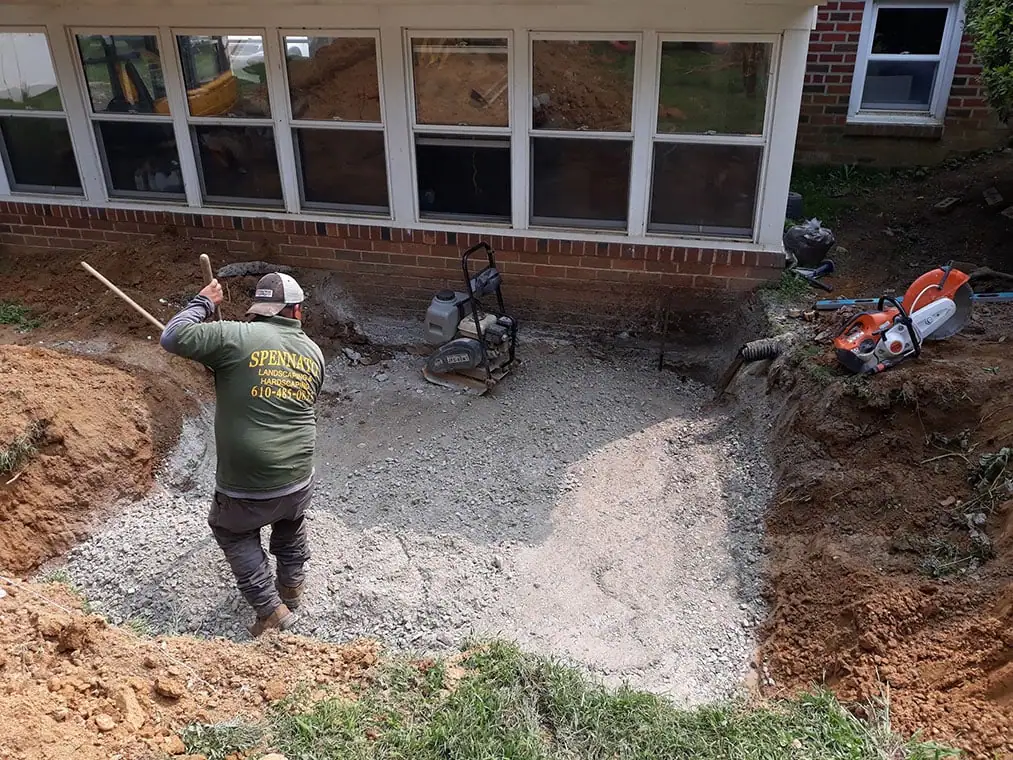
From there, you get a written estimate with a clear scope of work and a real project timeline before anything gets scheduled. If a zoning permit is required by East Lansdowne Borough (which it often is for patio projects that add impervious surface or involve significant grading), that process gets explained upfront so there are no surprises. The excavation and base preparation come first this is the most critical phase of the entire job, even though it’s the part you’ll never see once the surface goes down. The aggregate base gets compacted to the depth Pennsylvania’s frost zone demands, drainage slope is set correctly, and edge restraints are locked in before a single paver or stone gets placed.
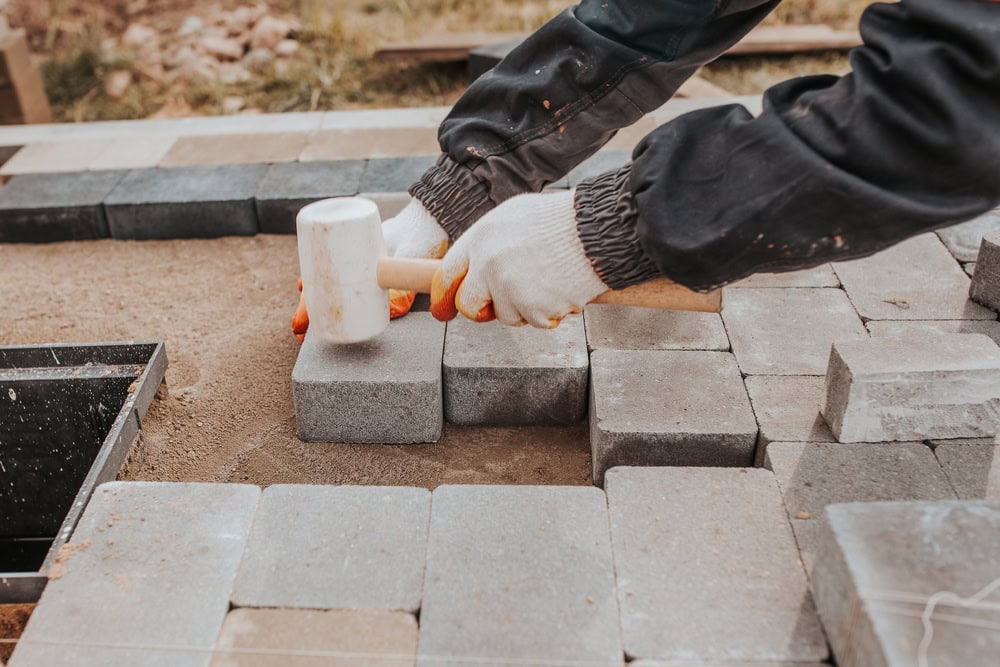
Installation follows in sequence, with the surface material whether interlocking pavers, natural flagstone, Pennsylvania Bluestone, or stamped concrete set, leveled, and finished with polymeric sand to lock joints and resist weeds. Final cleanup is part of the job, not an afterthought. When we leave, your yard is ready to use.
Ready to get started?
Interlocking concrete pavers are the most practical choice for most East Lansdowne properties. They handle Delaware County’s freeze-thaw cycles better than poured concrete, and if one section ever shifts or a paver gets damaged, you can replace individual pieces without tearing up the whole surface. That replaceability matters on older lots where soil movement is more likely over time.
Natural flagstone and Pennsylvania Bluestone are worth a serious look if your home has the pre-WWII character that’s so common throughout East Lansdowne. The organic texture and earthy tones of flagstone complement American Foursquares, Cape Cods, and bungalows in a way that a uniform concrete grid simply doesn’t. It’s a material that looks like it belongs not like it was added later. Stamped or colored concrete is a lower-cost option that works for some budgets, though it carries more cracking risk in a freeze-thaw climate and can’t be spot-repaired the way pavers can. That trade-off gets explained clearly so you can make the right call for your situation.
Pricing runs $15–$50 per square foot depending on material and complexity, with most projects landing between $3,500 and $12,000. For the 200–300 square foot footprints typical of East Lansdowne backyards, that puts a well-built paver patio in the $4,000–$7,500 range a realistic, plannable number, not a bait-and-switch starting point.

In most cases, yes and it’s worth knowing this before you start. East Lansdowne Borough requires a zoning permit prior to the erection or alteration of any structure and before any use or change in land that affects impervious surface. Patio installation particularly projects that involve significant excavation, grading changes, or the addition of a hard surface like pavers or concrete typically falls under that requirement. The borough’s zoning ordinance also addresses stormwater management, which means there are limits on how much of your lot you can cover with impervious material.
If impervious surface coverage is a concern for your specific lot, permeable paver options are worth discussing they allow water to filter through the joints rather than running off, which can help you stay within East Lansdowne’s zoning limits while still getting the patio you want. We walk you through the permit process as part of the project, so you’re not left figuring it out on your own.
The short answer is the base. Delaware County’s freeze-thaw cycles put real stress on anything installed in the ground water infiltrates the soil, freezes, expands, and then contracts as it thaws. If the base beneath your patio wasn’t compacted to the right depth or wasn’t graded to drain water away from the surface, that cycle works against the structure every winter until things start to move.
A properly built patio starts with excavation deep enough to get below the frost influence zone, followed by a compacted crushed aggregate base that gives the surface something stable to sit on. Edge restraints keep the perimeter locked in place so the whole field doesn’t migrate laterally over time. Polymeric sand in the joints resists washout and weed infiltration. None of this is visible once the surface goes down which is exactly why it matters so much who does the work. On East Lansdowne’s older, more settled lots, cutting corners on base preparation is how you end up with a patio that looks fine in June and starts rocking by March.
Most East Lansdowne backyards give you somewhere between 200 and 350 square feet of usable space once you account for the detached garage, any mature trees, and the existing grade. That’s not a limitation it’s just the starting point. A 200–250 square foot patio designed intentionally can function better than a larger slab that wasn’t thought through, because the design is built around how you actually use the space rather than how much room exists.
The key is defining zones. Even in a compact backyard, you can have a clear dining area, a lounging section, and a defined edge that transitions to the rest of the yard all within a modest footprint. Flagstone or pavers in a pattern that complements the home’s older architecture can make a small East Lansdowne patio feel like a natural extension of the house rather than an add-on. The goal isn’t to fill the yard it’s to make the yard work for you.
For most Delaware County homeowners, interlocking pavers hold up better over time specifically because of how Pennsylvania winters behave. Poured concrete is a single continuous slab, which means when freeze-thaw movement causes cracking (and it will, eventually), you’re dealing with a crack that runs through the whole surface. Repairs are visible and often involve significant work.
Pavers are individual units set in a compacted base. If one section shifts or a paver gets damaged, you lift and reset those specific pieces without touching the rest of the patio. That repairability is a practical advantage on East Lansdowne’s older lots, where soil that’s been settled for 80-plus years can behave unpredictably under new excavation. Stamped concrete can be a reasonable lower-cost option if budget is the primary driver, but the cracking risk in a freeze-thaw climate is real and worth factoring into the long-term math. Pavers cost more upfront and they tend to cost less over the life of the patio.
For a standard residential patio in the 200–400 square foot range, most projects run two to four days of active work from excavation through final cleanup. The timeline depends on the complexity of the design, the material chosen, and what the site conditions look like once excavation begins. On older East Lansdowne lots, it’s not uncommon to find drainage quirks or soil conditions that weren’t visible from the surface a contractor who’s worked in this area before knows to account for that rather than being surprised by it.
Scheduling is the other piece of the timeline conversation. The optimal installation window in Delaware County runs April through October, with late summer and early fall being particularly good timing the base materials have time to settle and compact before the first hard freeze. The best availability is typically secured in late winter when most homeowners haven’t started planning yet. If you’re thinking about a patio for this season, earlier in the year is the right time to have the conversation.
Our pricing runs $15–$50 per square foot, with most completed projects landing between $3,500 and $12,000. For the backyard footprints typical of East Lansdowne where most homes sit on modest pre-WWII lots with limited usable outdoor space a well-built 200–300 square foot paver patio generally falls in the $4,000–$7,500 range depending on material choice and site conditions.
That range is published openly because it lets you plan before you pick up the phone. There’s no pressure to sit through a consultation before you have any sense of what you’re looking at financially. The final number depends on your specific yard the excavation depth required, any drainage work needed, the material you choose, and the complexity of the layout. What doesn’t change is that the estimate you receive is written, firm, and complete not a low number designed to get the job that grows once work begins. For a homeowner in East Lansdowne treating this as a real investment in their property, that kind of transparency is part of what makes the decision easier.
Useful Links
Other Services we provide in East Lansdowne