
Hear from Our Customers
When the rear yard of a Collingdale row house gets ignored long enough, it stops feeling like yours. Maybe it’s a cracked slab that’s been heaving since the eighties. Maybe it’s just bare ground that collects water every time it rains. Either way, you’ve got a space with real potential that isn’t doing anything for you right now.
A properly built patio changes that. You get a defined outdoor area somewhere to put a table, fire up the grill, let the kids run around, or just sit outside without standing in the mud. For a family in a Collingdale row house where interior square footage is what it is, that rear yard becomes an actual room. One you’ll use from April through October.
The other thing worth knowing: in a dense neighborhood like Collingdale, where properties share fence lines and drainage runs close to neighboring foundations, how a patio is built matters as much as what it looks like. A correctly graded surface one that moves water away from your home and doesn’t push it toward your neighbor’s is the difference between a patio that holds up and one that creates problems. That’s not a bonus feature. It’s how the job should be done every time.
We’re based in Aston Delaware County, same as you. Renato Spennato has been doing this work across Collingdale and the surrounding county for over 15 years, and his name is on the business. That matters in a category where the most common complaint isn’t bad craftsmanship it’s contractors who take a deposit, finish the job, and then become impossible to reach the moment something needs attention.
That’s not how we work. One team handles your project from start to finish. No subcontractors, no handoffs, no wondering who to call. The same crew that pours the base is the same crew that sets the last paver and cleans up the site. And if something comes up six months later a paver that shifted after the first hard freeze, a drainage question you reach the same people who built it.
We work regularly throughout Southeast Delco, including the row house neighborhoods along MacDade Boulevard and the residential streets that connect Collingdale to Glenolden, Sharon Hill, and Darby Township. This isn’t a service area added to a map. It’s ground we know.
It starts with a conversation about your yard its dimensions, how you want to use it, what’s currently there, and what your budget looks like. If you’ve got an old concrete slab that needs to come out first, that gets factored in from the beginning, not added as a surprise line item later. We publish pricing openly: most projects run $15–$50 per square foot, with the majority of Collingdale jobs falling between $3,500 and $12,000 depending on size and material. You’ll know where you stand before anything is signed.
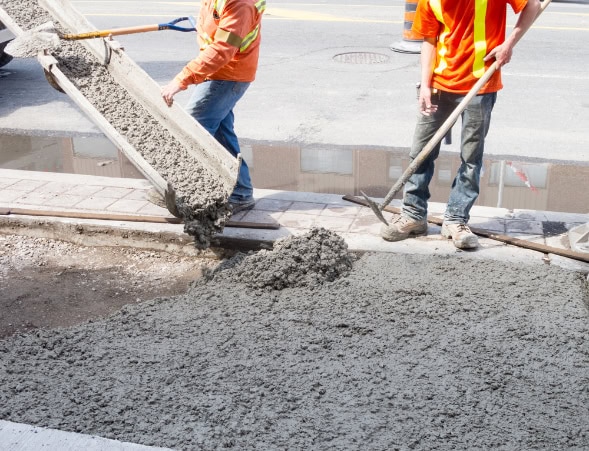
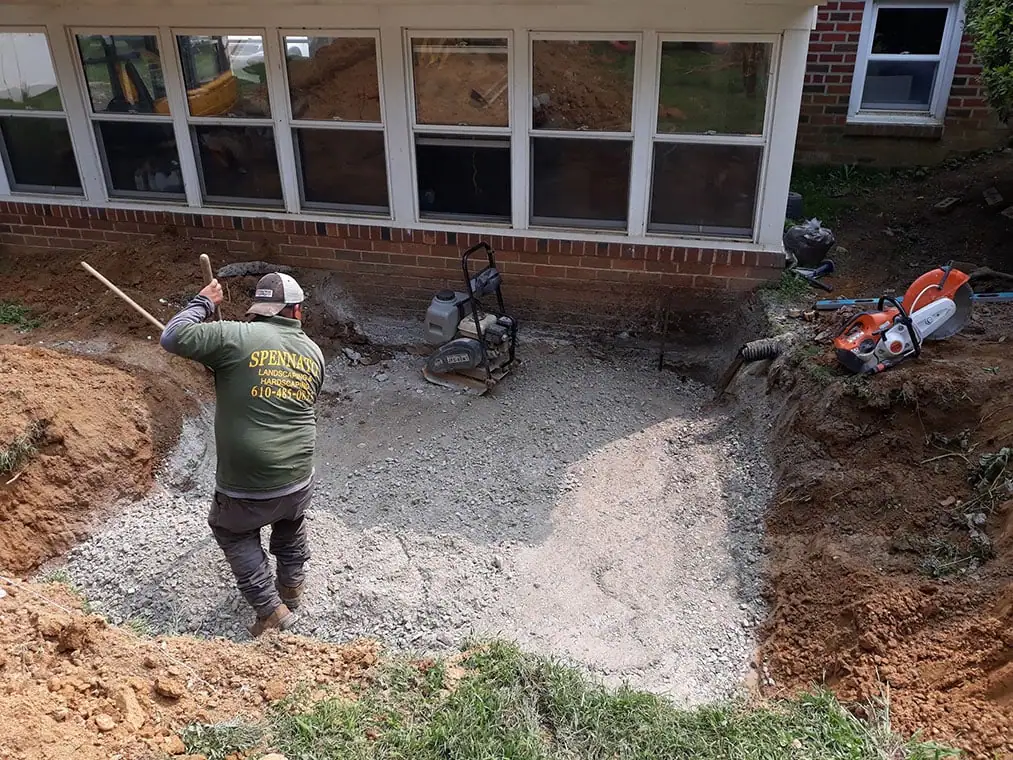
Once the design is agreed on and the project is scheduled, we handle everything demo and removal of the existing surface if needed, excavation, base preparation, and installation. The base work is the part most homeowners never see, but it’s what determines whether your patio looks the same in year fifteen as it does in year one. In southeastern Pennsylvania, where freeze-thaw cycles hit hard every winter, a minimum compacted aggregate base with proper drainage slope isn’t optional it’s the whole game.
If your project requires a permit through Collingdale Borough, we address that during the planning phase. The borough administers its own building and zoning requirements, and we’ll walk you through what applies to your specific project so nothing gets missed. When the work is done, the site gets cleaned up and you’re left with a finished patio not a construction zone.
Ready to get started?
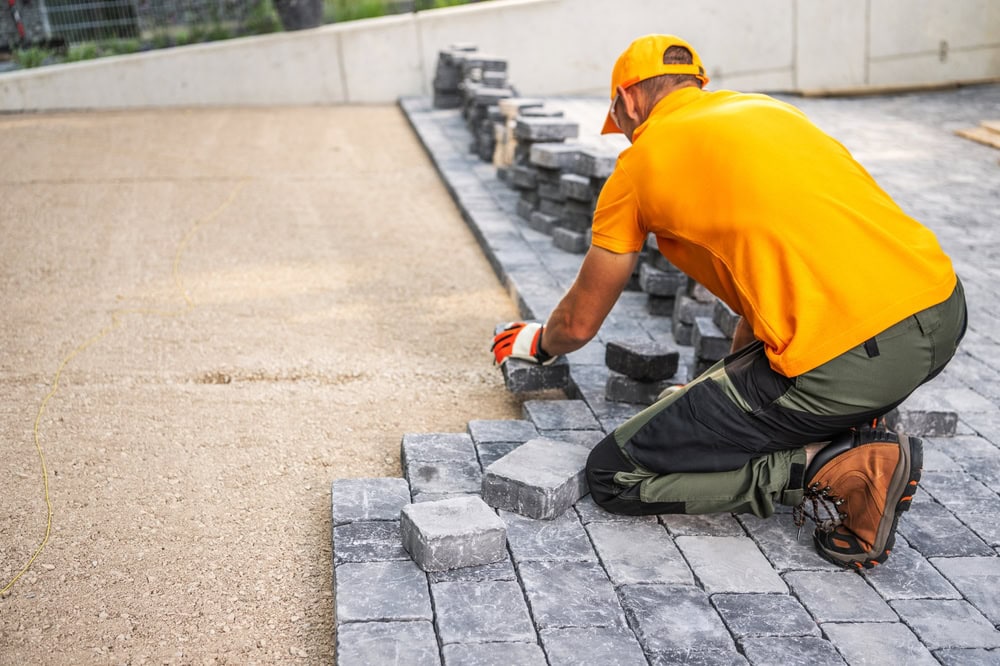
Paver patio installation is the most popular choice for Collingdale homeowners, and for good reason. Individual pavers handle Pennsylvania’s freeze-thaw cycle better than a solid concrete slab they allow for minor movement without cracking, and if a section ever needs attention, you’re resetting a few pavers, not jackhammering an entire surface. They also deliver 30–50% better ROI at resale compared to plain concrete, which matters in a market where median home values sit around $160,000–$190,000 and every improvement needs to pull its weight.
Flagstone is a natural option for homeowners who want something with more character irregular shapes, earthy tones, a look that feels less manufactured. It works well in smaller Collingdale rear yards where the goal is a relaxed, garden-style space rather than a formal outdoor room. Concrete remains a cost-effective choice when budget is the primary driver, and stamped or finished concrete can look sharp when it’s done right. The best material depends on your specific yard, your timeline, and what you’re trying to accomplish.
Covered patio structures pergolas, lattice overhead covers, shade sails are worth considering in Collingdale’s row house neighborhoods where privacy and shade are both in short supply. A well-placed overhead structure creates the sense of an outdoor room rather than just an outdoor surface. We can incorporate these elements into the overall design so everything is planned together from the start, not bolted on as an afterthought.

It depends on the scope of the project. In Collingdale Borough, ground-level patio installation pavers or concrete set at or near grade often falls below the threshold that triggers a building permit requirement, but that’s not a blanket rule. If the project involves any elevated structure, significant grading changes, or work near the foundation, the borough may require a permit through their administrative office.
The safest approach is to confirm with Collingdale Borough directly before breaking ground. We address this during the planning phase we know what Delaware County boroughs typically require and will advise you on what applies to your specific project. You won’t be left guessing, and you won’t find out after the fact that something needed approval. Getting that piece right upfront is part of doing the job correctly.
Most patio projects in Collingdale run between $3,500 and $12,000, with pricing landing somewhere in the $15–$50 per square foot range depending on material, size, and site conditions. Pavers sit toward the higher end of that range; concrete is typically more affordable. If you have an existing cracked slab that needs to be removed first which is common in Collingdale’s older row house stock demo and disposal gets factored into the estimate upfront, not added on later.
For a compact rear yard in a Collingdale row house, a well-designed paver patio in the 200–300 square foot range is a realistic and common scope. That kind of project typically falls in the $4,000–$7,500 range depending on material choice and any additional features like a border treatment or edging. We provide written, itemized estimates so you know exactly what you’re paying for before any work begins.
Concrete pavers are the most durable option for southeastern Pennsylvania’s climate. The freeze-thaw cycle which hits Delaware County with 40 or more cycles in a typical winter is the primary reason older concrete slabs crack and heave over time. The problem usually isn’t the surface material itself. It’s that the base underneath wasn’t built to handle the ground movement that comes with repeated freezing and thawing.
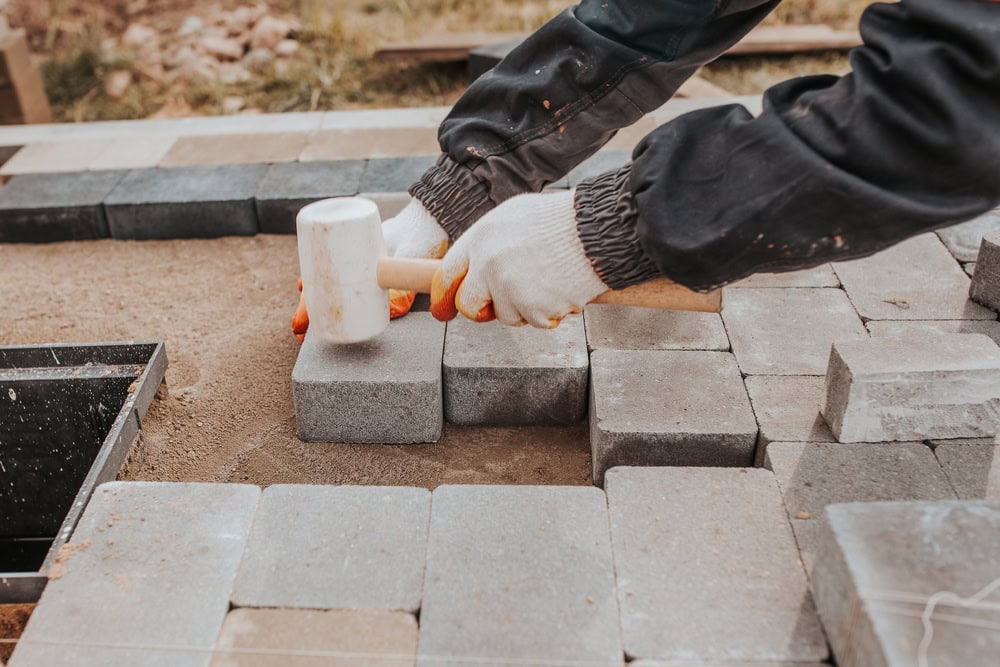
Properly installed pavers sit on a compacted aggregate base that allows for minor movement without cracking the surface. If a paver ever shifts, it can be reset individually you’re not replacing the whole patio. Flagstone performs well too when it’s set correctly. Plain concrete can hold up, but it’s more vulnerable to surface cracking over time if the base isn’t right. Whatever material you choose, the base preparation is what determines how it holds up after ten or fifteen Pennsylvania winters.
Yes and it’s something we do regularly in Collingdale and the surrounding Southeast Delco neighborhoods. Row house rear yards in this area are typically narrow, running anywhere from 16 to 22 feet wide with limited depth. That’s a real constraint, but it’s a design problem with good solutions, not a reason to skip the project.
A 200–300 square foot patio designed for a compact Collingdale row house yard can include a defined seating area, space for a grill, and still leave enough open ground to feel like a yard rather than a parking pad. The key is proportion keeping the patio scaled to the space so it doesn’t overwhelm the yard or push drainage toward the shared fence line. We work in these conditions regularly and know how to design something that functions well and looks right in a tight footprint. Small doesn’t have to mean settling.
For a typical Collingdale project a 200–400 square foot paver or concrete patio the installation itself usually takes two to four days once work begins. That includes demo of any existing surface, excavation, base preparation, and the final installation. Larger projects or those with additional features like a pergola or border work may run a few days longer.
The fuller timeline includes the period between your initial consultation and the project start date. Spring and early summer are peak scheduling seasons throughout Delaware County, so homeowners who reach out in late winter or early fall tend to get better access to the calendar. If you’re hoping to have something finished before summer, the earlier you start the conversation, the better. October is generally the last reliable month for full patio installation before the ground starts to freeze, so fall projects have a real window it’s just a tighter one.
This is one of the most common concerns homeowners in Collingdale have going into a patio project and for good reason. BBB complaint data consistently shows that contractor unresponsiveness after project completion is one of the most documented problems in the hardscaping category. A contractor who’s easy to reach before the deposit and impossible to find six months later is a real pattern.
Our model is built around the opposite of that. One team does the work, one point of contact handles communication, and that contact doesn’t change after the final paver is set. If a paver shifts after the first winter, if there’s a drainage question, if anything about the finished product doesn’t hold up the way it should you call the same number you called to schedule the job. The accountability doesn’t end at project completion. In a close-knit community like Collingdale, where word travels fast between neighbors, that kind of follow-through is how we’ve kept working in these neighborhoods for over fifteen years.
Useful Links