
Hear from Our Customers
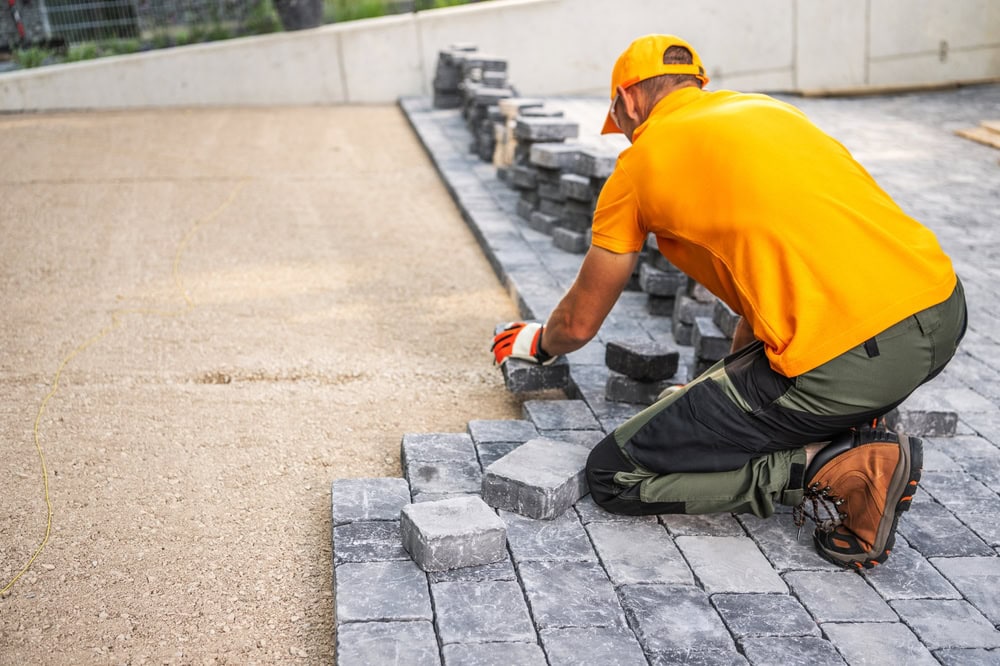
Chester sits right along the Delaware River, and that location puts your outdoor surfaces through more than the average Delaware County winter. Between the moisture cycling from the river and southeastern Pennsylvania’s 40-plus freeze-thaw cycles per year, a patio that wasn’t built on a proper base won’t last. It’ll heave, crack, and settle and you’ll be starting over in a few years.
When a patio is installed correctly, that doesn’t happen. The base is excavated, compacted, and graded so water drains away from your home’s foundation. The joints are packed with polymeric sand that hardens against weeds and resists moisture. The surface stays level because what’s underneath it was built to stay level. That’s what separates a patio that looks good in year one from one that still looks good in year ten.
For Chester homeowners specifically, there’s another piece that matters: most of the housing stock here was built in the 1940s or earlier, and a lot of those rear yards have old concrete that’s been failing for decades. Replacing it isn’t just about aesthetics it’s about fixing drainage problems that have been getting worse every season. A new patio done right solves both at once.
We’re based in Aston just a few miles up I-95 from Chester and have been serving Delaware County homeowners for over 15 years. This isn’t a franchise. It’s not a company that wins bids and hands the work off to whoever’s available. One experienced crew handles your project from the first shovel to the final cleanup, and the same people who built it are the ones you call if anything comes up afterward.
That matters more than it sounds. BBB complaint data consistently shows that contractor unresponsiveness after a job is one of the most common grievances in this industry. Our model is built around the opposite clear communication before, during, and after the project. Chester homeowners near Crozer Park, Crozer Hills, or anywhere else in the city can expect a written estimate, a real timeline, and a crew that shows up when we say we will.
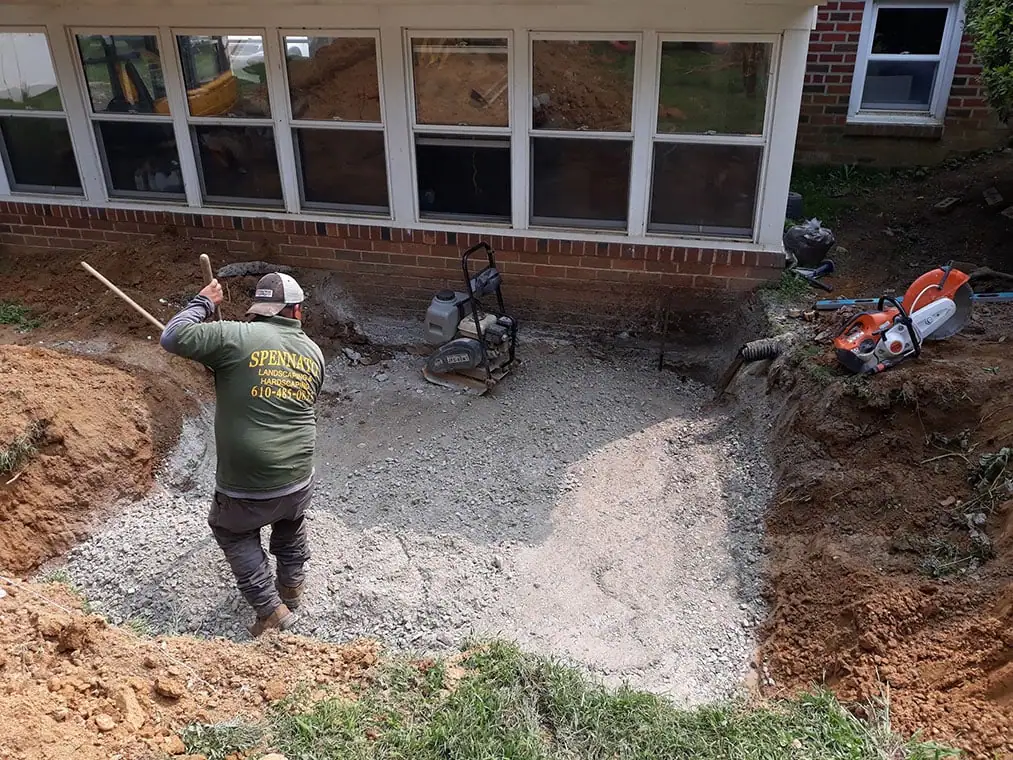
It starts with a site consultation. Someone from our team comes out, looks at your actual yard not a photo, not a satellite image and talks through what you’re working with. For Chester properties, that usually means a compact rear yard, older soil conditions, and in many cases, existing concrete that needs to come out first. All of that gets factored into the estimate before anything is agreed to.
Once you’re ready to move forward, the work begins with excavation and base preparation. This is the part most homeowners never see, but it’s the part that determines whether your patio lasts. A proper aggregate base at least five inches deep in frost-affected areas like southeastern Pennsylvania is compacted in layers, graded for drainage, and checked before a single paver or stone goes down. For Chester’s older homes, this step sometimes reveals drainage issues that need to be corrected at the same time, and we address that as part of the project, not pass it off to someone else.
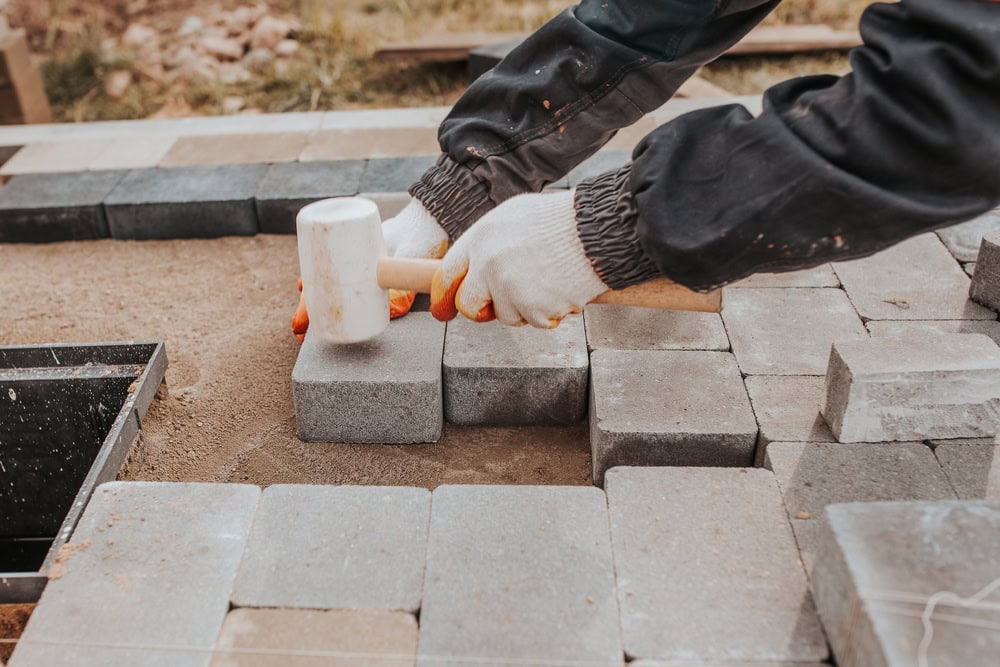
From there, the surface goes in whether that’s interlocking pavers, flagstone, stamped concrete, or standard concrete followed by jointing, edging, and cleanup. Most residential patio installations in Chester are completed within one to three days depending on scope. If your project involves a covered structure or any elevated elements, Chester’s Licensing and Inspection department may require a permit, and that’s something we confirm before work begins. We walk through that with you upfront so there are no surprises mid-project.
Ready to get started?
Chester’s housing stock is mostly twins and row homes properties with character, history, and rear yards that are compact by design. That’s not a limitation, it’s just a different starting point. A well-designed 150 to 250 square foot paver patio with defined zones for dining and sitting can completely transform how you use your outdoor space, and it doesn’t require a large lot to do it.
For material, the choice usually comes down to what you want the space to look and feel like, and what your budget allows. Interlocking concrete pavers are the most durable and flexible option individual units can be replaced if one ever shifts or cracks, and they handle Pennsylvania’s freeze-thaw cycles better than poured concrete. Flagstone and Pennsylvania Bluestone are a natural fit for Chester’s older Colonial and early-20th-century homes, where natural stone complements the architecture in a way stamped concrete simply can’t replicate. Poured or stamped concrete is a solid lower-cost entry point, particularly for homeowners replacing an old slab who want a clean, finished surface without the higher per-square-foot cost of pavers.
Pricing for patio installation in Chester typically runs $15 to $50 per square foot depending on material and scope, with most projects falling between $3,500 and $12,000. That range is published openly because you shouldn’t have to make a phone call just to know whether something fits your budget. A written, itemized estimate is provided before any work begins no verbal quotes, no moving targets.

For most Chester homeowners, patio installation runs between $3,500 and $12,000, with a per-square-foot cost of roughly $15 to $50 depending on the material you choose. Concrete sits at the lower end of that range, pavers land in the middle to upper range, and natural stone like Pennsylvania Bluestone or flagstone tends to be at the higher end. The size of your yard plays a big role too Chester’s twin homes and row houses typically have compact rear yards, which means many projects here come in at the lower end of that range without sacrificing quality or design.
What can push a project higher is existing concrete removal, drainage correction, or any covered structure like a pergola. If you’re replacing an old failing slab which is common in Chester given the age of the housing stock that adds demo and disposal costs. All of that gets laid out in a written estimate before work starts, so you know exactly what you’re committing to.
Interlocking concrete pavers are generally the most freeze-thaw resistant option available, and that matters a lot in southeastern Pennsylvania where you’re looking at 40 or more freeze-thaw cycles per year. Unlike poured concrete, which expands and contracts as a single slab and tends to crack over time, pavers move slightly with the ground and can be individually replaced if one ever shifts or settles. That flexibility is a real advantage in a climate like Delaware County’s.
That said, the material is only part of the equation. The base is what actually determines whether your patio survives the winters. A minimum five-inch compacted aggregate base, properly graded for drainage, is what keeps pavers level year after year. Chester’s proximity to the Delaware River adds a moisture dimension that makes drainage slope even more critical here than in inland suburban towns water that pools under your patio or near your foundation will accelerate freeze-thaw damage regardless of what surface material you chose.
For a standard ground-level patio pavers, flagstone, or concrete installed at grade most Pennsylvania municipalities don’t require a building permit under the state’s Uniform Construction Code. Chester generally follows that standard, but the City of Chester’s Licensing and Inspection department is the right place to confirm current requirements before work begins, since interpretations can vary and code updates do happen.
Where permits become more likely is when you’re adding a covered structure a pergola, a roof extension, or any overhead element attached to the home. If that’s part of your patio vision, it’s worth a quick call to Chester’s Licensing and Inspection office to confirm what’s needed. We walk through this with you during the estimate phase so you’re not discovering a permit requirement after the project has already started. It’s a simple step that saves a lot of headaches.
Most residential patio installations in Chester are completed in one to three days once work begins, depending on the size of the project and whether existing concrete needs to be removed first. A straightforward 200-square-foot paver patio on a prepped surface can often be done in a single day. A project that involves demo, drainage correction, and a larger or more complex layout will take longer typically two to three days.
The part that takes more time upfront is the estimate and planning phase, and that’s intentional. Rushing into an installation without properly assessing the site especially on Chester’s older properties where you might find drainage issues or unstable soil under an old slab leads to problems that show up later. Taking a few extra days to plan means the installation itself goes smoothly and stays on schedule. Once a start date is confirmed, the goal is to finish within the agreed window, not drag it out over multiple interrupted visits.
Neither is universally better they’re different tools for different situations. Poured concrete is less expensive upfront and gives you a clean, solid surface. The downside is that when it cracks and in Pennsylvania’s freeze-thaw climate, it eventually will you’re typically looking at patching or full replacement, not a simple repair. Stamped concrete adds visual interest but doesn’t change that underlying vulnerability.
Pavers cost more per square foot, but they hold up better over time in this climate, and individual units can be lifted and reset if settling occurs. They also tend to deliver stronger ROI at resale professionally installed paver patios return 30 to 50% more than plain concrete at sale, which is worth factoring in if you’re thinking about Chester’s improving property values and the city’s ongoing revitalization. For homeowners in the Crozer Hills area or other parts of Chester where property investment is a real priority, pavers are usually the smarter long-term spend.
Yes and this is one of the most common questions from Chester homeowners for good reason. The rear yards on Chester’s twin homes and row houses are compact by nature, often 20 to 40 feet deep and 15 to 25 feet wide. That’s not a lot of square footage, but it’s more than enough for a well-designed patio that actually functions as an outdoor room.
The key is designing for the space you have rather than defaulting to a standard suburban template. A 150 to 200 square foot patio with a defined dining area, clean edge restraints, and the right material scale can feel intentional and complete not like a leftover corner of the yard. Flagstone or smaller-format pavers tend to work better visually in tighter spaces than large-format concrete units. Getting the proportions right from the start is something that comes from experience with this type of property, and it’s a conversation worth having during the site consultation before any material decisions are locked in.
Useful Links