
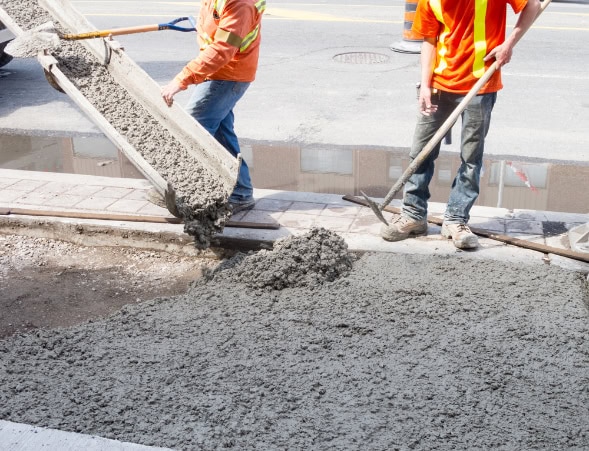
Hear from Our Customers
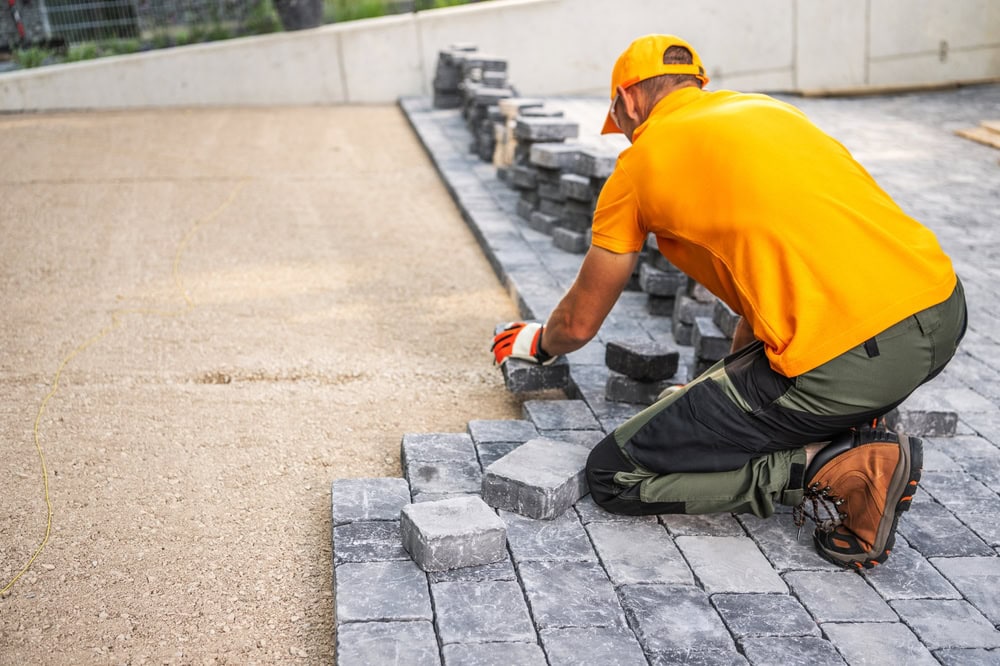
Most patios don’t fail because of bad materials. They fail because of what’s underneath a base that wasn’t compacted properly, drainage that wasn’t thought through, joints that let water in and let the freeze-thaw cycle do the rest. Delaware County gets 40+ freeze-thaw cycles a year. That’s not a worst-case scenario. That’s every winter. And it’s the reason a patio that looks fine in October can be heaving and cracking by March.
Chester Heights properties add another layer to this. A lot of homes here sit on sloped lots with mature tree canopy and proximity to the West Branch of Chester Creek. That means real drainage complexity water that needs somewhere to go, root systems that affect excavation, grade changes that have to be engineered into the design rather than ignored. A contractor who doesn’t account for those conditions isn’t cutting corners on purpose. They just don’t know the area well enough to know what they’re dealing with.
When the base is built right proper depth, proper compaction, proper slope away from the foundation the surface above it lasts. Pavers stay level. Flagstone stays tight. You’re not calling anyone for repairs in year three. That’s the outcome. Not a beautiful patio on day one, but a patio that still looks that way a decade later.
We’re based in Aston the borough directly north of Chester Heights. That’s not a detail we throw in to sound local. It means our crew knows what southern Delaware County soil looks like, how the ground behaves near the Chester Creek watershed, and what a real winter does to a poorly built patio base in Chester Heights and the surrounding area.
Renato Spennato has been doing this work in Delaware County for over 15 years. His name is on the business, and he’s reachable not a call center, not a regional office. Homeowners throughout Chester Heights have worked with contractors who disappear after the check clears. That’s not how we work. One crew, one point of contact, and a person who is genuinely accountable from the first site visit to the final walkthrough.
The Chester Heights community tends to attract homeowners who plan to stay. If you’re investing in your property for the long haul, you want a contractor who will still be here if something needs attention down the road.
It starts with a site visit, not a phone estimate. Chester Heights properties vary too much lot grade, tree coverage, drainage patterns, proximity to the creek for us to give you a useful number without seeing the ground first. During that visit, we discuss how you use the space, what materials make sense for your home’s character, and what the site itself is telling us about drainage and base requirements.
From there, you get a written scope and a real price range before anything is scheduled. Our published range runs $15–$50 per square foot, with most projects landing between $3,500 and $12,000 depending on size, materials, and site complexity. No number that triples when the crew shows up. If excavation or drainage work is going to affect cost, you’ll know that before the project starts, not after.
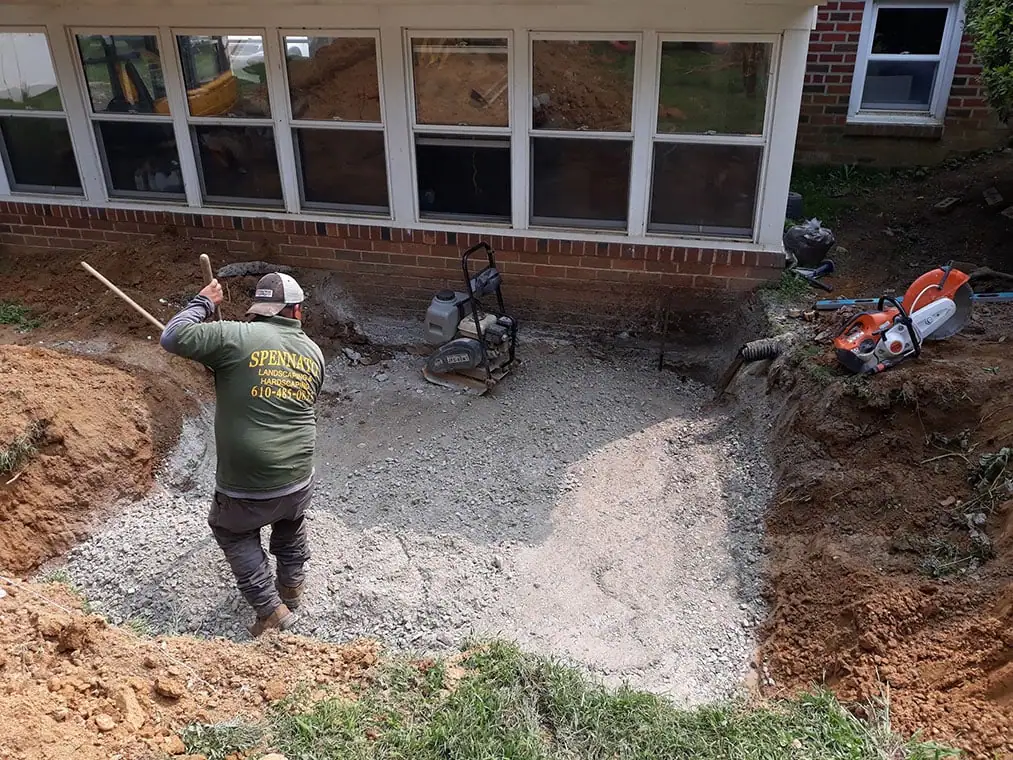
Installation begins with excavation and base preparation the work you won’t see once it’s done, but the work that determines everything. Proper aggregate depth, compaction, and drainage slope are built in at this stage. Surface installation follows, whether that’s interlocking concrete pavers, flagstone, or another material suited to your property. Chester Heights Borough follows the Pennsylvania UCC, and ground-level patio installations typically don’t require a building permit but if your project scope raises any questions around Chester Heights’ stormwater management ordinance, we sort that out before a shovel goes in the ground. Cleanup is part of the job. When our crew leaves, your yard looks like a patio was built, not like a construction site was abandoned.
Ready to get started?
Chester Heights has some of the most architecturally varied housing stock in Delaware County. Fieldstone and brick homes throughout the borough that date back to the 1700s sit a few streets away from newer Colonial Revival builds and contemporary single-family construction. The material conversation isn’t one-size-fits-all here and it shouldn’t be.
For older, historically-characterized properties, natural flagstone and Pennsylvania Bluestone tend to complement the existing aesthetic without looking like an addition that doesn’t belong. For newer builds or homeowners who want a cleaner, more structured look, interlocking concrete pavers offer a wide range of colors, patterns, and edge profiles that hold up well in freeze-thaw conditions when installed correctly. Stamped and poured concrete is also available for projects where budget or design calls for it though the trade-offs in a Delaware County climate are worth understanding before you commit. The honest answer is that pavers outperform poured concrete over time in this region, and that’s a conversation worth having upfront rather than after the fact.
Every project also includes a discussion about covered patio options if you’re thinking about extending the usable season. Pergolas and shade structures integrate naturally with paver and flagstone bases, and for Chester Heights homeowners who entertain outdoors and many do that conversation often shapes the overall patio design from the start. Whatever direction you go, the material choice gets made with your specific property in mind, not whatever’s easiest to install.

For most ground-level patio installations pavers, flagstone, or poured concrete set at grade a building permit is not required under Pennsylvania’s Uniform Construction Code. Chester Heights Borough adopted the UCC through Borough Ordinance No. 171, and standard patio work at grade level generally falls outside the permit threshold.
That said, Chester Heights has a stormwater management ordinance (Chapter 160) that applies when a project significantly increases impervious surface coverage on a property. If your patio is large, or if your lot already has substantial hardscaping, it’s worth a quick check with the borough before installation begins. We review permit and stormwater questions as part of the project scoping process so if there’s a question about your specific lot, it gets answered before anything is scheduled, not after the base is already in the ground.
The honest range for patio installation in Chester Heights runs $15–$50 per square foot, with most residential projects landing between $3,500 and $12,000. Where your project falls within that range depends on size, material choice, and site conditions and Chester Heights properties often introduce real site complexity that affects cost.
Sloped lots, mature tree root systems, and drainage considerations near the Chester Creek watershed can all affect how much excavation and base preparation is required. A flat, open backyard on a newer build is a different project than a terraced installation on a wooded lot throughout the borough. The site visit is where that picture becomes clear and the written scope you receive afterward reflects actual site conditions, not a low number designed to get the job and adjust later.
Interlocking concrete pavers are generally the most durable option for Delaware County’s climate. The reason comes down to how they handle the freeze-thaw cycle. Unlike poured concrete, which expands and contracts as a single rigid slab and tends to crack over time, individual pavers flex slightly with ground movement. If a section does shift or settle, individual pavers can be reset without tearing out the entire surface a repair that costs a fraction of concrete replacement.
Flagstone and natural stone perform well too, provided the base beneath them is built properly. The base is the real variable. A paver patio with a shallow or poorly compacted base will fail in a Delaware County winter just as surely as bad concrete. A properly built base appropriate aggregate depth, correct compaction, drainage slope away from the foundation is what separates a patio that lasts 30 years from one that needs attention after three. The surface material matters, but the base work is what you’re really paying for.
Yes and in Chester Heights, sloped and wooded lots are more the rule than the exception. The borough’s topography involves real grade variation, and mature tree canopy is a defining characteristic of Chester Heights neighborhoods. Neither of those things prevents a great patio. They just require a contractor who knows how to work with them.
Sloped lots typically require grading work to create a level surface, and in some cases a retaining wall to hold that grade in place. Drainage has to be engineered into the design water needs a clear path away from the home’s foundation and away from the patio surface itself. Tree root systems affect where and how deep excavation can go, and our experienced crews know how to work around established roots without damaging the trees above. The site visit is where all of that gets assessed. A sloped, wooded Chester Heights lot isn’t a problem it’s a design condition that shapes the project from the start.
For a typical residential patio in Chester Heights somewhere in the 300–600 square foot range installation generally runs two to four days once the project is scheduled and materials are confirmed. Larger projects, those requiring retaining walls, or sites with significant grade work will take longer, and that timeline is communicated clearly before the crew arrives.
The part homeowners don’t always account for is scheduling lead time. Spring and early summer are the busiest periods for patio installation in Delaware County, and quality contractors book out weeks or months in advance during those windows. If you’re planning a project for spring, the fall or winter before is genuinely the best time to start the conversation not because of any sales pressure, but because you’ll have more scheduling flexibility, more time for the design process, and a crew that isn’t rushing to fit you in between three other jobs. The installation season in Chester Heights runs roughly April through October, with base work ideally completed before the first hard freeze.
Sinking and shifting almost always trace back to the base specifically, a base that wasn’t deep enough, wasn’t compacted properly, or didn’t account for drainage. When water sits in or under the aggregate base and freezes, it expands and pushes the surface material upward. When it thaws, the ground settles unevenly. Repeat that 40 or more times over a Delaware County winter and you have a patio that looks like it’s been through a minor earthquake.
The fix isn’t complicated, but it requires doing the invisible work correctly. That means excavating to the right depth for frost-area installation, compacting the aggregate base in layers rather than all at once, sloping the surface away from the foundation, installing solid edge restraints to keep the perimeter from spreading, and finishing with polymeric sand in the joints to resist weed growth and lock the surface together. None of that is visible once the job is done which is exactly why it’s easy to skip and hard for a homeowner to verify. The way to avoid the problem is to work with a contractor who builds the base right the first time, not one who counts on you not knowing the difference.
Useful Links
Other Services we provide in Chester Heights