
Hear from Our Customers
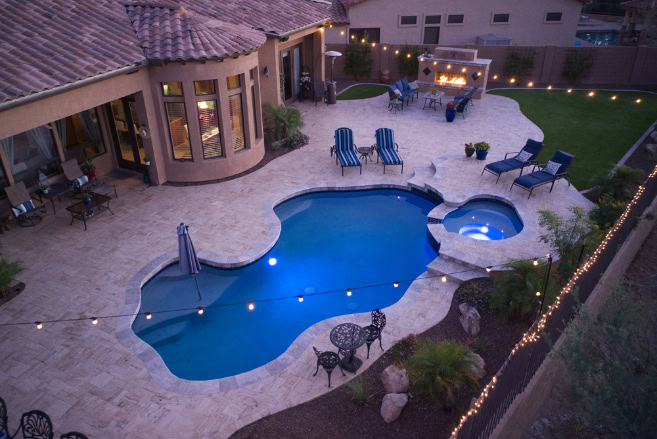
A well-built outdoor kitchen doesn’t just look good on installation day it performs ten years later. That means the countertop isn’t cracking, the masonry isn’t heaving, and the whole structure still looks like it belongs on your property, not like something that barely survived a few winters. That’s not a given in Delaware County. Lima’s freeze-thaw cycles temperatures swinging from the low 30s in January to the mid-70s in July are hard on outdoor masonry when it’s not built specifically for that kind of punishment.
Lima’s older housing stock also plays a role. A lot of homes in this area sit on larger lots with established landscaping, mature trees, and grade changes that a generic outdoor kitchen design would completely ignore. When the design actually accounts for your yard its drainage patterns, sun exposure, how traffic flows from your back door to the cooking area you end up with something that works the way you imagined it would. Not just a structure that exists in your backyard, but one you actually use every weekend from May through October.
The return is real too. Industry data consistently shows outdoor kitchens returning 55% to over 100% of their cost at resale, and homes with them sell faster. In Delaware County’s competitive housing market, that’s not a small thing but for most Lima homeowners, the bigger return is simply having a backyard that earns its square footage every single season.
We’re based in Aston a short drive south of Lima along Route 452 and Route 1. That’s not a coincidence. This is the area we work in regularly, which means we know Middletown Township’s permit process, we know the clay soil conditions that affect every masonry base we pour, and we know what outdoor structures in Lima and the surrounding area need to survive long-term.
We’ve been doing residential hardscaping and landscaping work in Delaware County for over 15 years. That kind of time in one market builds something you can’t fake familiarity with the conditions, the property types, and the community expectations that are specific to places like Lima, Media, and Chester Heights. Every project is handled by one crew, start to finish, with the owner involved throughout. There’s no handoff to a subcontractor you’ve never met. The people who build your outdoor kitchen are the people accountable for it afterward.
It starts with a conversation about your yard and how you actually use it. We look at the space, talk through what you want whether that’s a clean grill station or a full outdoor kitchen with a sink, refrigerator, side burner, and bar seating and we build a design around your property, not a catalog template. Lima’s lots tend to have more going on than newer suburban developments: existing hardscape, established trees, drainage considerations, grade changes. All of that factors into the design before anything gets built.
From there, we handle the permit process through Middletown Township. Outdoor kitchen projects here require a Zoning Permit and building permits, with mandatory inspections at multiple stages footings, structural work, gas, electrical, and a Final Occupancy Inspection before the kitchen is usable. We manage all of that. You don’t have to figure out what Keystone Municipal Services needs or when to schedule inspections. That’s on us.
Once permits are in hand, construction follows a clear timeline. We don’t start a project and disappear. Lima homeowners who want their outdoor kitchen ready before summer entertaining season need to start the consultation process in late winter February or March at the latest because between permit processing and construction scheduling, lead time matters. The build itself moves efficiently, with one team on-site from groundwork through the final walk-through.
Ready to get started?
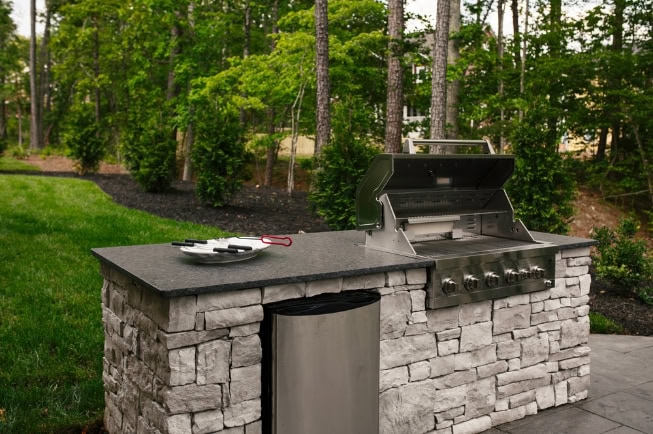
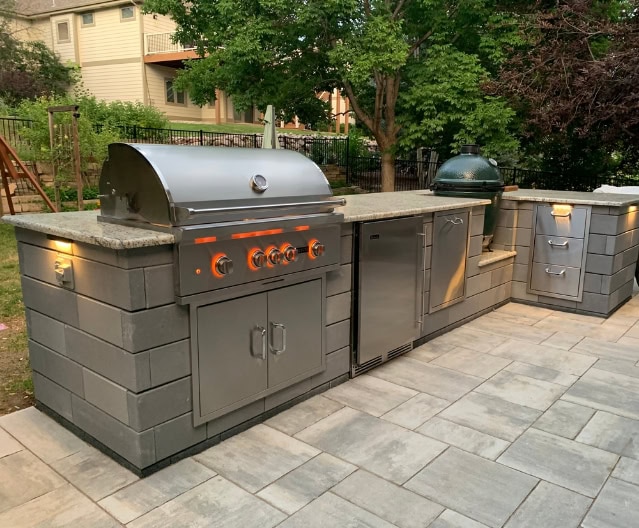
No two outdoor kitchens we build near Lima look the same, because no two Lima properties are the same. The design process accounts for your lot size, your existing hardscape, how the space connects to your home, and what you actually want to do out there. Some homeowners want a straightforward built-in grill station with a masonry surround and a prep counter. Others want a full outdoor kitchen built-in grill, side burner, outdoor refrigerator, running water at the sink, storage cabinetry, a pizza oven, bar seating, and ambient lighting for evenings. We build both ends of that range and everything in between.
Material selection is where a lot of contractors cut corners, and it’s where Lima homeowners pay the price a few winters later. We use frost-resistant stone veneer, countertops sealed and rated for outdoor use, stainless steel appliances spec’d for exterior environments, and structural masonry components with compressive strength exceeding 5,000 psi. Delaware County’s clay-heavy soil and freeze-thaw conditions aren’t theoretical risks here they’re the actual environment your outdoor kitchen will live in for the next decade or more. The materials we specify are chosen with that in mind.
Gas connections, electrical work, and plumbing are all coordinated and permitted through Middletown Township. Every utility connection is handled by licensed tradespeople as part of the project not something you need to separately source or coordinate. When we’re done, you have a Certificate of Occupancy and a kitchen that’s ready to use.

Yes and it’s more involved than most homeowners expect. Because Lima falls within Middletown Township’s jurisdiction, any outdoor kitchen project requires a Zoning Permit before work can begin. If the kitchen includes gas lines, electrical connections, or plumbing which most full outdoor kitchens do you’ll also need building permits for each of those systems, with mandatory inspections scheduled at specific stages of construction. The process wraps up with a Final Occupancy Inspection and a Certificate of Occupancy before the kitchen can be used.
The township’s Building Code Official is Keystone Municipal Services, and for larger projects involving multiple permit types, they encourage a pre-submittal review to make sure everything is in order before the application goes in. That pre-review step alone adds time to the front end of a project. If you’re hoping to have your outdoor kitchen ready for summer, you need to start the process in late winter February or March at the latest. We handle the permit process from start to finish, so you’re not navigating the township’s requirements on your own.
The honest answer is that it depends heavily on what you’re building. A clean, functional grill station with a masonry surround and a prep counter can come in around $8,000 to $15,000. A mid-range outdoor kitchen built-in grill, side burner, sink, refrigerator, storage, and a quality countertop typically runs $15,000 to $35,000. Once you add a pizza oven, bar seating, a covered structure, and custom stone or tile work, you’re looking at $35,000 to $60,000 or more.
In Delaware County, material quality has a direct impact on long-term cost. A cheaper build using materials not rated for Pennsylvania’s freeze-thaw conditions can start failing within five to seven years cracked masonry, heaving bases, deteriorating countertops and reconstruction runs $3,000 to $8,000 on top of what you already spent. Lima homeowners who are investing in a property they plan to stay in for years are generally better served by building it right the first time than by optimizing for the lowest upfront number.
Pennsylvania’s freeze-thaw cycle is the real test for any outdoor masonry. When temperatures repeatedly cross the 32°F threshold through winter which they do regularly in Lima, where January averages around 31°F moisture inside masonry materials expands and contracts. Materials that aren’t rated for that kind of movement crack, spall, and deteriorate faster than most homeowners realize until the damage is already done.
For structural components, you want masonry with compressive strength above 5,000 psi. For veneer and facing, frost-resistant stone or porcelain tile rated for freeze-thaw exposure is the standard. Countertops should be sealed with a product rated for outdoor use and temperature swings unsealed concrete or natural stone countertops absorb moisture and can crack through a Delaware County winter. Stainless steel appliances should be spec’d for exterior environments, not interior-grade units moved outside. The base preparation underneath the structure matters just as much as what’s above ground a properly compacted gravel base with adequate drainage slope prevents the frost heave that destabilizes entire outdoor kitchen structures when the ground freezes.
The construction itself once permits are approved and materials are on-site typically takes one to three weeks depending on the complexity of the project. A basic grill station moves faster than a full outdoor kitchen with gas, electrical, plumbing, and custom stonework. But the full timeline from first consultation to a usable kitchen is longer than most homeowners anticipate, and that’s mostly because of the front end.
In Middletown Township, permit processing takes time. Depending on the scope of the project, you may need a pre-submittal review, separate permits for gas, electrical, and plumbing, and inspection scheduling at multiple stages. That process can add four to eight weeks before construction even starts. For Lima homeowners who want their outdoor kitchen ready by Memorial Day weekend, a February consultation is realistic a late April consultation is cutting it close. Starting the conversation early gives you the best shot at a summer build season start without rushing the design or the permit process.
In most cases, yes but it depends on what’s already there and what condition it’s in. If your existing patio is structurally sound, properly graded, and has adequate drainage, it can often serve as the base for an outdoor kitchen addition. If it’s showing signs of heaving, cracking, or poor drainage which is common in Lima’s clay-heavy soil, especially on older properties those issues need to be corrected before anything gets built on top of them. Building an outdoor kitchen over a compromised base just transfers the problem upward.
The design process starts with an assessment of your existing outdoor space: what’s there, what’s working, what needs to be addressed. Lima properties with established landscaping and older hardscape often have more site prep considerations than newer builds, but that’s not necessarily a barrier it just means the design needs to account for those conditions from the beginning. We’ll tell you honestly what the existing patio can support and what, if anything, needs to be corrected before construction starts.
The most common problem homeowners run into in this category isn’t finding a contractor it’s finding one who stays accountable after the project is done. BBB complaint data for masonry and hardscaping contractors consistently shows post-completion unresponsiveness as the top complaint type. You get a beautiful kitchen installed, something comes up six months later, and the contractor stops returning calls. In a category where a gas connection question or a masonry concern can feel urgent, that’s not a minor inconvenience.
What to look for: a contractor who pulls their own permits and manages the inspection process, which signals they’re building to code and plan to stand behind the work. A contractor with verifiable local experience in Delaware County specifically someone who understands Middletown Township’s requirements and has built outdoor structures that have actually survived Pennsylvania winters, not just warm-climate builds. And a contractor with a single-team model, where the people building your kitchen are the people you can call afterward not a network of subcontractors assembled for one job. We operate out of Aston, just down Route 452 from Lima, and have been doing this work in Delaware County for over 15 years. That proximity and track record matter when something comes up post-completion and you need someone who actually picks up the phone.
Useful Links