
Hear from Our Customers
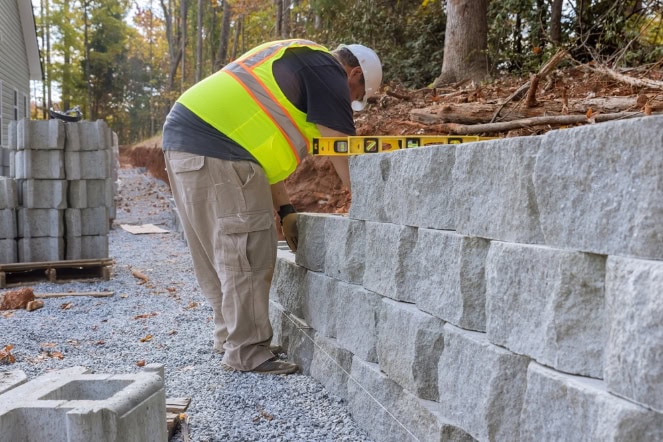
Lima’s terrain isn’t forgiving. The streets are hilly, the lots are sloped, and the soil underneath most Lima properties is Piedmont clay the kind that swells when it’s wet and shrinks when it dries. Add Delaware County’s freeze-thaw cycle to that, and you’ve got a combination that quietly destroys retaining walls that weren’t built to handle it. The right wall doesn’t just hold dirt. It manages water, accommodates soil movement, and stays structurally sound through years of weather cycles without leaning, cracking, or washing out at the base.
For Lima homeowners specifically, that matters more than it might in a flatter, drier part of the county. Properties near Pennell Road, throughout the Riddlewood area, and along the wooded stretches off North Middletown Road tend to have grade changes that make a significant portion of the yard either unusable or actively eroding. A well-built retaining wall changes that. You get usable outdoor space, a stabilized slope, and a property that holds its value which is a real consideration when homes in Lima are selling anywhere from $400,000 into the seven figures.
The other thing worth knowing: a retaining wall installed correctly, with proper drainage behind it, typically adds 100 to 200 percent of its cost back in appraised home value. That’s what property appraisers consistently report for well-designed hardscaping in suburban markets like Lima.
We’re based in Aston, about ten miles south of Lima on Route 452. This isn’t a regional chain dispatching crews from three counties away we’re a Delaware County operation that works these same roads, understands how water moves through the Chester Creek watershed, and knows what Middletown Township’s building department expects when a permit is required.
Every project runs with one experienced crew from start to finish. No subcontractors, no handoffs, no wondering who’s actually showing up on day three. Renato Spennato holds active Pennsylvania contractor license PA057623 and carries a BuildZoom score of 102 placing us in the top 11 percent of licensed contractors statewide. For a structural project on a property you’ve invested in for years, that kind of accountability isn’t a bonus it’s the baseline.
If something comes up after the job is done, you’re not chasing down a subcontractor or leaving voicemails that go nowhere. You’re calling the same team that built your wall.
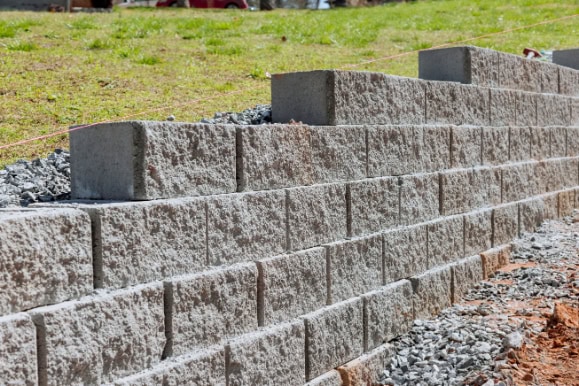
It starts with an on-site assessment not a phone quote, not a ballpark based on square footage. Lima’s lots vary too much for that. Slope angle, soil conditions, existing drainage patterns, proximity to the foundation, tree root systems from mature canopy trees all of it affects how the wall gets designed and what materials make sense. That first visit is where the real planning happens.
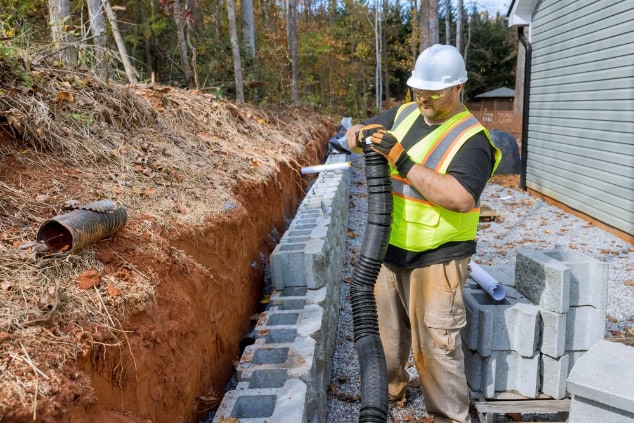
From there, drainage gets designed before anything else. This isn’t an afterthought. Hydrostatic pressure from water trapped behind a wall is the number one reason retaining walls fail in this region, and it’s entirely preventable when you plan for it upfront. Gravel backfill, perforated pipe, and proper outlet placement are built into the design not added on as an upgrade.
If your wall exceeds four feet in height, Middletown Township requires a building permit, mandatory footing inspections, and a final occupancy inspection before the project is considered complete. We handle the permit filing and coordinate inspections directly with the township’s building department at 27 North Pennell Road so you’re not navigating that process on your own. Once permits are in order, our crew builds, cleans up, and walks you through the finished work before leaving the site.
Ready to get started?
Material selection isn’t a style decision it’s a structural one. In a climate like Delaware County’s, where temperatures cycle through freezing and thawing repeatedly each winter, the wrong material on a sloped lot with clay soil is a wall that fails in ten years instead of lasting fifty. We work with natural stone, VERSA-LOK modular block, and concrete block systems depending on what the site actually calls for.
Natural stone integrates well with Lima’s wooded, historic character the kind of aesthetic you’d expect near the Tyler Arboretum or along the older residential streets off Lima Road. It’s also one of the most durable options available, with properly built stone walls lasting well over a century. VERSA-LOK is a strong fit for properties with curved property lines or irregular slopes, since the modular system handles those transitions cleanly. Concrete block is the go-to for taller structural walls where load-bearing capacity is the primary concern.
If you have a timber wall that’s leaning or rotting common on Lima properties where landscaping was installed in the 1980s or 1990s replacement with concrete block or natural stone isn’t just a repair. It’s an upgrade that adds decades of functional life and eliminates the recurring cost of patching a wall that’s already past its lifespan. Every project includes a full drainage system, proper backfill, and a site cleanup that leaves the property better than we found it.
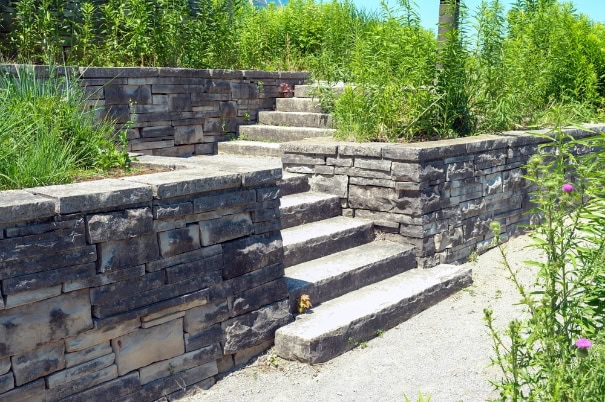
Lima falls within Middletown Township, which enforces Pennsylvania’s Uniform Construction Code through its Building and Planning Department. The general rule is that any retaining wall taller than four feet requires a building permit, along with mandatory inspections at the footing stage and a final occupancy inspection before the wall is considered complete. Walls under four feet may still require zoning compliance depending on where they’re located on your property, how close they are to a property line, and whether they affect drainage patterns on adjacent lots.
The permit process runs through the township office at 27 North Pennell Road in Media. It’s not complicated, but it does require proper documentation, scheduled inspections, and coordination with the township’s building code official. We handle all of that directly filing the paperwork, scheduling the inspections, and making sure the finished wall meets current code requirements. You won’t have to figure out Lima’s township process on your own, and you won’t end up with an unpermitted wall that creates problems at resale.
Residential retaining wall projects in Delaware County generally run between $3,500 and $10,000 for a standard installation, with per-linear-foot pricing ranging from roughly $40 to $345 depending on the material, wall height, and site complexity. Natural stone and VERSA-LOK systems tend to sit at the higher end of that range, while basic concrete block comes in lower. Site conditions slope angle, soil type, drainage requirements, and access also affect the final number.
For Lima specifically, most projects involve some combination of sloped terrain, clay soil, and mature trees, which adds complexity compared to a flat-lot installation. Drainage engineering, proper backfill, and permit fees are part of the total cost and should be included in any legitimate quote you receive. Be cautious of estimates that don’t account for drainage it’s the most important part of the project and the most common thing cut from low bids. A wall built without proper drainage in this area will cost you significantly more to repair or replace within a decade than the money you saved upfront.
Lifespan depends almost entirely on two things: material choice and drainage. In Delaware County’s freeze-thaw climate, water that gets trapped behind a wall freezes, expands, and applies lateral pressure against the structure repeatedly over the course of each winter. Over time, that pressure causes walls to bow, crack, or fail at the base especially if the drainage behind the wall was never properly installed.
Treated timber walls typically last 10 to 30 years under the best conditions and less in Lima’s clay-heavy soil, where moisture retention accelerates rot. Concrete block walls, properly installed with drainage, last 30 to 50 years. Natural stone, when built correctly, can last a century or more. If you’re replacing a timber wall that was installed in the 1980s or 1990s which is common on Lima properties upgrading to concrete block or natural stone is the decision that eliminates this project from your list for the rest of the time you own the home.
The most common cause of retaining wall failure in this region is poor drainage. When water can’t escape from behind a wall, it builds up hydrostatic pressure essentially pushing the wall outward from behind. In Delaware County’s climate, that pressure is compounded each winter when the saturated soil freezes and expands. Most wall failures that look like structural problems are actually drainage problems that were never addressed at installation.
The fix isn’t complicated, but it has to be planned before the wall goes in not after. Proper drainage means gravel backfill directly behind the wall, a perforated drain pipe at the base to collect and redirect water, and an outlet that channels that water away from the structure. On Lima’s sloped lots, where clay soil holds water rather than draining it, this step is non-negotiable. A wall built without it on a property in this area is a wall that’s going to need attention within a few years, regardless of how good it looks on the day it’s finished.
The best material for your Lima property depends on the wall’s job, the slope it’s holding, and the aesthetic you’re working with. That said, a few things hold true across most properties in this area. Timber is generally not the right choice for a long-term installation in Delaware County the combination of clay soil, moisture retention, and freeze-thaw cycling shortens its lifespan significantly, and you’ll likely be replacing it within 15 to 20 years.
Natural stone is a strong fit for Lima’s character. The wooded, historically rooted feel of the community the kind you get near the Tyler Arboretum or along the older residential streets off Pennell Road pairs well with the naturalistic look of fieldstone or cut stone. VERSA-LOK modular block is a practical choice for properties with irregular slopes or curved property lines, which are common on Lima’s hilly lots. Concrete block is the right call for taller structural walls where load capacity is the priority. The best way to know which material fits your specific site is an on-site assessment not a phone call.
A wall that’s leaning more than one inch for every four feet of height, showing horizontal cracks, or pulling away from the soil at the top is past the repair stage in most cases. Those are signs of structural movement, not surface wear, and patching them doesn’t address what caused the movement in the first place. On Lima properties with timber walls installed in the late 1980s or 1990s, visible rot at the base, posts that have shifted, or boards that have separated are reliable indicators that the wall has reached the end of its functional life.
Walls that are cracking but still plumb, or showing surface deterioration without structural movement, are sometimes repairable but it depends on what’s behind them. If the drainage was never properly installed, repairing the face of the wall without addressing the drainage is a short-term fix that leads to the same failure again. The honest answer is that a site visit is the only way to know for certain. An assessment of the wall’s current condition, the drainage situation behind it, and the soil movement around it will tell you whether repair makes sense or whether replacement is the better investment for the long term.
Useful Links