
Hear from Our Customers
Most outdoor kitchens in Wayne don’t fail because of bad design. They fail because the contractor didn’t account for what Delaware County winters actually do to masonry. When temperatures swing from 15°F to 60°F multiple times in a single season, water works its way into stone and grout, freezes, expands, and quietly fractures the structure from the inside out. By year six or seven, you’re looking at cracking veneer, shifting countertops, and a rebuild estimate that starts around $5,000.
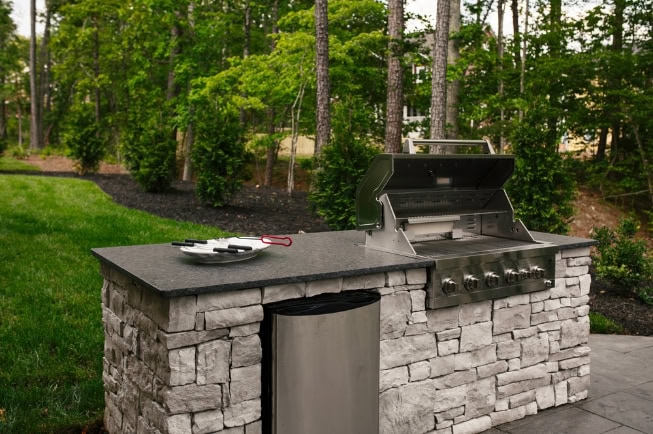
When an outdoor kitchen is built with the right materials frost-rated stone veneer, properly spec’d pavers, stainless appliances, marine-grade cabinetry it doesn’t just survive Wayne’s winters. It looks the same in year fifteen as it did in year one. And in a neighborhood where homes are selling above $1.2 million and buyers expect premium outdoor amenities, that durability isn’t just about aesthetics. It’s a real asset at resale.
Wayne’s historic properties add another layer. Many homes in the North Wayne and South Wayne historic districts sit on established lots with mature trees, existing hardscape, and clay-heavy soil that shifts seasonally. Getting the base preparation right the compacted gravel substrate, the drainage design, the grading is what separates a structure that stays level from one that starts moving after the first hard frost. The difference is experience with this specific terrain, not just outdoor kitchens in general.
We’ve been building in Delaware County for over 15 years, which means we know Wayne’s specific challenges. We navigate Radnor Township’s permit requirements, work around the clay soil conditions common throughout the area, and build hardscaping that actually holds up through the kind of winters Wayne gets year after year.
The way we operate is straightforward: one experienced crew handles your project from the first site visit through the final walk-through. No subcontractor handoffs, no miscommunication between a masonry crew and a gas fitter who’ve never met each other, no disappearing act after the check clears. The people who build your outdoor kitchen are the people you call if you ever have a question afterward.
For homeowners near Chanticleer Garden or along the established streets of West Wayne, that kind of consistency matters. You’ve invested in a property worth protecting and the contractor you hire should operate like they understand that.
It starts with a site visit and a real conversation about how you use your backyard. Not a sales pitch a practical discussion about layout, appliances, materials, and how your outdoor kitchen fits the existing architecture and landscaping of your property. For older homes in Wayne’s historic districts, that means looking at what’s already there: mature trees, existing hardscape, grading, and how the new structure will sit relative to the house.
From there, we put together a detailed proposal specific materials, scope, timeline, and cost. No ballpark ranges that balloon later. Radnor Township requires building permits for outdoor kitchen structures, and if your project involves gas lines or electrical work, licensed tradespeople are required by code. We manage all of that coordination: permit applications, trade scheduling, inspection sign-offs. You don’t have to figure out which forms to file with the township or chase down a separate gas fitter on your own.
Construction typically runs April through October in this region masonry work below 40°F doesn’t cure properly, and Wayne homeowners who want their kitchen ready for Memorial Day weekend need to be in the planning process by late winter. Once the build starts, the timeline you agreed to is the timeline you get. The goal is to be done before you need it, not scrambling to finish while your summer calendar fills up.
Ready to get started?
Every outdoor kitchen we build is designed around the specific property the home’s architecture, the yard’s existing layout, and how you actually want to use the space. For Wayne, that often means working with colonial or Tudor-style homes in established neighborhoods where a prefabricated-looking structure would stick out immediately. We account for that from the start.
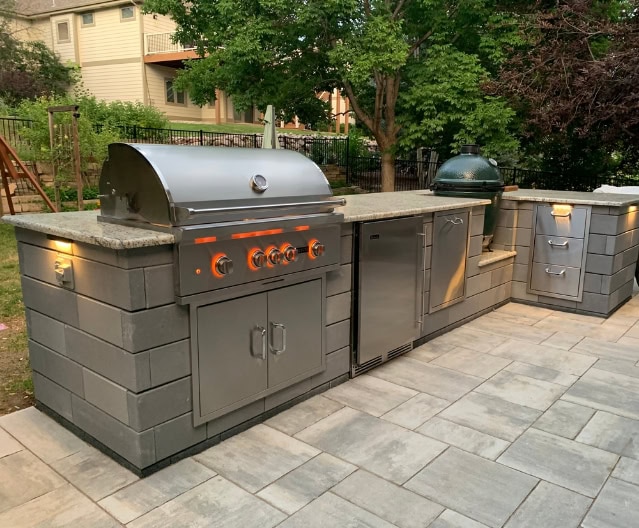
On the functional side, builds range from a clean built-in grill station with a prep counter and bar seating to full setups with pizza ovens, outdoor refrigerators, sinks with running water, storage cabinetry, and integrated lighting for evening use. What goes into your kitchen depends on how you entertain not on what’s easiest to install. Material selection is specific to Radnor Township’s climate: frost-rated veneer, properly rated pavers, and appliances spec’d for four-season outdoor exposure. These aren’t upgrades they’re the baseline for anything built to last in Delaware County.
Gas and electrical connections are handled by licensed tradespeople as required by Radnor Township code. We pull permits before work begins, schedule and manage inspections, and document everything so there are no issues at resale. In Wayne’s competitive real estate market, unpermitted outdoor work is a liability. Permitted, well-built outdoor kitchens are an asset and the difference shows up at closing.

Yes and the requirements in Radnor Township are more specific than most homeowners expect. The township requires building permits for new construction and structural additions, which includes outdoor kitchen structures. As of 2022, Radnor Township requires two sets of plans and two permit applications on all submittals, along with engineered or architectural plans in most cases. Any contractor working in the township also needs to be licensed with Radnor Township specifically this is a local requirement that goes beyond Pennsylvania’s statewide Home Improvement Contractor registration.
If your outdoor kitchen includes a gas line connection or electrical work which most full setups do those components require licensed gas fitters and electricians separately. We coordinate all of this: permit applications, trade licensing verification, and inspection scheduling. You won’t need to figure out what to file or who to call at the township office. It’s handled before the first block goes in, which also protects you at resale unpermitted outdoor structures can create real problems during a home inspection in Wayne’s competitive market.
The honest answer is that it depends on scope, materials, and site conditions but for Wayne’s market, a well-built outdoor kitchen typically falls somewhere between $15,000 and $50,000, with larger or more complex builds running higher. A clean built-in grill station with a prep counter and bar seating sits toward the lower end of that range. A full setup with a pizza oven, outdoor refrigerator, sink, storage cabinetry, and integrated lighting sits toward the upper end or beyond, depending on the materials and footprint.
What affects cost in Wayne specifically is the site itself. Older properties in the North Wayne or South Wayne historic districts often have established landscaping, existing hardscape that needs to be removed or integrated, and clay-heavy soil that requires careful base preparation to prevent frost heave. Those site conditions add time and labor that a contractor working off a flat rate won’t account for upfront which is how quotes balloon mid-project. A detailed, itemized proposal after a real site visit is the only way to get a number that actually reflects your project.
Delaware County’s freeze-thaw cycle temperatures swinging repeatedly between the teens and the 60s through a single winter is one of the most damaging forces on outdoor masonry. Water penetrates porous or improperly installed materials, freezes, expands, and fractures the structure from within. Over five to seven winters, this process destroys outdoor kitchens built with the wrong materials or without proper base preparation.
For Wayne’s climate, the right material list includes frost-rated stone veneer, properly spec’d concrete pavers, stainless steel appliances rated for outdoor use, and marine-grade cabinetry designed for moisture exposure. These aren’t premium upgrades they’re what any outdoor kitchen in this region needs to last. The base preparation matters just as much: a compacted gravel substrate and proper drainage design are what keep the structure level and intact as the ground moves seasonally. Skipping or shortcutting either of those is how you end up with a cracked, shifting outdoor kitchen that needs a $5,000–$8,000 rebuild within a decade.
For most residential outdoor kitchens, the physical construction phase runs two to four weeks once materials are on-site and permits are in hand. The full timeline from first consultation to finished kitchen is longer typically eight to fourteen weeks depending on project complexity, permit processing time with Radnor Township, and trade scheduling for gas and electrical connections.
The seasonal factor matters here. Masonry work can’t be done safely below 40°F mortar won’t cure properly, and freshly laid materials are vulnerable to freeze damage. Wayne’s construction window runs roughly April through October. If you want your outdoor kitchen ready for Memorial Day weekend, the planning conversation needs to happen in January or February. Homeowners who reach out in April hoping to be done by June are usually looking at a July or August completion at the earliest, depending on where things stand in the permit queue with Radnor Township. Starting early is the single biggest factor in controlling your timeline.
In Wayne’s market specifically, yes and the numbers are meaningful. Industry data puts outdoor kitchen ROI at 55% to 200% at resale, with the National Association of Realtors citing 100% as a general benchmark. In a market where homes are selling above $1.2 million and buyers expect premium amenities, a well-built outdoor kitchen is a genuine differentiator. Homes without strong outdoor living spaces are at a disadvantage when competing against comparable properties that have them.
The caveat is that it has to be built right and permitted properly. An unpermitted outdoor kitchen or one built with materials that have visibly deteriorated can actually work against you at inspection. Buyers at Wayne’s price point have experienced agents who know what to look for, and a crumbling or unpermitted outdoor structure becomes a negotiating point that costs you more than the kitchen was worth. A properly permitted, well-built outdoor kitchen with documentation is an asset. That’s the version worth investing in.
January through March is the ideal planning window for Wayne homeowners who want their outdoor kitchen ready for summer. That timeline accounts for the consultation and design phase, Radnor Township’s permit processing time, material lead times, and trade scheduling for gas and electrical work all of which need to line up before construction can begin. Waiting until spring to start the conversation almost always means a mid-summer or fall completion at best.
The construction season in this region runs April through October. Once temperatures drop below 40°F consistently, masonry work stops mortar won’t cure correctly in the cold, and fresh installations are vulnerable to freeze damage before they’ve had time to set. Wayne’s shoulder seasons can be unpredictable, which is another reason to start early and build schedule buffer into the plan. Homeowners who want to be grilling by the Fourth of July need to be in conversations by February. It’s not about urgency for its own sake it’s just how the calendar and the climate work in Delaware County.
Useful Links