
Hear from Our Customers
Most outdoor kitchens in Saint Davids fail within five to seven years not because the homeowner made a bad decision, but because the contractor made one. They used the wrong materials. They skipped the base preparation. They didn’t account for what Delaware County winters actually do to masonry. The result is cracked stone, shifted countertops, and a repair bill that rivals the original installation.
When it’s built right, the difference is immediate and lasting. You get a kitchen that holds up through freeze-thaw cycles that swing from 15°F to 60°F in a single week the kind of thermal stress that destroys cheap masonry but doesn’t touch properly engineered work. The clay-heavy soil throughout the Wayne and Saint Davids area expands when it freezes, which means frost heave is a real risk if the base isn’t built specifically for these conditions. We account for all of it before the first stone is laid.
Beyond durability, you get a space that genuinely fits the property. Saint Davids homes Tudor estates, stone Colonials, Victorian-era properties on half-acre lots have a character that demands more than a catalog-style grill station. The design should look like it belongs. The materials should match the architecture. And the finished product should add real value to a home already worth well over a million dollars, not detract from it.
Spennato Landscaping is based in Aston, PA Delaware County, same as you. That matters more than it sounds. Radnor Township, where Saint Davids is located, has its own contractor licensing requirement separate from Pennsylvania’s statewide registration, and permit applications require two full sets of plans before the township’s Community Development office will even review them. A contractor who doesn’t know that finds out the hard way usually on your timeline, not theirs.
We’ve been serving Delaware County homeowners for over 15 years. That means 15-plus winters of building outdoor kitchens in Saint Davids and surrounding areas that still look and function exactly as built. It means knowing the soil conditions in Saint Davids, understanding what the Radnor Township permit process actually involves, and building with materials rated for this specific climate not imported methods from warmer markets where freeze-thaw cycles simply don’t exist.
The same team that designs your kitchen builds it. The same people who pour the base set the stone and install the appliances. That’s not a customer service pitch it’s how accountability actually works on a job site.
It starts with a consultation a real one, not a sales call dressed up as one. You talk through how you use your backyard, what you want the space to do, and what your home’s architecture calls for. A Saint Davids property with a stone Colonial exterior and mature tree line is going to drive different design decisions than an open-lot contemporary. The conversation shapes the plan, not the other way around.
From there, we handle site preparation and material selection, including coordination of all utility connections gas line for the built-in grill, water for the sink, electrical for refrigeration and lighting. In Radnor Township, each of these requires licensed tradespeople and separate permits. That process gets managed entirely on your behalf. You don’t make a single call to the township’s Department of Community Development at 610-688-5600. It’s handled.
Construction follows once permits are cleared and conditions are right. Masonry work can’t be done safely below 40°F or in wet conditions that’s not a preference, it’s a structural reality. We plan around Delaware County’s build season, which runs roughly April through October, so if you want the kitchen ready for Memorial Day weekend, the conversation needs to start in January or February. Once construction begins, the same crew stays on the project through final walk-through. No handoffs. No surprises.
Ready to get started?
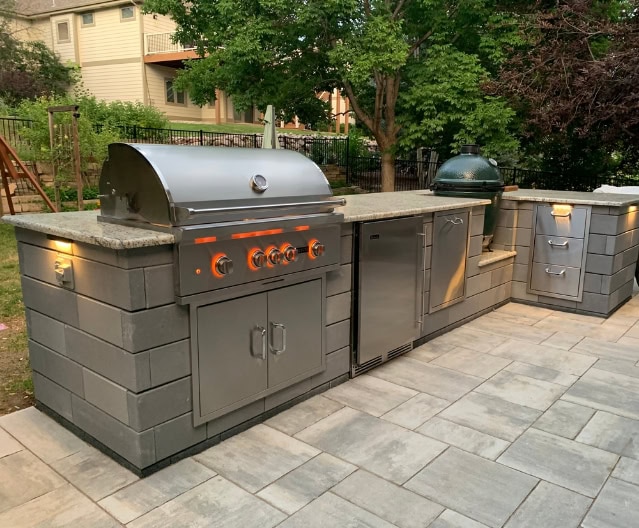
No two outdoor kitchens we build are the same because no two Saint Davids properties are the same. Some homeowners want a clean, built-in grill station with a bar counter and outdoor refrigerator, something that extends the patio without overwhelming it. Others want the full build: pizza oven, sink, multiple cooking zones, covered dining area, and lighting that keeps the evening going well into fall. The scope is yours to define. The execution is our responsibility.
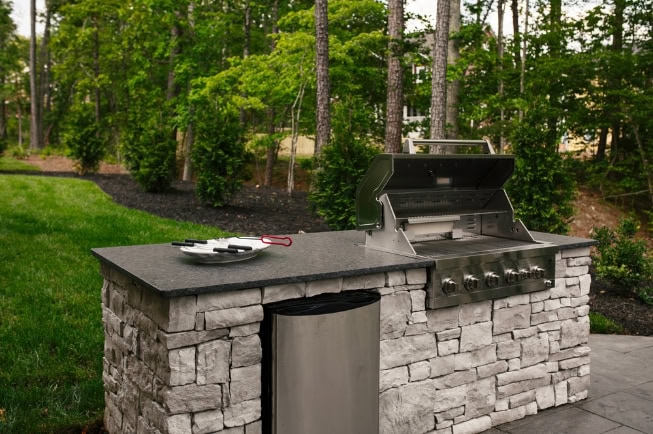
Material selection is where a lot of outdoor kitchens quietly succeed or fail. For Saint Davids specifically, that means frost-proof stone veneer that won’t crack under repeated thermal cycling, countertop materials sealed for outdoor exposure in a climate that sees real winters, stainless steel appliances rated for year-round outdoor use, and marine-grade cabinetry that handles moisture without warping. These aren’t premium upgrades they’re the baseline for a build that lasts in Delaware County.
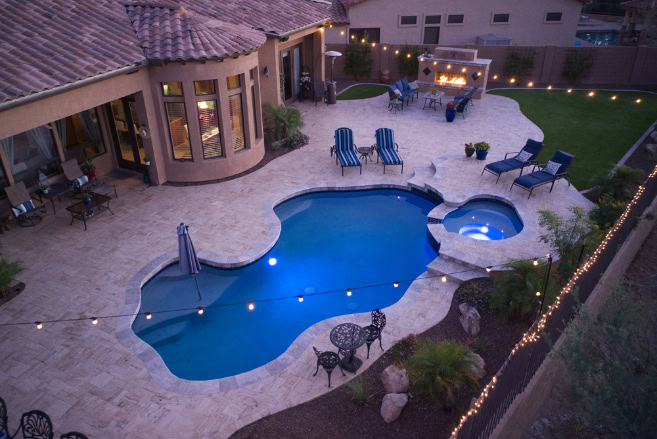
If your property already has a patio, pool deck, or existing hardscaping, the outdoor kitchen design can integrate directly with what’s there. If you’re starting from a blank backyard, we can design the full outdoor living space kitchen, patio, seating areas as a single cohesive project. Either way, the result should look like it was always part of the property. In a neighborhood like Saint Davids, where homes carry real architectural identity and real market value, anything less isn’t worth building.

Yes, and it’s worth understanding what that actually involves before you hire anyone. Saint Davids falls under Radnor Township’s jurisdiction, and the township requires a building permit for most outdoor construction including outdoor kitchen structures, particularly those with roofed elements, pergolas, or pavilions that exceed 200 square feet. What most homeowners don’t know is that Radnor Township also requires contractors to be licensed with the township directly before they can even submit a permit application. That’s a separate requirement from Pennsylvania’s statewide Home Improvement Contractor registration, and not every contractor operating in this area has done it.
Beyond the contractor licensing piece, permit submissions in Radnor Township require two complete sets of plans and two sets of permit applications. If your outdoor kitchen includes gas, water, or electrical connections which most full builds do those each require licensed tradespeople and their own permits. We manage all of this as a standard part of the project. Nothing gets built before it’s approved, and nothing gets approved without the right paperwork in place.
The honest answer is that it depends on what you’re building, and any contractor who gives you a firm number before seeing your property and understanding your goals isn’t giving you a real quote. Nationally, the midpoint for outdoor kitchen installation runs around $13,000, but that figure reflects a wide range of project types. In Saint Davids and the surrounding Main Line market, where homes are priced well above the national average and the expectation for materials and craftsmanship is correspondingly higher, most full outdoor kitchen builds fall in the $25,000 to $60,000 range and larger, more complex projects with covered structures, pizza ovens, and full appliance suites can go higher.
What drives cost most is scope, materials, and site complexity. A simple built-in grill station on an existing patio costs significantly less than a full outdoor kitchen with a sink, refrigeration, pizza oven, and new patio base built from scratch. Material quality also matters and in Delaware County’s climate, cutting corners on materials to save upfront almost always costs more in repairs within five years. The better frame for this investment is return: outdoor kitchens return 55% to 200% of their cost at resale, and in a Saint Davids market where homes sell for $1 million to $2 million, a well-built outdoor kitchen is a genuine asset.
This is the right question to ask, and most homeowners don’t ask it until after something fails. Delaware County winters are genuinely hard on outdoor masonry not because of snowfall, but because of the freeze-thaw cycle. Temperatures in Saint Davids regularly swing from below 15°F to 60°F multiple times between November and March. Every time moisture in the masonry freezes and expands, it puts stress on the material. Do that dozens of times over a winter, and inferior stone veneers crack, grout joints open up, and countertops shift.
For Saint Davids specifically, the clay-heavy soil adds another variable. Clay holds moisture and expands when frozen, which creates frost heave the gradual upward movement of the ground that can crack and tilt outdoor structures that weren’t built on a properly engineered base. The materials that hold up are frost-proof stone veneer, sealed natural stone or porcelain countertops rated for outdoor use, stainless steel appliances with marine-grade finishes, and concrete block or steel-framed structure rather than wood framing. The base preparation compacted gravel, proper depth, drainage matters just as much as the visible materials. We build for these conditions specifically, not for a generic outdoor climate.
The timeline has two parts: the planning and permit phase, and the actual construction phase. Planning consultation, design, material selection, and permit approval through Radnor Township typically takes six to ten weeks depending on project complexity and township processing times. Construction, once permits are cleared and the weather cooperates, generally runs two to five weeks for a standard full outdoor kitchen build.
The seasonal reality in Delaware County is that quality masonry work can’t happen below 40°F or in wet conditions. That means the practical build window runs from roughly April through October. If you want your outdoor kitchen ready for Memorial Day weekend or the Fourth of July, you need to start the conversation in January or February at the latest. Projects that begin planning in April often don’t break ground until June, which means missing the early part of the summer entirely. The homeowners who get the most out of their outdoor kitchens are the ones who plan through the winter and build in the spring.
In most cases, yes but it depends on what the existing surface was built on and how it was built. A concrete patio poured on a properly prepared base can often support an outdoor kitchen structure directly. A paver patio may need sections removed and the base reinforced before a kitchen structure goes in. A wood deck is generally not the right foundation for a masonry outdoor kitchen the weight and moisture exposure create long-term problems that aren’t worth working around.
The evaluation happens during the initial consultation. We look at the existing surface, the base beneath it, the grade of the yard, drainage patterns, and how the proposed kitchen placement relates to your home’s gas, water, and electrical access points. In Saint Davids, where many homes were built in the early-to-mid 20th century, existing patios sometimes have aging bases that need reinforcement regardless of what’s being added. Getting that assessment right at the start is what prevents expensive corrections mid-project. If the existing patio is solid, the integration is straightforward. If it needs work, you’ll know that upfront not after construction has already started.
The most important thing to verify before signing any contract is whether the contractor is licensed with Radnor Township specifically not just registered with Pennsylvania as a Home Improvement Contractor. Radnor Township requires its own contractor licensing before permit applications can be submitted, and a contractor who isn’t licensed with the township will either skip permits entirely or delay your project while they get compliant. You can verify this directly by calling Radnor Township’s Department of Community Development at 610-688-5600.
Beyond licensing, ask whether the contractor has built outdoor kitchens specifically in Delaware County not just in the broader Philadelphia region or across state lines. The clay soil conditions in the Saint Davids and Wayne area, combined with Delaware County’s freeze-thaw cycle, require construction methods that aren’t universal. Ask to see completed projects in this area, ask how they handle the base preparation for clay soil, and ask explicitly who manages the permit process. A contractor who can answer all three questions clearly and specifically is one worth talking to further.
Useful Links
Other Services we provide in Saint Davids