
Hear from Our Customers
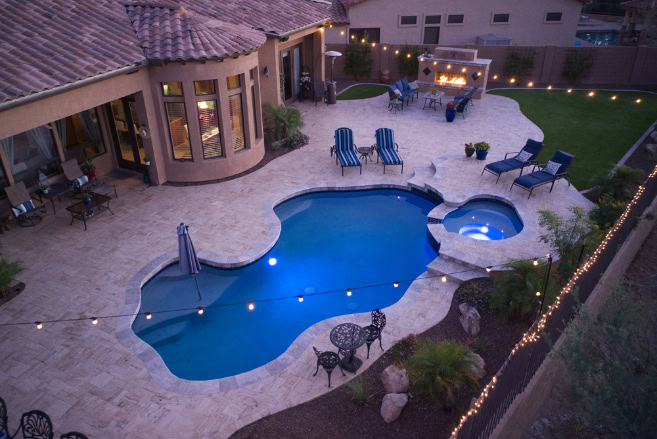
Most Middletown homeowners have already put the work into the inside of their home. Updated kitchen, renovated bathrooms, finished basement and then a backyard that still has a freestanding grill from 2011 and a concrete slab that’s seen better days. That gap between what your home looks like inside and what it looks like outside is exactly what a well-built outdoor kitchen closes.
When it’s done right, you’re not just adding a grill station. You’re creating the space where your family actually wants to be on a Saturday evening where the neighbors end up staying two hours longer than they planned, where graduation parties and summer cookouts stop feeling like logistical events and start feeling easy. For a lot of Middletown households, especially those with teenagers at Penncrest or empty nesters reclaiming the backyard after years of swing sets, that shift matters more than any square footage number.
There’s also a financial side worth saying plainly. Outdoor kitchens consistently return between 55% and 100% of their investment at resale, and in a township where median home values reflect a market that expects outdoor amenities, a quality build is a genuine differentiator. But the more immediate return is the one you get every weekend from May through October and that starts the summer after it’s built.
We’re based in Aston right next door to Middletown Township. That’s not a footnote. It means the team that shows up to your property in Middletown knows Baltimore Pike, knows Delaware County’s clay-heavy soils, and has been building outdoor structures through Pennsylvania winters long enough to know what holds and what doesn’t.
This is an owner-operated business with over 15 years of experience in residential hardscaping across Delaware County. Renato Spennato is personally involved in projects not handing things off to a crew he’s never met and hoping for the best. Customers notice that. It shows up in the quality of the work, and it shows up when you have a question six months after the project is done and someone actually picks up the phone.
No subcontractor juggling. No revolving door of unfamiliar faces in your backyard. One team, one standard, start to finish.
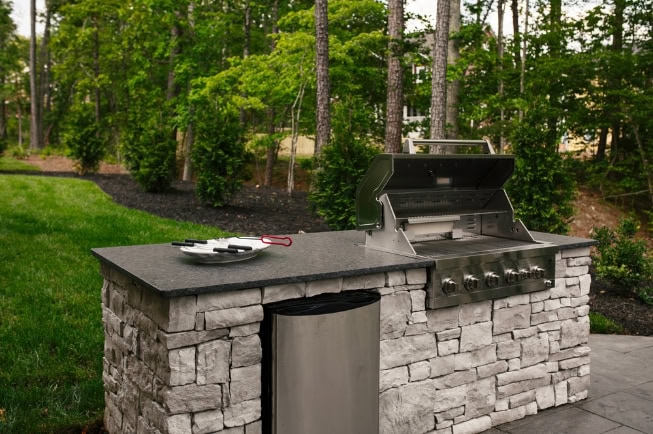
It starts with a consultation where the focus is on your yard, your goals, and how you actually use the space. Sun exposure, traffic flow from the house, where the utilities are, what kind of entertaining you do all of that gets factored into a design before a single material gets chosen. This isn’t a catalog selection process. It’s a custom design built around your specific property in Middletown.
Once the design is finalized, we handle the permitting. In Middletown Township, outdoor kitchen structures with gas, electrical, or plumbing connections require a building permit through the township’s Building and Planning Department, and electrical work must be inspected by a PECO-approved underwriter before a Certificate of Occupancy is issued. That’s a specific local requirement that out-of-area contractors frequently miss mid-project. We know the process, submit the right documentation, and manage it so you don’t have to.
Construction follows once permits are in hand. The build window in Delaware County typically runs April through October masonry and hardscaping can’t be done safely below 40°F or in wet conditions, so timing matters. If you want to be cooking outside by Memorial Day, the conversation needs to start in late winter or early spring. The project wraps with a final walk-through where everything gets reviewed before the crew leaves your property.
Ready to get started?
Outdoor kitchens in Middletown need to be built differently than they would be in a warmer climate. Delaware County’s freeze-thaw cycle is the real test temperatures that drop below 15°F in January and then climb back to 60°F during a mid-winter warm spell, over and over again all winter long. Clay-heavy soils throughout the county retain moisture, expand when frozen, and cause frost heave that cracks outdoor kitchen structures built without proper base preparation. Inferior materials and shortcuts in the base work show up as cracking and structural failure within five to seven years. We use frost-proof stone veneer, stainless steel appliances, marine-grade cabinetry, and properly compacted, drained bases not because it sounds good on paper, but because it’s what actually holds up here.
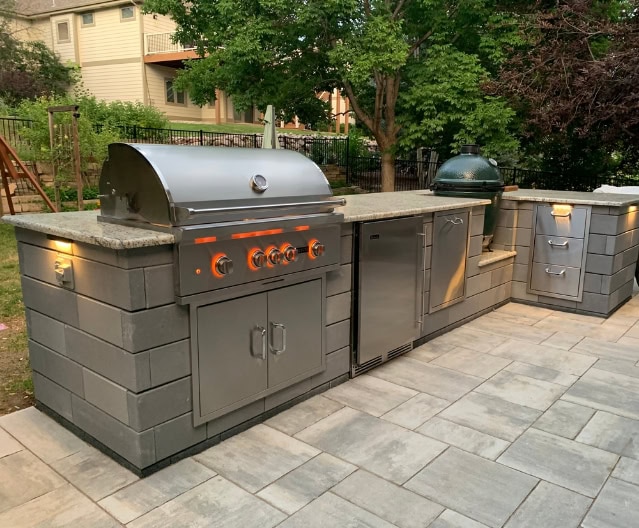
The scope of what gets built is entirely up to you. Some Middletown homeowners want a clean, well-built grill station with a prep counter and storage functional, finished, done. Others want a fully equipped outdoor kitchen with a built-in grill, side burners, a sink, a refrigerator, a bar area, a pizza oven, and lighting for evening entertaining. Both are legitimate starting points, and the consultation is designed to help you figure out what fits your space, your lifestyle, and your budget without being pushed toward more than you need.
Every project includes material selection guidance, site preparation, utility connections for gas, water, and electrical, and a detailed proposal with clear scope and pricing before any work begins. What you agree to at the start is what you pay at the end.

Yes and it’s worth understanding what that actually involves before you start talking to contractors. Middletown Township requires a building permit for outdoor kitchen structures, particularly those with gas connections, electrical service, or plumbing. The application goes through the township’s Building and Planning Department at 27 N. Pennell Road in Media.
There’s also a specific local requirement that catches a lot of out-of-area contractors off guard: electrical work must be inspected by a PECO-approved underwriter before the township will issue a Certificate of Occupancy. That’s not a standard requirement everywhere, and contractors who aren’t familiar with the Middletown Township process sometimes don’t discover it until they’re already mid-project. We know this process, handle the permit application, coordinate the electrical inspection, and manage the paperwork from start to finish. Your job is to review the finished kitchen not navigate the township’s building department.
The honest range is wide because the scope of outdoor kitchens varies significantly. A well-built, functional grill station with a prep counter and storage typically starts around $10,000–$15,000. A mid-range outdoor kitchen with a built-in grill, side burners, a sink, and refrigeration generally runs $20,000–$35,000. A fully equipped setup with a bar, pizza oven, premium countertops, and custom lighting can reach $50,000–$80,000 or more.
What drives the cost in Delaware County specifically beyond design scope is material quality. Building for Pennsylvania’s freeze-thaw cycle means you can’t cut corners on the base, the veneer, or the appliances. Frost-proof materials, stainless steel rated for outdoor use, and properly drained, compacted bases all add to the upfront cost. But the alternative is a kitchen that starts cracking within five to seven years and costs $3,000–$8,000 to repair or rebuild. In Middletown’s market, the better investment is clear. We provide a detailed written proposal before any work starts, so there are no surprises when the final bill comes.
This is one of the most important questions to ask before committing to a design, and most homeowners don’t think to ask it until after something has already cracked. Delaware County’s freeze-thaw cycle is genuinely harsh temperatures swing from well below freezing in January to mild in the middle of a warm spell, then back down again, repeatedly throughout the winter. Each cycle puts stress on any material that absorbs moisture.
For countertops, porcelain and granite rated for outdoor use in freeze-thaw climates are the right choice standard concrete countertops without proper sealing can crack within a few seasons. For the structure itself, frost-proof stone or brick veneer over a properly prepared base is standard. Stainless steel appliances designed for outdoor installation handle the humidity and temperature swings that would rust or warp lower-grade alternatives. For cabinetry and storage, marine-grade or powder-coated aluminum outperforms wood in this climate. The base preparation compaction depth, drainage slope, and material selection is where shortcuts cause the most long-term damage, and it’s also where experienced Delaware County contractors differ most from out-of-area operators who build for milder climates.
The planning conversation should start in late winter January through March if you want the project completed before summer. Masonry and hardscaping work in Pennsylvania can’t be performed safely below 40°F or in wet conditions, so the practical build window runs from roughly April through October. Projects that get designed and permitted in the winter are ready to break ground in early spring, which means a May or June completion is realistic.
Homeowners in Middletown who wait until April or May to start the process are often looking at a late summer or fall completion at best and that’s assuming the contractor has availability. The planning season in Delaware County tends to fill contractor schedules quickly, particularly for quality operators who aren’t taking on more work than they can execute well. If you’re thinking about having the backyard ready for a graduation party in June or a Fourth of July cookout, the time to start the conversation is now not when the weather breaks.
For most residential outdoor kitchen projects in Middletown, active construction runs two to four weeks once the permits are in hand and materials are on site. More complex builds full outdoor kitchen suites with gas, electrical, plumbing, a bar, and custom stonework can run four to six weeks. The permit process itself typically adds two to four weeks before construction begins, depending on the township’s current review timeline.
The bigger timeline risk in this category isn’t construction it’s contractor scheduling and project management. The industry has a well-documented problem with timeline overruns: projects quoted at six weeks stretch to four months, summer comes and goes, and the homeowner is left waiting. Our single-team model one crew managing the project from start to finish, without subcontractor scheduling gaps is a direct structural answer to that problem. Projects get completed on schedule because there’s no handoff between crews and no waiting on a subcontractor who’s tied up on another job across the county.
The short answer is yes and the Middletown market makes the case better than most. Industry data consistently shows outdoor kitchens return between 55% and 100% of their investment at resale, with the National Association of Realtors citing a 100% ROI benchmark for well-built outdoor living spaces. In a township where median household incomes run well above $120,000 and buyers have high expectations for what a property should offer, a quality outdoor kitchen is a genuine differentiator not just a nice-to-have.
Homes with outdoor kitchens also tend to sell faster than comparable homes without them, because the pool of buyers who want that feature is real and motivated. For Middletown homeowners who plan to stay in their home for another decade and the township’s older median age suggests many do the return on daily enjoyment starts immediately. The financial return at resale is a secondary benefit, but it’s a real one. The key is that the kitchen needs to be built correctly: permitted, structurally sound, and built with materials that hold up through Delaware County winters. An unpermitted or poorly constructed outdoor kitchen can actually create problems at resale when inspectors flag it or lenders object. A properly permitted, well-built kitchen does the opposite.
Useful Links
Other Services we provide in Middletown