
Hear from Our Customers
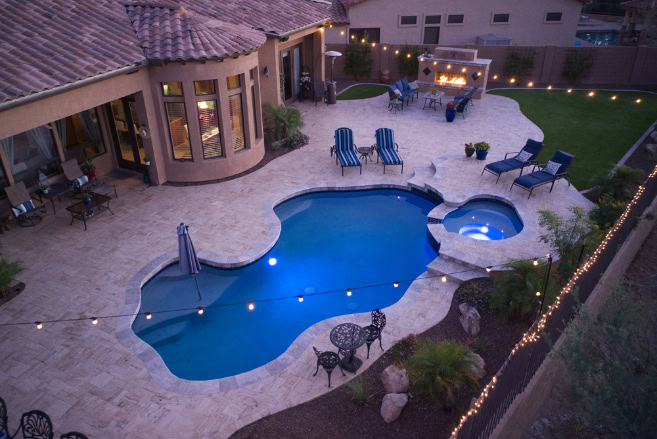
Most outdoor kitchens in Edgmont don’t fail because of bad taste. They fail because the contractor didn’t account for what Pennsylvania winters actually do to masonry, stone veneer, and improperly set bases. When temperatures swing between 15°F and 60°F repeatedly from November through March, inferior materials crack, spall, and heave. A kitchen we build with the right materials and the right base preparation for Delaware County’s freeze-thaw cycle will still look and function the same way a decade from now.
Beyond durability, there’s the question of fit. Edgmont properties whether you’re in Runnymeade Farms, Springton Chase, or on a larger lot along Providence Road aren’t flat suburban backyards. They have grade changes, mature trees, irregular shapes, and a natural character that took years to establish. A good outdoor kitchen design works with all of that. It doesn’t fight it. The result is a space that feels like it’s always been part of your property, not something that was installed on top of it.
When it’s done right, you get a functional cooking and entertaining space you’ll actually use not just look at. Homes with outdoor kitchens also sell roughly 23% faster than comparable properties without them, and the National Association of Realtors puts the ROI at around 100%. For a property in Edgmont, that’s not a small number.
We’ve been doing hardscape and outdoor living work in Delaware County for over 15 years, and we know Edgmont specifically. We understand the clay soils in western Delaware County that shift and drain poorly. We know the permit process at Edgmont Township including the 300 square foot threshold that triggers a building permit and the septic system considerations that come up on properties not connected to public sewer. We’ve worked in Runnymeade Farms, Springton Chase, Okehocking Hills, and along the properties bordering Ridley Creek State Park. We’re not figuring it out as we go.
What makes the biggest difference for most homeowners isn’t the design it’s the accountability. We operate as one team. The same people who show up for the consultation are the ones building your kitchen. There’s no handoff to a subcontractor, no one pointing fingers at another crew when something needs attention. If you have a question during the build or after it’s done, you reach the same person who built it.
That’s not how most of the industry works. It’s how we work and it’s why the projects finish on time and the calls actually get answered.
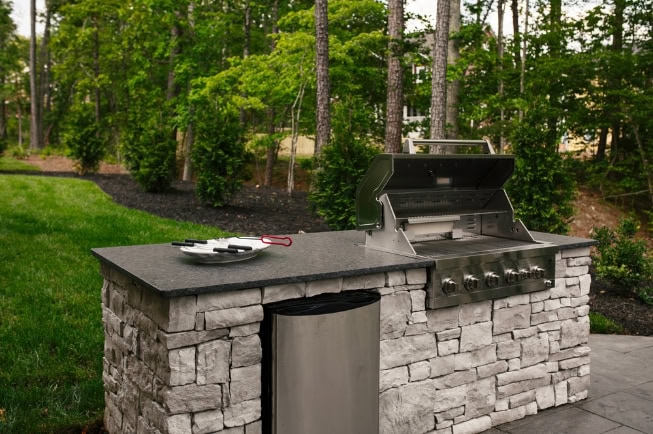
It starts with a consultation on your property. We want to see the actual space the grade, the sun exposure, where the afternoon light hits, how close the gas line is, whether you’re on public sewer or a septic system. All of that shapes the design. This is where you tell us how you actually use your backyard: how many people you typically host, whether you want a simple built-in grill setup or a full kitchen with a sink, refrigeration, and bar seating. We’re not trying to upsell you into something you don’t need. We’re trying to figure out what actually makes sense for your property and your lifestyle.
From there, we handle the design, material selection, and permitting. In Edgmont Township, structures over 300 square feet require a building permit under Pennsylvania’s Uniform Construction Code. Any outdoor kitchen with gas, electrical, or water connections requires coordination with licensed tradespeople and appropriate permits regardless of size. We manage all of it the applications, the inspections, the trade coordination. You don’t have to call the township or track down a plumber separately.
Construction runs on a firm timeline. Masonry and concrete work can’t be done safely below 40°F, so if you want to be ready for summer entertaining, the conversation needs to start in January or February. Homeowners who reach out in early winter are realistically looking at a Memorial Day completion. We do a final walk-through together before we consider the project done and if anything needs attention after that, you know exactly who to call.
Ready to get started?
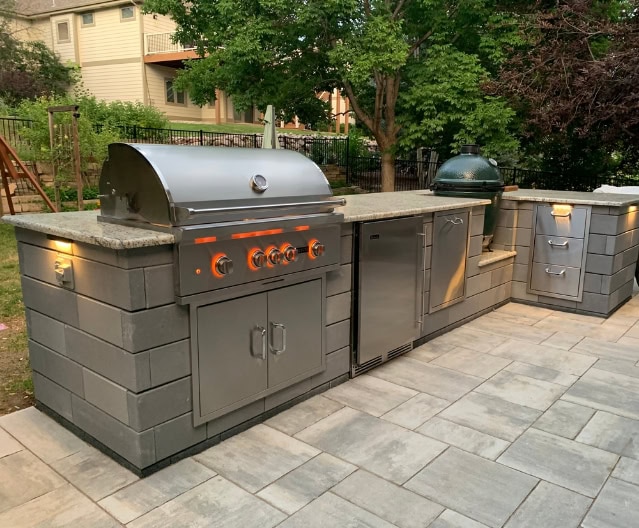
Every outdoor kitchen we build in Edgmont is custom. That means the design starts with your lot not with a package from a brochure. For properties in neighborhoods like Okehocking Hills or the single-family sections of Runnymeade Farms, that might mean a full cooking and entertaining setup with a built-in grill, side burners, outdoor refrigerator, sink with running water, bar seating, and overhead lighting. For a homeowner who wants something cleaner and simpler a quality built-in grill with a stone surround and a prep counter that’s a completely legitimate project too. The scope is whatever fits your property, your budget, and how you actually want to use the space.
Material selection is where a lot of contractors cut corners, and it’s where Edgmont properties get hurt. We use frost-proof stone veneer, high-grade stainless steel appliances, and marine-grade cabinetry materials selected specifically because they hold up through Pennsylvania’s freeze-thaw cycles, not materials rated for a milder climate. The base preparation matters just as much: proper compacted aggregate depth and drainage slope are what prevent frost heave on Edgmont’s heavy clay soils over time.
For properties on on-lot septic systems which is common in the rural areas of Edgmont Township we account for setback requirements and drainage management for any water connections from the start. That’s not something you want to discover after the countertop is already in.

Yes, in most cases. Edgmont Township has adopted the 2018 International Building Codes under Pennsylvania’s Uniform Construction Code. A building permit is required for any structure over 300 square feet, and that threshold applies whether or not the structure has utilities. Most built-in outdoor kitchens which involve structural masonry or framing, a roof or pergola, and utility connections will exceed that size and require a permit.
Beyond square footage, any outdoor kitchen with gas line connections, electrical service, or plumbing requires coordination with licensed tradespeople and separate permits regardless of size. If your property is on an on-lot septic system, which is common in the more rural parts of Edgmont Township, there may also be additional township review required for any water connections that could affect your existing system. We handle the full permit process applications, inspections, and trade coordination so you’re not navigating the township office on your own. Unpermitted structures discovered at resale can be expensive to resolve, so getting this right from the start protects your investment.
The honest answer is that it depends on what you’re building, but for a quality built-in outdoor kitchen in Delaware County, you’re generally looking at a range from around $15,000 on the lower end for a straightforward grill station with a stone surround and prep counter, up to $45,000 or more for a full setup with a built-in grill, refrigeration, sink, bar seating, overhead lighting, and premium stone work.
For Edgmont specifically, the larger lot sizes and higher property values in neighborhoods like Springton Chase and Okehocking Hills tend to support mid-to-upper range projects homeowners here aren’t looking for the cheapest option, they’re looking for something that fits the property and holds up over time. Material quality is a significant cost driver, and it’s one worth paying attention to. Frost-proof stone veneer and marine-grade cabinetry cost more upfront than alternatives, but they don’t need to be replaced in five years because they couldn’t handle a Pennsylvania winter. That’s where the real cost comparison lives.
This is one of the most important questions to ask before you commit to a contractor, and not enough homeowners think to ask it. Pennsylvania’s freeze-thaw cycle temperatures swinging repeatedly between 15°F and 60°F from November through March is genuinely hard on outdoor structures. Materials that look great at installation can crack, spall, and degrade within a few years if they weren’t selected for this climate.
For stone veneer, you want frost-proof rated products specifically not all stone veneer is rated for repeated freeze-thaw exposure. For appliances, high-grade stainless steel is the standard for outdoor use; lower-grade steel will corrode. For cabinetry, marine-grade materials are what hold up in outdoor environments that see moisture and temperature swings. And the base preparation matters as much as the surface materials: Edgmont’s heavy clay soils require proper compacted aggregate depth and drainage slope to prevent frost heave from shifting or cracking the structure over time. A contractor who doesn’t talk about base preparation when you ask about material quality is skipping the most important part of the answer.
From the initial consultation to a completed outdoor kitchen, most projects run between six and twelve weeks depending on scope, material lead times, and permit processing. The permit process in Edgmont Township adds time to the front end of the project applications need to be submitted and approved before construction begins, and that review period can take several weeks depending on the township’s current workload and the complexity of your project.
This is why timing matters more than most homeowners realize. Masonry and concrete work can’t be performed safely below 40°F, which means the practical outdoor construction window in Delaware County runs roughly from April through October. If you want a functional outdoor kitchen for Memorial Day weekend, you need to be starting the conversation in January or February not March. Homeowners who reach out in the fall for a spring build are in the best position. Those who call in April hoping for a June completion often end up disappointed, not because the work can’t be done, but because the permitting and material procurement timelines are already compressed.
Yes, but it requires more planning than a project on a property connected to public sewer and it’s one of the things that catches contractors unfamiliar with Edgmont off guard. A meaningful portion of properties in Edgmont Township, particularly in the more rural areas along Valley Road and in neighborhoods like Okehocking Hills, are on on-lot septic systems rather than public sewer. When an outdoor kitchen includes a sink with running water, the drainage from that sink has to be properly managed and can’t simply run to a storm drain or across the yard.
As of June 1, 2023, the Delaware County Health Department handles septic permits and inspections in Edgmont. Any addition or structure that may impact an existing septic system requires township review as part of the permit process. A contractor who has only worked in the sewer-connected boroughs in eastern Delaware County may not be familiar with these requirements and may not flag them until you’re already mid-project. We account for septic system setbacks and drainage management during the design phase, before anything is built, so there are no surprises later.
The short answer is that it should be designed around your property from the start not adapted from a standard layout after the fact. Edgmont properties aren’t generic. Lots in Runnymeade Farms, Springton Chase, and the custom home areas along Providence Road often have grade changes, mature trees, irregular shapes, and natural character that took years to develop. A design that ignores all of that will feel out of place, and it may also create functional problems a grill oriented the wrong direction relative to prevailing winds, a seating area that gets no shade in the afternoon, or a kitchen footprint that doesn’t leave enough yard space around it.
Our consultation happens on your property, not over the phone or from a photo. We look at the actual grade, the sun exposure, where utilities are located, and how the space connects to the rest of your yard before we sketch anything. The design we bring back is specific to your lot. If you’re adjacent to the wooded edge of Ridley Creek State Park, that backdrop shapes how we think about the layout and material palette. If you have a long, open yard in Somerhill, that opens up different options entirely. The goal is a kitchen that looks like it belongs there because it was designed to.
Useful Links