
Hear from Our Customers
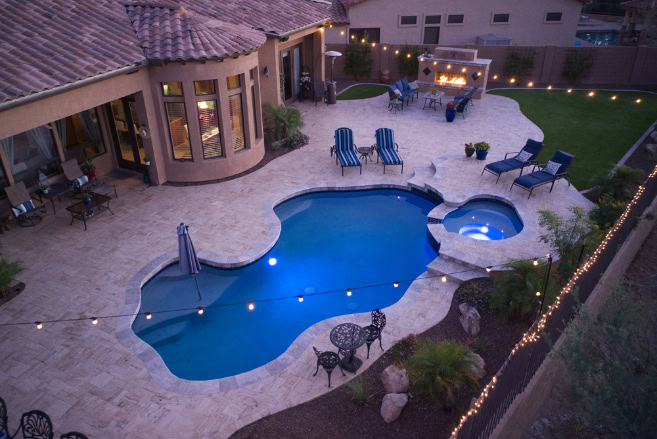
Most Aston homeowners have the backyard for it. The square footage, the privacy, the neighborhood that makes outdoor living worth investing in. What they don’t have is a space that actually functions one where you can cook a real meal, host without hauling everything in and out of the house, and enjoy a May evening without the whole setup feeling like a production. That’s what a well-built outdoor kitchen changes.
Here’s what matters for Aston specifically: Delaware County’s freeze-thaw cycle is brutal on outdoor masonry that wasn’t built for it. Temperatures swing from the teens to the 60s repeatedly through winter, and that pattern cracks inferior materials and heaves improperly prepared bases within five to seven years. The homes along Concord Road and Pennell Road that have been standing since the 1960s and 70s are worth investing in but only if the outdoor structure you add is built to match their longevity, not to look good for three seasons and fail by the fifth.
When the build is done right, the backyard stops being an afterthought. It becomes the place your family actually gravitates to from May through October and a genuine differentiator when it comes time to sell in a market where Aston homes are moving in a median of 12 days.
We’re based in Aston Township same roads, same community, same Delaware County winters. This isn’t a regional contractor who maps your address and drives in from somewhere else. When we build an outdoor kitchen in Aston, we’re building it in our own backyard, figuratively speaking. That proximity matters more than it sounds, because it means there’s no disappearing act after the job is done.
We’ve been working in Delaware County for over 15 years. That’s 15 years of navigating Aston Township’s Building Code Department, working with Delaware County’s clay-heavy soils, and building outdoor structures that hold up through the kind of winters that expose every shortcut a cheaper contractor might have taken. The crew that starts your project is the crew that finishes it no subcontractors handed off mid-build, no communication gaps between trades, no one pointing fingers when something needs attention.
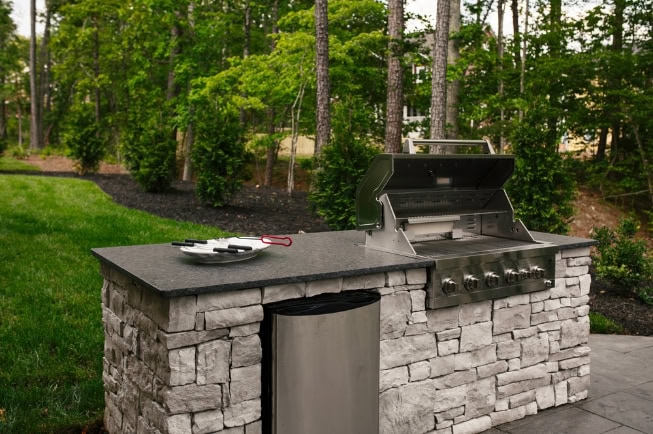
It starts with a real conversation. Not a sales pitch a consultation where you walk through how you use your backyard, what you want to be able to do in it, and what your budget looks like. From there, we design around your space: sun exposure, traffic flow, how the kitchen connects to the house, and what appliances actually make sense for the way you cook and entertain. If you want a built-in grill and a sink, that’s one layout. If you want a pizza oven, a bar area, and a refrigerator, that’s a different conversation entirely and both are valid.
Once the design is locked in, we handle the permit process through Aston Township’s Building Code Department. Any outdoor kitchen that includes gas connections, electrical work, or plumbing requires a permit in Aston Township and pulling that permit requires contractor documentation and insurance on file before work begins. That’s all handled before a single shovel hits the ground.
Construction follows a clear timeline, communicated in writing. We manage site preparation, base installation, masonry, and utility connections with licensed gas fitters, electricians, and plumbers brought in as needed under our direct coordination. When the build wraps, you get a final walk-through to confirm everything works and looks exactly as designed. The timeline you were given at the start is the timeline you can plan around.
Ready to get started?
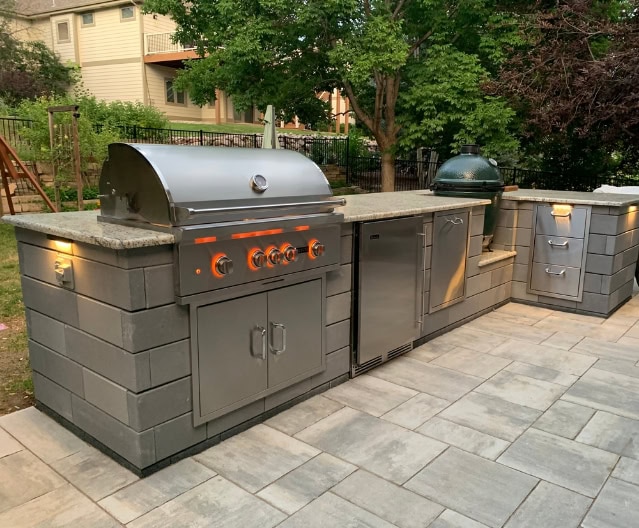
A true outdoor kitchen in Aston isn’t just a grill on a patio slab. It’s a structure that has to handle Pennsylvania’s full four-season climate including the freeze-thaw cycles that crack inferior stone veneer, buckle countertops that weren’t properly sealed, and destroy base layers that weren’t engineered for ground movement. Every build we do uses frost-proof materials, engineered paver base systems rated for freeze-thaw conditions, and stainless steel or marine-grade appliances that won’t rust or corrode after a few Delaware County winters.
The range of what gets built varies widely depending on what you actually want. Some projects are a clean grill station with a countertop and under-counter storage functional, straightforward, and done in a week. Others include sinks with running water, built-in refrigeration, pizza ovens, and dedicated bar areas with seating. The design isn’t pulled from a catalog. It’s drawn around your yard, your lifestyle, and how your family uses outdoor space from late spring through fall.
What stays consistent across every project we complete is the material standard and the process. Aston Township requires permits for any outdoor kitchen involving gas, electrical, or plumbing connections and every build we do that includes those elements is fully permitted, inspected, and documented. That matters at resale, and it matters for your peace of mind long before you ever think about selling.

Yes if your outdoor kitchen includes gas connections, electrical work, or plumbing, you need a permit from Aston Township’s Building Code Department. That covers the vast majority of outdoor kitchens worth building, because a built-in grill, outdoor lighting, a sink, or a refrigerator each trigger the permit requirement under Pennsylvania’s Uniform Construction Code.
The permit process in Aston Township also requires contractor documentation and proof of insurance on file before any permit is issued. That requirement alone filters out a lot of unlicensed or underinsured operators. We handle the entire permit process plan submission, contractor documentation, insurance filing, and inspection coordination so you’re never navigating the township’s requirements on your own. Unpermitted outdoor kitchen work creates real problems at resale, including mandatory disclosure requirements and, in some cases, removal orders. Getting it permitted upfront is the only way to protect the investment you’re making.
Most outdoor kitchen projects in Aston fall somewhere between $15,000 and $40,000, depending on the size of the structure, the materials selected, and the appliances included. A straightforward grill station with a countertop and storage tends to sit at the lower end of that range. A full build with a sink, refrigeration, pizza oven, and bar seating will push toward the higher end or beyond.
What drives cost up in Aston and in Delaware County generally is the material standard required to build something that actually lasts. Frost-proof stone veneer, engineered base systems, and marine-grade cabinetry cost more than the alternatives, but the alternatives fail. A cheaper outdoor kitchen that needs to be reconstructed within seven years costs more in the long run than a properly built one from the start. The rebuild cost alone typically $3,000 to $8,000 or more for failed masonry work often exceeds whatever was saved by going with a lower initial bid.
The construction phase for most outdoor kitchen projects in Aston runs one to three weeks, depending on the complexity of the build. A basic grill station can be completed faster. A larger structure with multiple appliances, utility connections, and custom masonry work takes longer and the permit process adds time before construction can begin.
The bigger timing factor for Aston homeowners is seasonal. Masonry work can’t be done safely below 40°F or in wet conditions, which means outdoor construction in Delaware County is essentially off the table from December through February. If you’re hoping for a Memorial Day completion, the time to have the consultation is well before March. Contractors book up quickly for spring starts.
For Aston’s climate specifically, the materials that matter most are the ones that handle freeze-thaw cycling without cracking, heaving, or deteriorating. That means frost-proof stone veneer on the structure itself, properly sealed natural stone or concrete countertops, stainless steel or marine-grade cabinet frames, and an engineered paver base system designed for ground movement in freeze-thaw conditions.
The clay-heavy soils common throughout Delaware County add another layer of complexity. Clay retains moisture and expands when it freezes which means an outdoor kitchen base that wasn’t properly prepared for those soil conditions will show movement and cracking within a few years, regardless of how good the surface materials look. This is a local construction reality that generic regional contractors often underestimate. Getting the base right compaction, drainage, depth is what separates a build that looks good in year one from one that still looks and functions correctly in year fifteen.
In Aston’s current real estate market, yes and the numbers support it. Industry data from the National Association of Realtors puts outdoor kitchen return on investment at or near 100% at resale, and homes with outdoor kitchens sell measurably faster than comparable homes without them. In a market where Aston properties are already moving in a median of 12 days, an outdoor kitchen is a genuine differentiator that makes your home more desirable to buyers who are comparing similar options in the same price range.
The caveat is that the value is tied to the quality of the build. A permitted, well-constructed outdoor kitchen with durable materials reads as an asset to buyers and home inspectors alike. An unpermitted structure with visible cracking or failed masonry reads as a liability and in some cases creates disclosure obligations that complicate the sale. The investment pays back when the build is done correctly from the start, which is why material selection and permit compliance aren’t optional considerations for Aston homeowners thinking about long-term value.
The clearest indicators are the ones contractors either have or don’t: a local business address, documented insurance on file with the township, a consistent crew rather than a rotating cast of subcontractors, and a track record of pulling permits rather than skipping them. In Aston Township, the Building Code Department requires contractor documentation and insurance before any permit is issued so if a contractor isn’t pulling permits, that’s a signal worth paying attention to.
Beyond the paperwork, the most reliable indicator is how the contractor communicates before the project starts. A contractor who gives you a clear written timeline, explains the permit process without prompting, and walks you through exactly what happens at each stage of the build is a contractor who has done this enough times to know what can go wrong and how to prevent it. A contractor who is vague about timelines, suggests permits aren’t necessary, or hands off coordination to you is one who will be difficult to reach when something needs attention after the job is done. Ask directly: who is on the crew from start to finish, and who do you call if there’s an issue six months later? The answer tells you most of what you need to know.
Useful Links