
Hear from Our Customers
A cracked mortar joint on a brick home in Ridley Park isn’t just cosmetic. Every winter, water gets in, freezes, expands, and widens that crack a little more. By the time it’s obvious, what started as a straightforward repointing job has turned into something far more expensive. Getting ahead of it with the right materials and the right approach is what keeps a repair a repair instead of a replacement.
Ridley Park’s housing stock is older than most of Delaware County. A significant share of homes in and around the historic district were built before 1940, some going back to the 1880s and 1890s. That kind of brick and original mortar wasn’t designed to last forever without attention and it especially wasn’t designed for the repeated freeze-thaw cycles this area sees from November through March. Proper masonry work here means understanding what those materials actually need, not just applying whatever’s cheapest or fastest.
Beyond repair, there’s the outdoor living side of things. A well-built stone patio, a retaining wall that handles Ridley Park’s rolling terrain, a brick walkway that doesn’t heave and shift every spring these aren’t luxuries. They’re investments in a property that, for most homeowners here, has more than doubled in value since 2000. Protecting that equity starts with the work that holds the property together.
We’re based in Aston a few minutes from Ridley Park and have been doing residential masonry and hardscape work across Delaware County for over 15 years. That’s not a talking point. It means we’ve worked on the kinds of homes that line North Swarthmore Avenue and the streets around Ridley Park Lake. We know the soil, the drainage challenges, the age of the housing stock in this borough, and what Pennsylvania winters actually do to masonry that wasn’t installed correctly.
We work as one crew. There’s no subcontracting your job out to someone we’ve never worked with the same team that shows up on day one is there on the last day. Renato is directly involved in the projects, not just the estimate. That matters when something comes up mid-job, and it matters when you have a question six months later and need someone to actually pick up the phone.
It starts with a walkthrough of your property. We look at what you’re working with existing masonry, drainage, grade changes, the condition of any brick or stonework and we talk through what makes sense for your specific situation. If you’re in Ridley Park’s historic district, that conversation also includes what the borough’s Historic Commission may require before any exterior masonry changes are made. We’d rather surface that early than have it slow things down after you’ve committed to a plan.
From there, you get a written proposal with a real timeline not a vague “sometime in spring.” Ridley Park Borough requires a Zoning Permit for paver patio installations, and depending on the scope, a full Building Permit may apply. We handle that process as a standard part of the job, and we’re registered with both the state and the borough as required. Starting work without the right permits means doubled fees and potential stop-work orders that’s not a headache we’re going to hand you.
Once work begins, the focus is on doing it right the first time. For masonry in this climate, that means proper drainage behind retaining walls, mortar mixes matched to the existing materials on older homes, and base preparation that accounts for Delaware County’s clay-heavy soils. The freeze-thaw cycle will test everything we build so we build with that in mind from the start.
Ready to get started?
The masonry work we do in Ridley Park covers both new installations and repairs. On the new build side, that includes stone and brick patios, retaining walls, brick and stone walkways, outdoor fireplaces, and concrete curbing. Concrete curbing in particular is something a lot of homeowners overlook until they’re re-edging their beds for the fifth time in a season once it’s in, the edge is permanent, mulch stays where it belongs, and water follows the grade you actually want.
Decorative gravel installation is another service that looks simple but goes wrong quickly without proper prep. The difference between gravel that stays put and gravel that migrates into your lawn or creates drainage issues comes down to site preparation, the right weed barrier, and edging that’s actually anchored. In Ridley Park’s rolling terrain, drainage is always part of the conversation.
On the repair side, we handle cracked mortar joints, loose or spalling brick, heaved walkway sections, damaged steps, and surface deterioration. For homes in and around the historic district where original brick and lime-based mortar are common the repair approach matters as much as the repair itself. Using the wrong mortar on historic brick causes more damage than it fixes. We match materials to what’s already there, which is the only way a repair on a 100-year-old home actually holds.
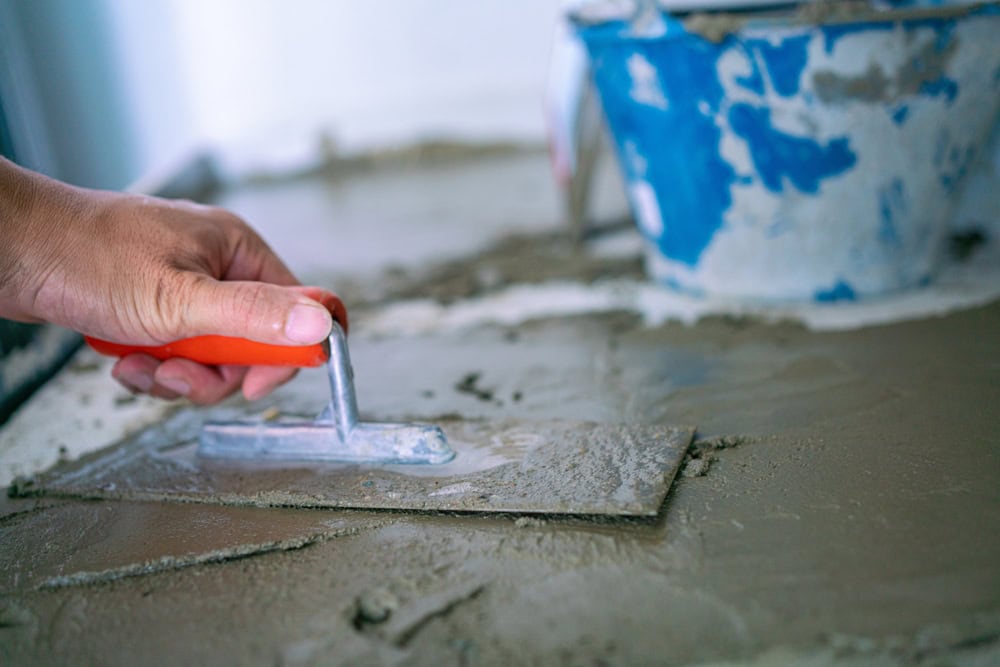
For most paver patio installations in Ridley Park, you’ll need a Zoning Permit from the borough before work begins. It’s a simpler process than a full Building Permit, but it’s still required and the borough is clear that fees are doubled if work starts without one. Larger structures like significant retaining walls typically require a full Building Permit.
If your property is within Ridley Park’s designated historic district, there’s an additional layer to consider. The borough has an active Historic Commission, and exterior changes on historic district properties including masonry work visible from the street may require their review before you proceed. It’s worth confirming your property’s status before signing any contract. A contractor who doesn’t bring this up during the estimate conversation is either unaware of it or hoping you won’t ask.
This is one of the most common issues homeowners in Ridley Park and Delaware County deal with, and the cause is almost always the same: freeze-thaw cycling combined with inadequate base preparation. When water gets under a patio or walkway and the temperature drops below freezing which happens repeatedly in Ridley Park from November through March that water expands as it freezes and physically lifts the material above it. When it thaws, the surface settles back down, but not always in the same position.
The fix isn’t just relaying the surface. It’s addressing the base proper compacted gravel depth, drainage that moves water away from the installation rather than letting it pool underneath, and in some cases, edge restraints that prevent lateral movement. Delaware County’s clay-heavy soils hold water longer than sandy soils, which makes drainage design more important here than it would be in other parts of the region. If the base isn’t right, the surface will keep failing regardless of how good the top materials are.
The honest answer is that most older homes in Ridley Park need repointing long before they need brick replacement the problem is that repointing often gets skipped until the damage has progressed further than it needed to. Mortar joints are designed to be the sacrificial element in a brick wall. They’re meant to absorb movement and moisture so the brick itself doesn’t have to. When the mortar fails, water gets in, and eventually the brick starts to spall or crack.
If the brick itself is still structurally sound no deep cracks, no significant spalling, no hollow sections when you tap it repointing is almost always the right call. It’s a fraction of the cost of replacement and, done correctly, extends the life of the wall by decades. The key word is “correctly.” On a home built in the 1890s or early 1900s, the original mortar is likely lime-based and softer than modern Portland cement mixes. Using a hard Portland cement mortar on historic brick traps moisture inside the brick instead of letting it escape through the joint which accelerates spalling rather than preventing it. Matching mortar hardness to the existing brick is non-negotiable on Ridley Park’s older homes.
Start with registration. Pennsylvania’s Home Improvement Consumer Protection Act requires any contractor doing $5,000 or more in annual residential work to be registered with the PA Attorney General’s Office. This isn’t optional, and it’s not just a formality it’s what gives you legal recourse if a contractor takes your deposit and disappears or does substandard work. You can verify any contractor’s PA HIC registration on the AG’s website before you sign anything.
Beyond state registration, Ridley Park Borough requires contractors to register locally as well. If a contractor you’re considering hasn’t mentioned permits or borough registration at all during the estimate conversation, that’s a red flag. Also pay attention to how specific the proposal is. A real timeline, a clear scope of work, and materials that are actually named not just “quality stone” or “premium mortar” are signs that the contractor knows what they’re doing and is willing to be held accountable to it. Vague proposals protect the contractor, not you.
Spring and fall are the two best windows for masonry work in this region, and spring books fast. Most homeowners in Ridley Park start noticing freeze-thaw damage heaved patios, widened mortar cracks, leaning retaining wall sections right after winter, which means everyone is calling in March and April at the same time. Quality contractors fill their spring schedules by February. If you’re planning a project for spring, reaching out in late winter gives you the best chance of getting a start date that actually works for your timeline.
Fall is a strong secondary window, particularly for masonry repair. Getting repointing or crack repairs done before the next freeze season prevents another winter of progressive damage. The practical limit for masonry installation in Pennsylvania is temperature mortar needs to be applied and cured above 40°F, which rules out most of December through February for new work. Planning ahead and booking early is the most reliable way to avoid the “we can fit you in sometime in July” conversation when you were hoping for May.
Masonry costs in Ridley Park vary based on material choice, square footage, site conditions, and scope but having a realistic range in mind before you start getting estimates helps you evaluate what you’re hearing. For a professionally installed paver or natural stone patio in Delaware County, you’re generally looking at $20 to $45 per square foot depending on the material, with natural stone on the higher end and standard concrete pavers on the lower end. A mid-size patio say, 300 to 400 square feet typically runs $8,000 to $18,000 installed. Retaining walls range widely based on height, length, and drainage requirements, but a straightforward residential wall commonly falls between $6,000 and $15,000.
What drives cost up in Ridley Park specifically is the age and condition of existing masonry, site access in the borough’s more compact, older neighborhoods, and for historic district properties the need for materials that match the existing character of the home. A proposal that comes in significantly below these ranges is worth scrutinizing carefully. Base preparation, proper drainage, and correct material specification aren’t line items that can be cut without consequences that show up the following spring.
Useful Links
Other Services we provide in Ridley Park